⏱ 19 min read
Published August 14, 2026
Should you leave a real estate team over high lead splits?
When you decide to leave a real estate team, it usually comes down to the math. Giving up a quarter of your commission check to a leader who provides zero leads is a frustrating business reality. If you generate your own clients and do all the daily prospecting, paying a massive split for absent support makes no sense.
- A 25 percent team split costs an agent closing eight self-sourced deals roughly $20,000 to $30,000 annually for zero return.
- Team leads must provide warm leads, marketing support, and direct coaching to justify their commission cut.
- Solo agents can replicate a team follow-up system for a few hundred dollars a month using modern CRM tools.
- Independent contractor agreements determine if you can keep your database when you leave a real estate team.
Are you paying a team split for leads you found yourself?
Most agents pay a massive team split on deals they sourced entirely on their own. You need to look at your past year of closings and calculate what you paid your team lead per client you found yourself.
It is easy to ignore a split when you are closing deals and cashing checks. However, you need to calculate the actual costs. Look at your last eight closings. If your team lead provided none of them and you found six from your own sphere, that split is just a tax on your personal effort. Many agents realize they want to leave a real estate team right at this moment.
A standard team model assumes the team lead spends heavily on marketing to drive the phone to ring. You take a lower split because you take zero financial risk. But what happens when the phone stops ringing? Agents have to work past clients, call their sphere of influence, and knock on doors to generate business. And yet, the team still takes 25 percent for a marketing machine that is broken.
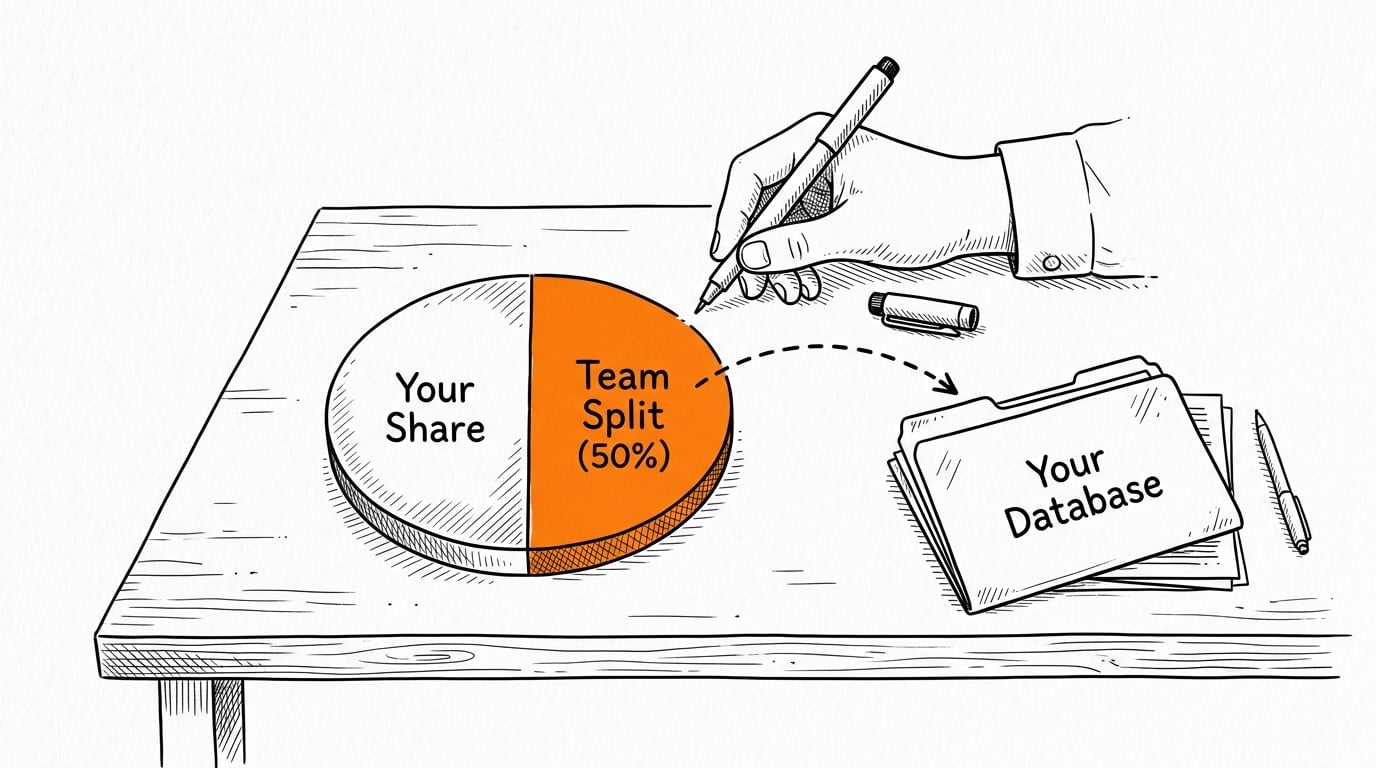
The numbers get ugly fast. An agent selling $4 million in volume on a 75/25 split pays a team lead almost $30,000 a year. If those leads came from your own hustle, that is $30,000 out the window. “A team split is a fair trade for warm leads and strong coaching. But it becomes a tax when you do all the heavy lifting,” says Rohan Attravanam, founder of nurtureBEAST. You have to ask what that money buys you. According to the National Association of REALTORS®, 26% of agents operate as part of a real estate team. Many of them are overpaying for the value they receive.
What are you actually getting in exchange for your commission split?
A team lead must provide warm leads, marketing support, and direct coaching to earn their cut of your commission. If they fail to deliver on these three things, you are essentially renting a desk for thousands of dollars a month.
A good team is an incredible asset. They feed you leads when you are new, cover marketing costs, teach you how to close, and help with contracts. But many teams stop doing this once you start producing. Eventually, lead flow dries up, marketing support turns into a shared Canva account, and coaching becomes a generic weekly meeting focused entirely on numbers. The focus shifts from learning to simply reporting metrics.
If you are going to pay a quarter of your income to a team, you need a return on that investment. A fair split means getting daily opportunities and administrative help so you can focus on selling. Doing your own transaction coordination while paying for your own online leads means the math is broken. This is a common reason why agents struggle with feast or famine cycles. They give up margin without getting the volume to make up for it. The National Association of REALTORS® reports that the median gross income for an agent is $56,400. Handing over a huge chunk of that for zero support hurts your livelihood.
Is your team lead giving you systems or just taking a cut?
You are paying a split for systems, but you are likely still building your own follow-up from scratch. If you are manually texting leads and setting up your own drips, your team lead is only taking a cut.
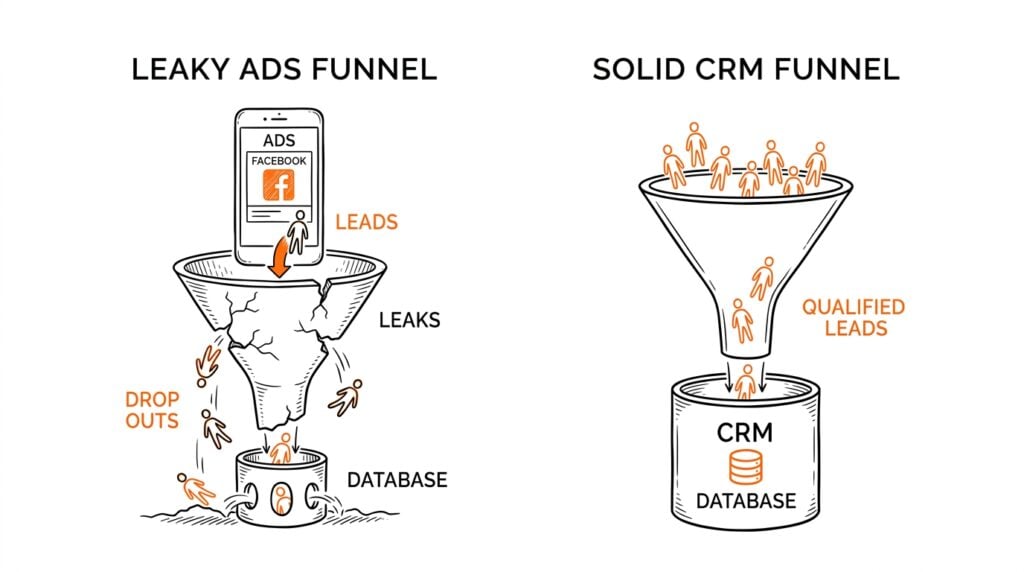
Teams are supposed to hand you a machine that works so you can just plug in and generate appointments. That is rarely the reality. Most agents join a team and find out the CRM is empty, the database is full of dead contacts, and there are no automated follow-up templates for new listings.
Agents often find themselves sitting at a desk late at night writing emails to prospects, building reminders, and manually typing text messages that should go out automatically. Doing the operational work of a solo agent while paying team-level splits is a massive drain. You need a system that runs your follow-up automatically. If your team does not provide that, you lose money on the split and lose hours doing manual admin work.
How much does it cost to run your own follow-up system solo?
Running your own follow-up system solo costs between $100 and $300 a month for a solid CRM and automation platform. This is a fraction of the thousands of dollars you lose to team commission splits every year.
When you look at the raw numbers, the decision to leave a real estate team makes financial sense for strong producers. The tools needed to run a business cost very little today. You do not need a massive brokerage office to manage your database when a laptop and a good CRM will do. A solo setup gives you total control over messaging, pipeline management, and the equity of your business.
| Team Setup | Solo Agent Setup | The Bottom Line |
|---|---|---|
| 25% split on $4M volume = $30,000/yr | CRM + Automations = $3,500/yr | Solo agents save $26,500 annually |
| Rely on team lead for campaigns | Control your own message and timing | Solo agents build their own brand |
| Leads often belong to the team | You own your database forever | Solo agents build long-term equity |
Taking that extra $26,500 and reinvesting it changes everything. Hiring a virtual assistant to handle paperwork is a smart move, especially since AI helps your assistant work much more efficiently. Your VA equipped with AI can run your entire backend. This setup gives you the scale of a team without the massive costs. You get your time back while keeping your money.

Will your current leads stay with you if you leave the team?
Your ability to keep your leads depends entirely on your independent contractor agreement and who generated the contact. You must read your contract carefully to see who owns the database before you make a move.
This is the scariest part of deciding to leave a real estate team. Starting over with an empty CRM and losing momentum are common concerns. The reality is usually less dramatic. Generating the lead from your own sphere of influence almost always means you keep it, while online leads paid for by the team will likely stay with them.
Downloading your personal contacts before giving notice is crucial. Check your independent contractor agreement because it lays out the rules clearly. Talking to your managing broker can also help, as they generally want to keep your license at the brokerage and will assist with the transition. The goal is to leave cleanly. Leaving some old online leads behind is fine because a clean break is worth it. The follow-up you already have is more valuable than the leads you are buying.
How do you replace team lead support without working double hours?
You replace team support by putting systems in place that handle the repetitive work for you. Automated text sequences, simple newsletters, and done-for-you content keep your pipeline full while freeing up your time.
Going solo does not require working 80 hours a week if you use better systems to stay in front of your database automatically. This is where automation takes over the heavy lifting.
Implementing a simple weekly newsletter, putting new online leads on automated text sequences, and setting up reminders for client birthdays and anniversaries will handle the first points of contact. The software manages the initial outreach, allowing you to step in only when a lead replies and actually wants to talk. This approach preserves the personal relationship with your clients while leveraging smart automation behind the scenes. Replacing the tasks that do not need a human ensures your clients get faster responses and you get to log off at a normal hour.
What is the cleanest way to transition off a team without burning bridges?
The cleanest way to leave a real estate team is to give a professional 30-day notice while having your new CRM ready to go. You want to set up your tools first, talk to your broker, and launch your solo business without any downtime.
Do not make this personal, as it is strictly a business decision. You ran the numbers, and the current structure no longer fits your goals. Start by picking your new CRM, getting your domain name set up, exporting your personal contacts, and writing your announcement letter.
Once your backend is ready, ask your team lead for a meeting. Keep it brief and professional. Thank them for the opportunity and let them know you are moving your license to a solo setup. Do this early in the month. Work your current escrows with total professionalism and close out your files properly. Clean up your new CRM database during those 30 days. When the month ends, you flip the switch. With your follow-up running and newsletters scheduled, your solo business is immediately operational.
Frequently asked questions
When is the best time to leave a real estate team?
The best time to leave a real estate team is when you consistently generate your own leads and pay a team split that exceeds the value of the support you receive. If your marketing and coaching benefits have dried up, it is financially wise to move on.
Will my broker support my decision to go solo?
Most managing brokers are supportive as long as you keep your license at the same brokerage. They want to retain top producing agents and will often help you navigate the transition smoothly.
What should I prepare before I leave a real estate team?
You should select a new CRM, export all personal contacts you legally own, and set up your essential automated follow-up campaigns. Having your backend tools ready ensures zero downtime when you finally make the transition.
Related reading
- Automate Real Estate Follow-Up: 3 Tracks to Build First – A guide to the essential automations every solo agent needs.
- How to Clean Up a Messy Real Estate CRM Database in 5 Easy Steps – A clear plan to organize your contacts before leaving your team.
- 4 Workflows to Use AI to Help Your Real Estate VA Work Faster – How to scale your solo business by combining human help with AI.
The Bottom Line
Deciding to leave a real estate team is a math problem. If you are paying 25 percent of your commission to someone who does not provide leads, marketing, or coaching, you are funding their business instead of your own. You are paying a premium for systems that you are likely building yourself anyway.
You can run a highly profitable solo operation for a few hundred dollars a month. Modern tools allow you to automate your follow-up, manage your database, and stay in front of your clients without working around the clock. Make the transition cleanly, protect your sphere, and take control of your own pipeline.
If you want to see how nurtureBEAST handles the automated follow-up you need to run solo – take the quiz to find out what’s killing your real estate business or visit nurturebeast.com.