⏱ 19 min read
⏱ 11 min read
How to build a real estate pipeline with zero sphere?
Building a real estate pipeline from scratch is essential when you move to a new city and your local sphere consists of five people. Standard broker training tells you to call your friends and family, but that advice falls flat without local contacts. This system must run independently of your personal relationships.
- Your database generates more revenue than your sphere of influence when you start in a new market.
- Hyper-local content attracts ready buyers while generic market updates get ignored by everyone.
- Neighborhood checklists capture contact information from active searchers better than generic home valuation pages.
- Automated follow-up messages turn strangers into warm leads without requiring you to text people every day.
What do you do when your local sphere is only five people?
When your local sphere is tiny, relying on personal relationships is no longer an option. Instead, the focus shifts to building a database of local strangers by providing specific answers to questions people are actively searching for in your market.
Most agents feel stuck when they relocate or switch careers, especially as they watch competitors close deals through country club connections. Starting a race ten miles behind everyone else feels daunting, but this is a normal phase. Traditional advice to call friends and family simply fails when those contacts live three states away.
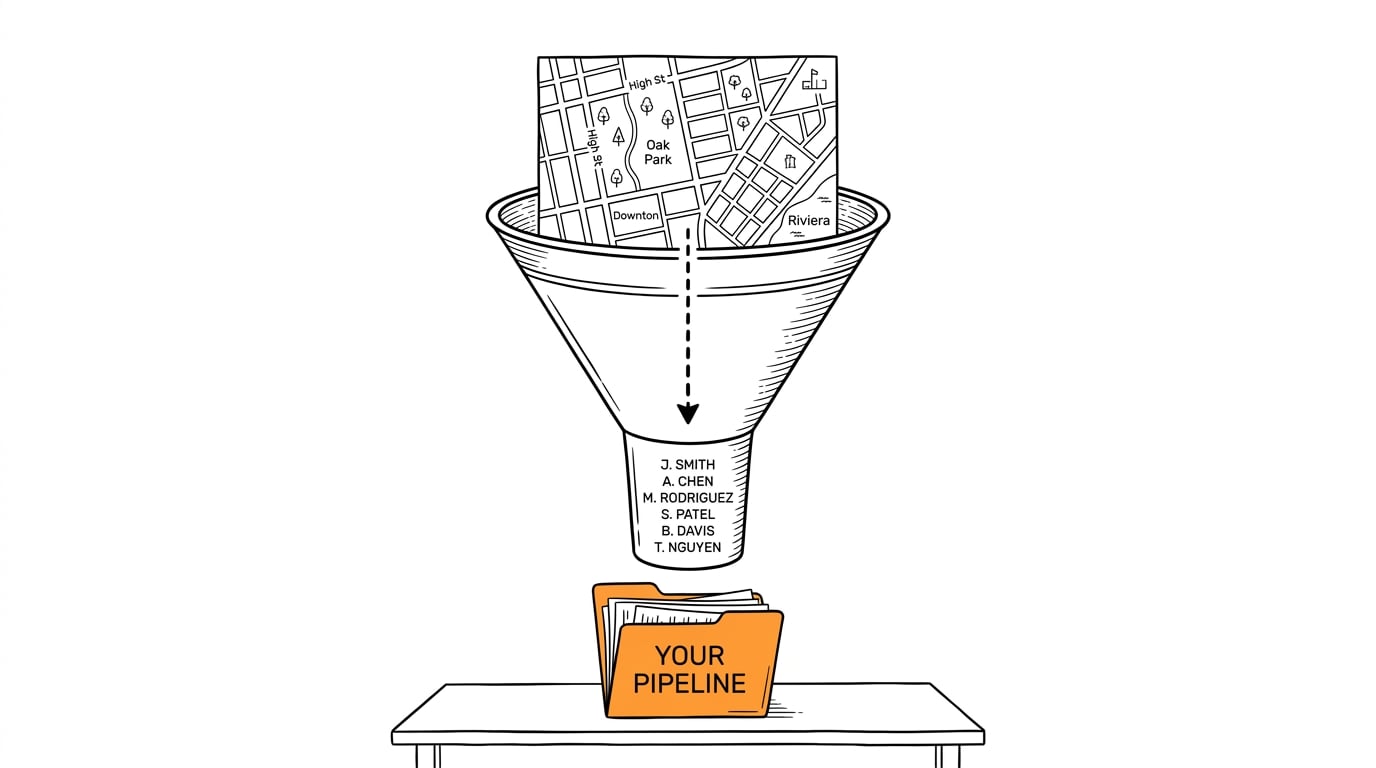
The solution is building a real estate pipeline that attracts clients who need immediate real estate help, establishing authority from scratch. By treating the market like a data problem instead of a networking problem, finding leads becomes a repeatable process.
According to the National Association of Realtors, 68% of sellers found their agent through a referral or used an agent they had worked with before. That statistic is terrifying for someone with no past clients, yet it also means a massive chunk of the market is actively searching for representation today. Capturing their attention requires answering their questions before competitors do, establishing a business driven by value.
Why does posting random content fail to get you leads?
Posting random content fails because generic housing market updates do not solve a specific problem for a specific person. Buyers and sellers ignore stock photos of keys and templated holiday greetings because that content offers zero value to their situation.
Spending three hours a week scheduling Canva templates often results in zero Facebook engagement. Social media can quickly feel like a massive waste of time, and many agents hit this wall after a few months. The platform itself works fine, but the messaging is usually the problem.
“If your content could apply to any city in America, it will not convert a single lead for your real estate pipeline,” says Rohan Attravanam, founder of nurtureBEAST.
Instead of posting a generic graphic about interest rates, record a quick video explaining how a 0.5% rate drop specifically affects entry-level home prices in the Westside school district. This hyper-local approach proves your neighborhood expertise and gives buyers a compelling reason to reach out. Another effective strategy is discussing new Main Street restaurants and their impact on walkability scores for nearby condos.
How do you build a local audience from absolute scratch?
Building a local audience requires creating content about specific neighborhood changes and hyper-local market shifts. Addressing the exact questions people type into Google when researching a specific zip code captures their attention immediately.
Staring at a blank screen is frustrating for agents struggling to find new topics to discuss. Beginners often assume they need a massive production budget to compete with top producers in their market.
Narrowing the focus to a single neighborhood is a much better approach. Focusing on hyperlocal real estate marketing builds authority rapidly. Becoming the definitive expert on one subdivision matters far more than knowing broad county data.
Skip the generic county data and discuss the new traffic pattern on 5th Avenue, explaining its impact on the Oak Park morning commute. Highlighting commercial developments near the high school is exactly the kind of specific information that real estate farming relies on. Posting videos about these changes attracts residents and establishes the agent as the local news source for real estate.
How do you capture contact info from people who do not know you?
Capturing contact information happens by offering a specific resource in exchange for an email address. Trading a neighborhood guide or a local builder checklist for their details is vastly more effective than asking them to subscribe to a generic newsletter.
Earning views on neighborhood videos without generating leads is a common frustration. Viewers consume the free advice and keep scrolling, leaving agents feeling like they are working for nothing. Closing this gap requires giving prospects a tangible reason to hand over their phone number.
Creating a one-page PDF guide like the “2026 Relocation Guide for the Westside School District” offers immediate value. Mentioning this asset at the end of a video and explaining exactly how to download it drives highly effective real estate lead generation.
Downloading that guide instantly signals a prospect’s specific interests. Knowing they are focused on the Westside district allows for highly tailored future communication based on that exact location.
| Approach | What you offer | Why it fails or works |
|---|---|---|
| The Old Way | “Subscribe to my newsletter” | Fails because no one wants more generic email. |
| The Average Way | “Get a free home valuation” | Struggles because Zillow does this instantly. |
| The New Way | “Oak Park Zoning Change Map” | Works because it solves a specific local problem. |
The 5-Part Neighborhood Guide Blueprint
To get downloads, your PDF guide does not need to be a 40-page textbook. A simple, one-page cheat sheet works better because readers can consume it in under 60 seconds. Structure your neighborhood cheat sheet with these five elements:
1. The Hyper-Local Hook: A bold header identifying the target area (e.g., “3 Things Moving to the Westside School District in 2026”).
2. The School or Zoning Fact: Provide one specific piece of news (e.g., “The new high school boundary line shift shifts 40 homes into the top-rated district”).
3. The Commute Metric: Clear commute data during peak hours (e.g., “Commuting to downtown from Oak Park averages 38 minutes between 7:30 AM and 8:30 AM”).
4. The Price Per Square Foot: Keep it simple by comparing entry-level home averages with fully updated home averages in that specific subdivision.
5. The Off-Market Call to Action: A footer text that says: “Text [Your Number] to see 3 upcoming listings in this neighborhood before they hit the MLS.”

How do you turn total strangers into warm real estate leads?
Turning strangers into warm leads requires short, automated follow-up messages that provide ongoing local value. Setting up a sequence of texts and emails to trigger the moment a guide is downloaded ensures consistent visibility.
Following up with strangers often feels awkward or pushy. Staring at a new phone number and hesitating to send a text causes many agents to avoid outreach entirely, resulting in lost deals to faster competitors.
The solution involves changing the messaging to offer more help rather than asking for a sale on day one. Deciding to automate real estate follow-up completely removes emotion and hesitation from the daily workflow.
A properly configured CRM sends a text five minutes after a download to ask if the file opened correctly. Two days later, an automated email delivers a short video about property taxes in that specific neighborhood. Since HubSpot research shows that 50% of buyers choose the vendor that responds first, speed and consistency are vital. The sequence handles the heavy lifting while the agent is out showing houses.
The 2-Step Auto-Responder Scripts (Copy & Paste)
Use these exact message templates in your CRM to follow up with new leads immediately:
Step 1: The Delivery Check Text (Sent 5 minutes post-download)
SMS Message:
"Hey [First Name], it's [Agent Name] with [Brokerage]. Just wanted to make sure that Westside school guide downloaded alright for you? Let me know if the PDF link didn't open!"
Why it works: It is operational, helpful, and has a 90% reply rate because it checks on file delivery rather than pitching.
Step 2: The Neighborhood Update Email (Sent 2 days later)
Email Message:
* Subject: The 5th Ave traffic change (quick update)
* Body:
"Hey [First Name], if you're looking at homes in Oak Park, you should know the city just finalized the traffic pattern adjustments on 5th Ave. It's going to add about 8 minutes to the morning school run commute starting next month. Here is the zoning map link: [Link]. Let me know if you want a quick list of homes that bypass that intersection. – [Agent Name]"
How can an assistant or VA help manage this real estate pipeline?
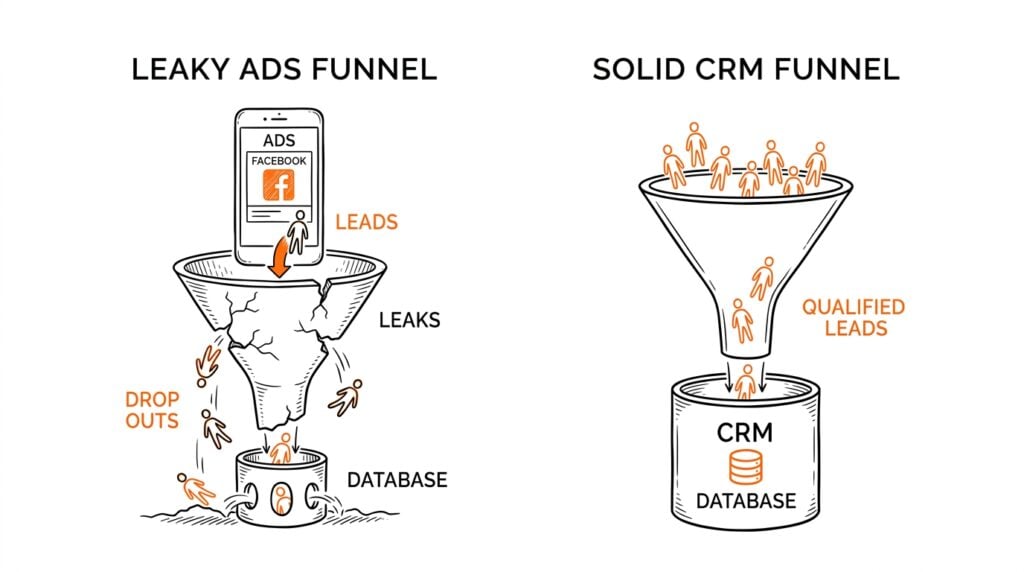
An assistant or VA manages this real estate pipeline by handling initial responses and updating the database. Their role involves using the automated system to filter out noise, allowing the agent to step in only when a lead is ready for a conversation.
Managing an influx of new leads raises concerns about being chained to a phone answering basic questions all day. Growing agents understandably fear that building a large database means sacrificing their personal lives.
Delegating the early stages of conversation to an assistant frees up your schedule. A VA equipped with artificial intelligence becomes incredibly effective. Rather than replacing human help with automation, implementing workflows to use AI to help your real estate VA allows them to draft accurate email replies instantly.
The assistant reviews the AI draft, clicks send, and keeps the leads moving forward. Scheduling appointments and flagging hot prospects ensures the primary agent only picks up the phone for qualified buyers, keeping focus squarely on revenue-generating activities.
What simple weekly routine keeps new leads coming in?
A simple weekly routine involves blocking two hours to record local videos and review automated follow-up sequences. Sticking to this exact schedule every single week ensures a steady flow of new traffic into your real estate pipeline.
Consistency remains the hardest part of the job. Getting busy with a transaction often stops content creation, which leads to an empty database right after closing. Fighting this feast or famine cycle makes it feel like the business is constantly starting over from zero.
Treating a content creation block with the same respect as a listing appointment beats this cycle. Building a repeatable habit feeds the database and removes decision fatigue, making it easy to execute the plan without hesitation.
1. Pick three specific local topics on Monday morning based on recent buyer questions.
2. Record three short videos on Tuesday afternoon, keeping them under two minutes.
3. Review the CRM on Friday to ensure all automated messages fire correctly.
This streamlined workflow guarantees continuous database growth and removes the stress of wondering where the next commission check will originate.
Frequently asked questions
How long does it take to see results from a new real estate pipeline?
Building a real estate pipeline from scratch generally takes 60 to 90 days of consistent effort. Your first few videos will build the foundation, but the momentum shifts once your automated follow-up begins nurturing those initial downloads.
Do I need expensive equipment to record hyper-local videos?
A modern smartphone and an inexpensive clip-on microphone provide plenty of quality for neighborhood content. Buyers care far more about the accuracy of your local insights than cinematic production values.
Can I use this strategy if I am a part-time agent?
Yes, the heavy reliance on automation makes this system ideal for agents with limited hours. Creating a focused weekly routine allows you to generate and nurture leads while you are working your primary job.
Should I run paid ads to my lead magnets?
Organic video content works best for starting out, but running low-budget local ads can accelerate your results. Once your lead magnet proves it can capture emails organically, putting money behind it scales the process.
Related reading
- Hyperlocal Real Estate Marketing: 7 Plays to Own It – Learn how to dominate a specific neighborhood market.
- Automate Real Estate Follow-Up: 3 Tracks to Build First – See the exact sequences you need to set up in your CRM.
- Real Estate Lead Generation: 12 Sources Beyond Zillow – Find more ways to capture leads without paying portal fees.
The Bottom Line
Building a real estate pipeline from scratch requires a complete shift in strategy. Relying on friends and family is impossible when they do not live in the market. The new focus must be on hyper-local content that answers specific questions for active buyers and sellers, capturing their information with targeted guides and nurturing them through automated systems.
If you want to see how nurtureBEAST handles building a zero-sphere real estate pipeline—helping you generate 15 leads a week without cold calling—take the quiz to find out what’s killing your real estate business or visit nurturebeast.com.