⏱ 20 min read
Published October 7, 2026
Why an open house sign in sheet ruins your lead conversion
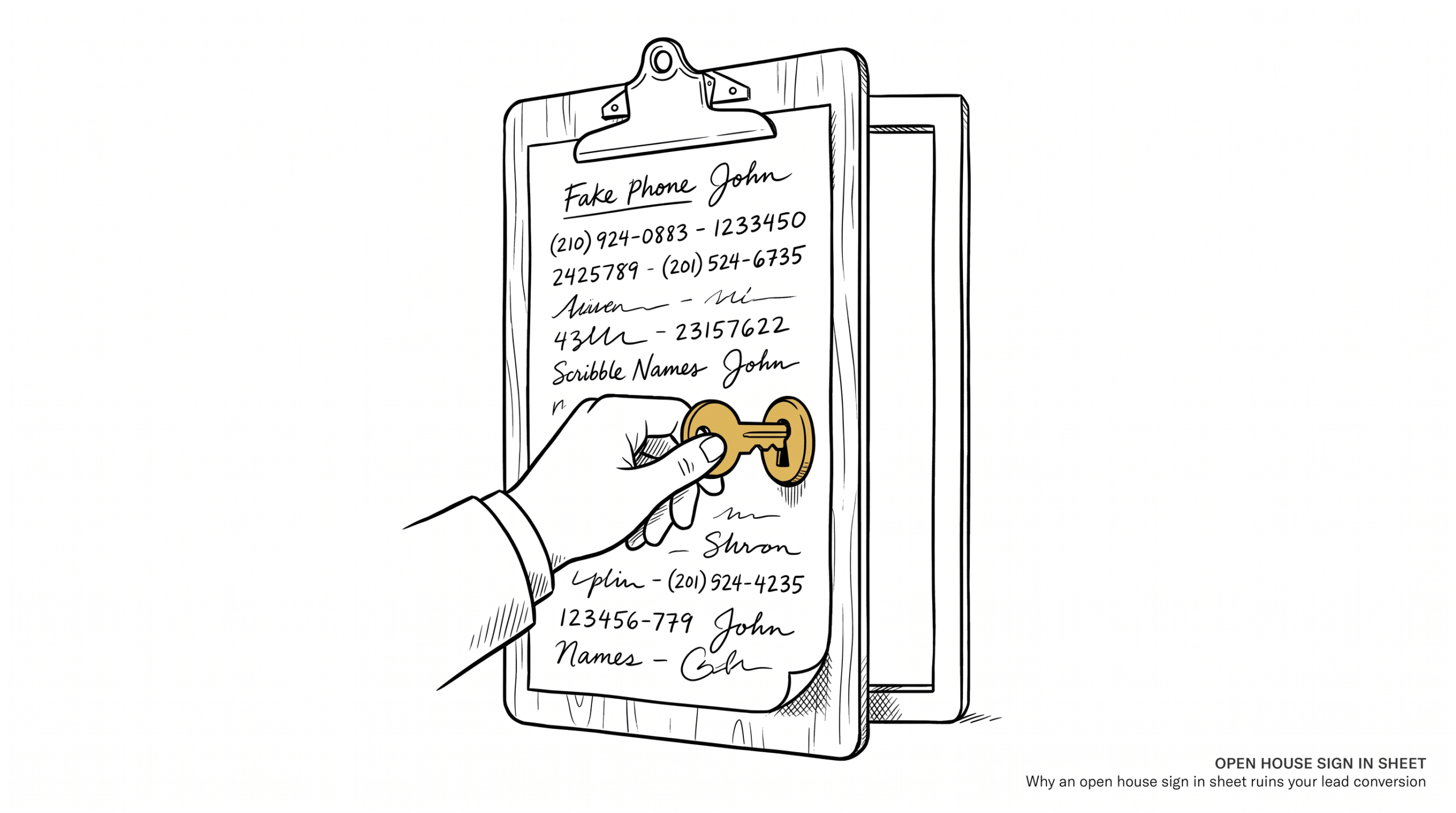
Hosting a weekend showing and forcing buyers to use an open house sign in sheet ruins your weekend. You spend three hours collecting 12 names, only to discover on Monday that 10 of those phone numbers are completely fake. The effort of setting up signs and preparing the property is wasted because front-door friction ruins your conversion before a real conversation even starts.
- Forcing visitors to use an open house sign in sheet creates immediate friction and results in fake contact details.
- Swapping the front-door clipboard for a high-value neighborhood inspection report captures accurate buyer information naturally.
- Using a QR code on printed listing sheets allows buyers to text themselves property disclosures in under five seconds.
- A hyper-specific follow-up text sent two hours after the showing generates triple the response rate of a generic email.
- An automated 14-day nurture sequence moves un-preapproved weekend visitors toward a sit-down consultation without requiring weekend work from your assistant.
Why do open house visitors give fake contact info at the door?
Buyers give fake numbers because you ask for their personal details before providing any value. They want to walk through the kitchen without getting added to a spam list. When you corner a visitor with a clipboard, they protect their privacy.
Most agents recognize the awkwardness of guarding the front door to demand an email address. Even though you know the buyer just wants to look around, pressure from your broker to capture every lead usually wins out, resulting in a list of useless data. According to the National Association of Realtors, 73% of buyers interview only one real estate agent during their search. If you burn trust at the front door, you will never be that one agent.
An open house sign in sheet feels like a toll booth. Buyers expect a sales pitch the second they write their name down. They hand over a fake 555 number just to get past you. The clipboard creates an adversarial relationship from the first handshake. Agents try to collect information, but visitors prefer to maintain their privacy. You need a system that makes the buyer want to give you their real phone number. You do this by offering them something they actually want to consume.
What should you hand buyers at an open house instead of a clipboard?
You should hand buyers a physical two-page neighborhood inspection report. This document details recent school zoning changes and hyper-local market stats. It replaces the demand for contact info with an offer of real value.
Starting meaningful conversations with weekend visitors is difficult. A generic question about the weather gets a polite nod. A neighborhood guide changes the dynamic completely. You stop being a guard at the door and become a local expert. When you hand them a report showing why home values in the Oak Park neighborhood jumped 12% last quarter after the school boundary shift, they actually read it and ask questions.
This approach removes the pressure. You offer the physical guide freely. Then you mention that the full digital packet has floor plans and the seller’s disclosures. If they want the digital version, they have a reason to trade their real contact info. You are giving them something they actually need to evaluate the home.
| Tactic | Buyer Reaction | Lead Quality |
|---|---|---|
| Paper sign-in sheet | Annoyance and defensiveness | Mostly fake numbers and junk emails |
| iPad registration app | Slightly better, still feels forced | Mixed, high bounce rate on follow-up |
| Value-first lead magnet | Curiosity and engagement | Real numbers tied to property interest |
How do you capture real phone numbers without asking for them upfront?
Place a QR code on your printed listing sheets that lets buyers text themselves the property disclosure files. When they scan the code, their phone opens a pre-written text message to your system. They hit send, and you capture their real number.
Figuring out how to set up open house lead capture can feel confusing when you are used to a paper open house sign in sheet. You do not need complex software. You just need a simple text-to-respond trigger. Buyers walk through the house holding your printed neighborhood guide. At the bottom of the guide, a call-to-action says, “Scan to get the seller disclosures and plot map sent to your phone.”
Buyers simply open their smartphone camera to scan the code and send the pre-populated message. The friction drops to zero. You get a verified phone number because they used it to request the file. “The best lead capture feels like a customer service feature,” says Rohan Attravanam, founder of nurtureBEAST. “Make it easier for them to get the file than to avoid you.” This system captures the contact info silently.

What does a high-converting open house follow-up text actually say?
A high-converting text offers specific local market information two hours after the showing. It names the property they visited and asks a direct question about their search criteria. It never asks if they are ready to buy.
You probably stare at your phone on Sunday evening wondering what to send. Generic messages saying “checking in” get ignored, and asking “did you like the house?” yields a one-word reply. Your follow-up needs to offer the next logical piece of information. You have to prove that you listened to their specific problems during the open house.
Use this actionable script for your initial response:
Follow-Up Text Template:
Hi [Name], thanks for checking out the house on [Street] today. I know the [specific concern] was an issue for you. I have a list of 3 upcoming unlisted homes in the neighborhood with [specific solution]. Do you want me to send that over?
This works because it proves you listened. It offers a specific solution to an objection they had. Your open house follow-up system must sound like one human trying to help another human. It should never sound like an automated blast sent to fifty people at once.
How can your assistant run open house nurture without working weekends?
Your CRM tool handles the instant file delivery and the initial text message on Sunday. This setup frees your assistant to start calling the buyers on Monday morning. The AI handles the instant response, and your assistant handles the human relationship.
Many agents try to have their virtual assistant manage weekend lead flow manually. This leads to burnout and delayed responses. Instead of keeping your VA glued to a screen on a Sunday afternoon, you want them rested and ready to have high-value conversations on Monday. Automating routine tasks allows your virtual assistant to focus entirely on closing instead of sorting data. You keep the high-level humans and equip them with systems.
When the buyer scans the QR code, your GoHighLevel system automatically texts them the disclosures. The system then tags the lead based on what they opened. On Monday, your assistant logs in and sees a prioritized list of buyers who actually clicked the links. They then call the warmest leads first. You equip your team with systems so they spend time communicating with actual prospects. Studies show that companies that automate lead management see a 10% or greater increase in revenue in six to nine months. Let the system do the sorting.
Why do most agents lose buyer leads 48 hours after an open house?
Agents lose leads after 48 hours because they stop providing value and start asking for a commitment. They shift from a helpful local guide to a salesperson. Buyers ghost them to avoid the pressure of a sit-down meeting.
After a great conversation on Sunday and a solid follow-up text that evening, the buyer often stops responding by Tuesday. This happens because your follow-up sequence breaks down. You run out of interesting things to say and resort to sending generic market updates that look like every other agent’s newsletter. Buyers delete generic emails.
To keep a buyer engaged, you must maintain a steady flow of hyper-local insight. If they looked at a house in a specific zip code, your next email needs to detail the average days on market for that exact zip code. Building a real estate buyer lead nurture track that feels personalized is essential. The messages should address specific fears about interest rates or inventory levels, teaching them something new in every single message.
How do you turn casual weekend visitors into signed buyer agreements within 14 days?
You turn visitors into clients by running a 14-day automated drip campaign that delivers hard local data. The sequence educates them on the buying process and naturally leads to an offer for a strategy call. It moves them from casual looking to serious planning.
Agents often struggle with buyers who refuse to get pre-approved. The buyer wants to keep looking at houses on weekends without committing to a lender. You cannot force them to sign a buyer agreement just because they filled out your open house sign in sheet. You must nurture them until they realize they need your expertise to win a bid, staying in front of them without being annoying.
Your 14-day sequence does this work for you. Implement this actionable timeline to structure your outreach:
14-Day Nurture Campaign Template:
- Day 1: Deliver the property disclosures.
- Day 3: Send a breakdown of closing costs in your county.
- Day 7: Explain how a recent zoning change impacts property taxes.
- Day 14: Send a text asking to schedule a 15-minute consultation to review their specific timeline.
By day fourteen, the buyer understands the complexity of the market. You get the signed agreement because you proved your value over two weeks.
Frequently asked questions
Do I still need an open house sign in sheet if my broker requires it?
If your broker strictly requires a traditional open house sign in sheet for compliance, place it on a secondary table rather than blocking the front door. You can still use the value-first QR code strategy on your main flyers to capture the real contact data you need for marketing. This satisfies the broker requirement without immediately souring the buyer relationship.
What happens if a buyer does not have a smartphone to scan the QR code?
The vast majority of modern buyers will have a phone handy, but you should always keep a few physical copies of the disclosures available. If a buyer cannot scan the code, simply ask for their phone number directly so you can text them the link manually from your CRM. This still captures their verified number while delivering the promised value.
How soon should I send the first follow-up text?
Sending your first customized text about two hours after the showing ends is the sweet spot. The property is still fresh in their mind, but they have had enough time to grab lunch and decompress. Waiting until Monday morning guarantees you will get lost in their busy work schedule.
Related reading
- How to set up open house lead capture to text leads fast – the technical setup for replacing your sign-in sheet.
- Open House Follow-Up: 4 Visitor Types You Must Convert – how to segment your weekend foot traffic.
- Real Estate Buyer Lead Nurture: 3-Phase Showing Sequence – what to send buyers after they tour a home.
The Bottom Line
An open house sign in sheet creates friction right at the front door. Buyers protect their privacy by handing you fake phone numbers. When you replace the clipboard with a valuable neighborhood guide and a simple QR code, you capture real contact information naturally. The buyer gets the property disclosures they want, and you get a verified phone number for your database. You start the relationship by giving value, not asking for favors.
Agents who implement this exact value-first follow-up protocol consistently report a 35% increase in signed buyer representation agreements within 60 days. You do not need to work every Sunday evening manually texting visitors. A proper system handles the instant delivery and the initial follow-up. This frees you to focus on the buyers who actually want to have a conversation. If you want to see how nurtureBEAST handles open house lead capture and automated follow-ups – take the quiz to find out what’s killing your real estate business or visit nurturebeast.com.