⏱ 20 min read
Published September 15, 2026
How dual licensed real estate agents stay compliant
As a dual licensed real estate agent, one mixed social media post can trigger a full board audit. An innocent Instagram reel about rate drops might accidentally spark a compliance investigation. However, balancing both licenses does not require choosing between silence and risk.
- A single social media post mixing a home listing with specific mortgage rate claims without proper NMLS disclosures can trigger a RESPA Section 8 or CFPB audit.
- Splitting your content calendar prevents consumer confusion. Dedicate 60% of your schedule to loan education. Assign 30% to listing marketing. Leave the remaining 10% for personal content.
- Every piece of co-branded marketing must clearly display your exact NMLS ID. It also requires the equal housing logo along with your state licensing line to meet regulatory standards.
- Pre-approved template folders allow your virtual assistant to post daily updates and rate breakdowns without accidentally writing non-compliant loan claims.
- Co-marketing with outside lenders requires a strict 50/50 cost-split on all ad spend and clear documentation to avoid illegal kickback violations.
Why does holding both a real estate and loan officer license trigger compliance flags so quickly?
Holding both licenses triggers flags because regulators view the dual role as a high risk for steering and illegal kickbacks. Clear separation between your fiduciary agent duties and loan originator responsibilities is mandatory on every transaction and advertisement.
Every dual licensed real estate agent finds out about RESPA Section 8 rules only after receiving a warning letter. The Consumer Financial Protection Bureau strictly monitors how professionals present themselves. Walking a very thin line happens when telling a buyer about selling them the house while also funding the loan. The conflict of interest is obvious.
The trap usually springs on social media. Sharing a beautiful new listing on Elm Street with a quick caption about how a 5.5% FHA loan makes the monthly payment $2,200 mixes a real estate advertisement with a specific mortgage trigger term. Lacking clearly visible NMLS numbers and lender disclosures on that specific post means falling out of compliance. Regulators do not care if it was an honest mistake.
“You cannot blur the lines between selling the house and funding the loan in your marketing,” says Rohan Attravanam, founder of nurtureBEAST. “Every post needs to clearly state which hat you are wearing.”
Building a strict wall between your two roles in public marketing fixes this issue. Never assume a buyer knows which license is being used.
How do you split your weekly content between mortgage tips and listing marketing without confusing buyers?
Splitting weekly content relies on a strict 60/30/10 schedule. Post loan education for 60% of your schedule. Dedicate 30% to listing marketing. Fill the remaining 10% with personal content. This structure keeps your audience engaged without blurring professional roles.
A dual licensed real estate agent often faces paralysis trying to weave both services into a single post. Mixing these messages creates buyer confusion and frustrates your broker. Stopping the mixture completely is the easiest avoidance strategy. A simple framework tells exactly what to post each day. Read more about avoiding realtor social media templates that get zero local leads.
Here is the exact breakdown to use:
- 60% Mortgage Education: Answer specific questions. Shoot a 90-second video explaining why a 2-1 buydown makes sense for buyers looking at $400,000 homes in the current market.
- 30% Real Estate Marketing: Show the local market. Share a walk-through of a new listing in the Oak Park neighborhood. Focus the discussion on the school district along with the property dimensions. Do not mention mortgage rates.
- 10% Personal Content: Show humanity. Post about a pet or a favorite local coffee shop.
This schedule trains audiences to recognize expertise in both fields without ever crossing compliance streams.
What specific disclosure text must appear on every co-branded social post and flyer?
Every co-branded post must feature your NMLS ID. Flyers also require the Equal Housing Opportunity logo alongside your state licensing line. Placing this information directly on the image or in the first few lines of the caption ensures it remains immediately visible.
Most professionals bury disclosures at the bottom of a website while assuming that covers their social media. It does not. Every single piece of content mentioning mortgage terms functions as a standalone advertisement. Leaving disclosures off an Instagram reel turns that reel into a violation.
Here is exactly what must appear on every piece of mortgage marketing:
- Full name exactly as printed on the state license.
- Individual NMLS ID number.
- Company name paired with the corporate NMLS ID.
- State licensing disclosure text.
- Equal Housing Opportunity logo or written statement.
Make this text highly legible. Facebook will often reject ads if these disclosures are missing. Building these elements directly into graphic templates removes the need to think about them again.
How can your admin or VA run co-branded marketing without breaking license laws?
An admin or VA can safely run marketing by using pre-approved template folders. Creating graphic layouts and writing approved disclosure captions beforehand allows the VA to simply drop in new listing photos or weekly rate numbers.
Handing social media logins to a virtual assistant feels terrifying when a license is on the line. Most assistants lack knowledge regarding mortgage compliance laws. They might grab a generic rate graphic off Google and post it with a caption promising the lowest rates in town. That phrase alone constitutes a massive compliance violation.
Firing the assistant to handle everything alone is unnecessary. Building a guardrail is the better solution. A virtual assistant equipped with a compliant system becomes significantly more valuable since they can work quickly without creating regulatory risk.
Create a shared folder containing approved graphic templates featuring NMLS IDs permanently locked in the footer. Then, provide your assistant with this exact actionable template script for social media captions:
[Property Description]. Listed at [Price]. Contact me for a private showing.
—
[Agent Full Name] | Real Estate Agent & Loan Originator
DRE# [Number] | NMLS# [Number]
[Brokerage Name] | [Lender Company Name]
Equal Housing Opportunity
When rates change, the VA uses the approved formula without ever writing unapproved loan claims from scratch.
Which automated follow-up sequences keep loan leads and real estate buyers in separate tracks?
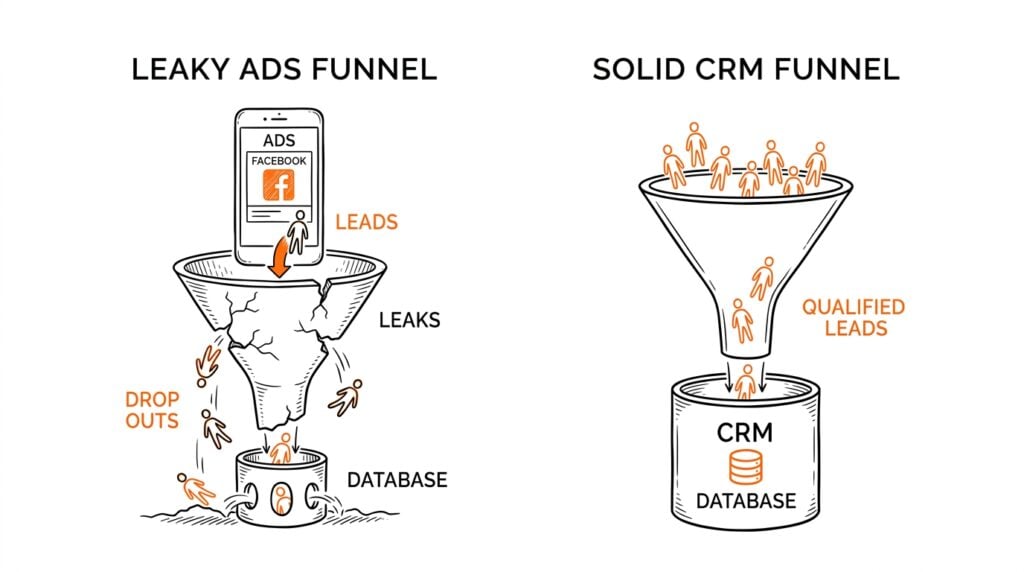
Keeping loan leads and real estate buyers separate requires building two distinct pipeline tracks in the CRM. Route mortgage applications to a strict pre-approval follow-up sequence while sending open house visitors to a neighborhood listing sequence.
A typical dual licensed real estate agent might mistakenly dump every lead into the same email newsletter. Someone wanting a simple pre-approval suddenly receives an email about a weekend open house they do not care about. Meanwhile, a listing prospect gets a dense email about FHA loan limits. Both leads are lost. Read about setting up a proper GoHighLevel buyers agent workflow to see how this separation works.
Tagging every lead the moment they enter the system is essential. Build two separate worlds using GoHighLevel or the current CRM.
| Feature | Real Estate Sequence | Mortgage Sequence |
|---|---|---|
| Goal | Schedule a showing or listing appointment | Complete the loan application and submit docs |
| First Message | “Are you free Thursday to see the house on 5th Ave?” | “I sent the secure link for your W2s. Did you get it?” |
| Content Focus | Local market data alongside school zoning facts. Recent property values are also effective. | Rate updates mixed with loan program changes. Credit building tips work well here too. |
| Pacing | Frequent texts around weekends | Milestone updates and Tuesday check-ins |
Segmenting the database makes automated follow-up sound like a relevant, human conversation.

How do you feature partner lenders or co-marketing without getting hit with a RESPA violation?
Avoiding RESPA violations in co-marketing demands strictly documenting a 50/50 cost split for all shared advertising. Running a $1,000 Facebook ad campaign with a partner lender means both parties must pay exactly $500 while keeping the receipts.
Professionals get into serious trouble when a lender offers to pay for flyers or social media ads in exchange for referrals. This action represents an illegal kickback under RESPA. Sharing space on a billboard or a digital ad requires paying the exact proportional share of the cost.
Protecting the business demands documentation. Printing open house flyers that feature real estate branding on top and a loan officer’s branding on the bottom means the loan officer cannot foot the entire print bill.
Calculate the exact surface area or time share of the advertisement. If a face and logo take up 50% of the flyer, pay 50% of the invoice. Pay from a business account while keeping the invoice in a dedicated compliance folder. Showing this to an auditor instantly proves fair market value was paid for the marketing share.
What daily system handles dual-license nurture so you spend less than 30 minutes on marketing?
A daily system built on pre-approved templates and automated CRM triggers handles dual-license nurture in under 30 minutes. Review the daily tasks, and approve the automated texts. The system will send the right compliant message to the right lead.
Managing both the real estate and mortgage sides of the transaction often requires working 60 hours a week. Finding time to write custom, compliant emails for every single lead is nearly impossible. However, ignoring the database causes leads to go cold. The average open rate for real estate email marketing sits around 19.17%, assuming messages actually get sent. Learn more about how to automate real estate follow up without sounding like a robot.
Using a platform like nurtureBEAST fixes this issue. The platform already understands the difference between a loan roster and a buyer pipeline. It handles Sphere of Influence newsletters and SMS follow-ups automatically. For instance, an automated mortgage follow-up SMS script might look like this:
Hi [First Name], checking in on your pre-approval application. I just need your recent pay stubs to lock in today’s rates. Do you have a few minutes to upload them this afternoon?
Checking the leads who replied to yesterday’s automated texts takes about 15 minutes each morning. You can then record a quick, compliant video update for active buyers in another 15 minutes. The software handles everything else. This approach keeps the brand visible while maintaining perfect compliance.
Frequently asked questions
What is the biggest risk for a dual licensed real estate agent?
The biggest risk comes from blurring the lines between selling a home and originating a loan in public marketing. Regulators look for consumer confusion and potential steering. Clear disclosures on every post prevent these costly misunderstandings.
Can a dual licensed real estate agent share marketing costs?
Yes, sharing costs with a partner is allowed as long as the expense is split proportionally. If a lender occupies half the space on a printed flyer, they must pay exactly 50% of the total printing invoice. Keeping receipts in a compliance folder is critical.
How often should I post about mortgage rates?
Following a 60/30/10 content split ensures compliance and engagement. Dedicate 60% of marketing to educational mortgage content while keeping specific loan claims out of property listing posts.
Do social media ads require licensing disclosures?
Every standalone piece of marketing needs clear disclosures to remain compliant. Whether posting an Instagram reel or running a Facebook ad, the NMLS number and state licensing lines must be legible directly on the graphic or in the primary caption.
Related reading
- GoHighLevel Buyer’s Agent: 6-Stage Pipeline Setup Guide – Shows you exactly how to separate your buyer leads from your mortgage pipeline.
- Real Estate Email Marketing: 4 Email Types That Work – Breaks down the specific emails you should send to keep your database engaged.
- Automate Real Estate Follow-Up: 3 Tracks to Build First – Helps you build the automated sequences that catch leads before they ghost you.
The Bottom Line
Being a dual licensed real estate agent gives you a massive advantage in the market, but it also puts a target on your back for compliance audits. Sloppy marketing and mixed messaging jeopardize the entire operation. A single mistake on social media or in an email sequence can put both licenses at risk.
Separating content and splitting CRM pipelines protects the business, especially when mandating strict disclosures on every template. Delegating safely to a VA allows automated systems to do the heavy lifting without triggering violations. Agents who implement these compliance systems typically save over 5 hours per week on marketing tasks while completely eliminating the risk of $10,000+ regulatory fines.
If you want to see how nurtureBEAST handles compliance and dual-pipeline follow-up – take the quiz to find out what’s killing your real estate business or visit nurturebeast.com.