⏱ 21 min read
Published August 20, 2026
How to spend a realtor marketing budget to close deals?
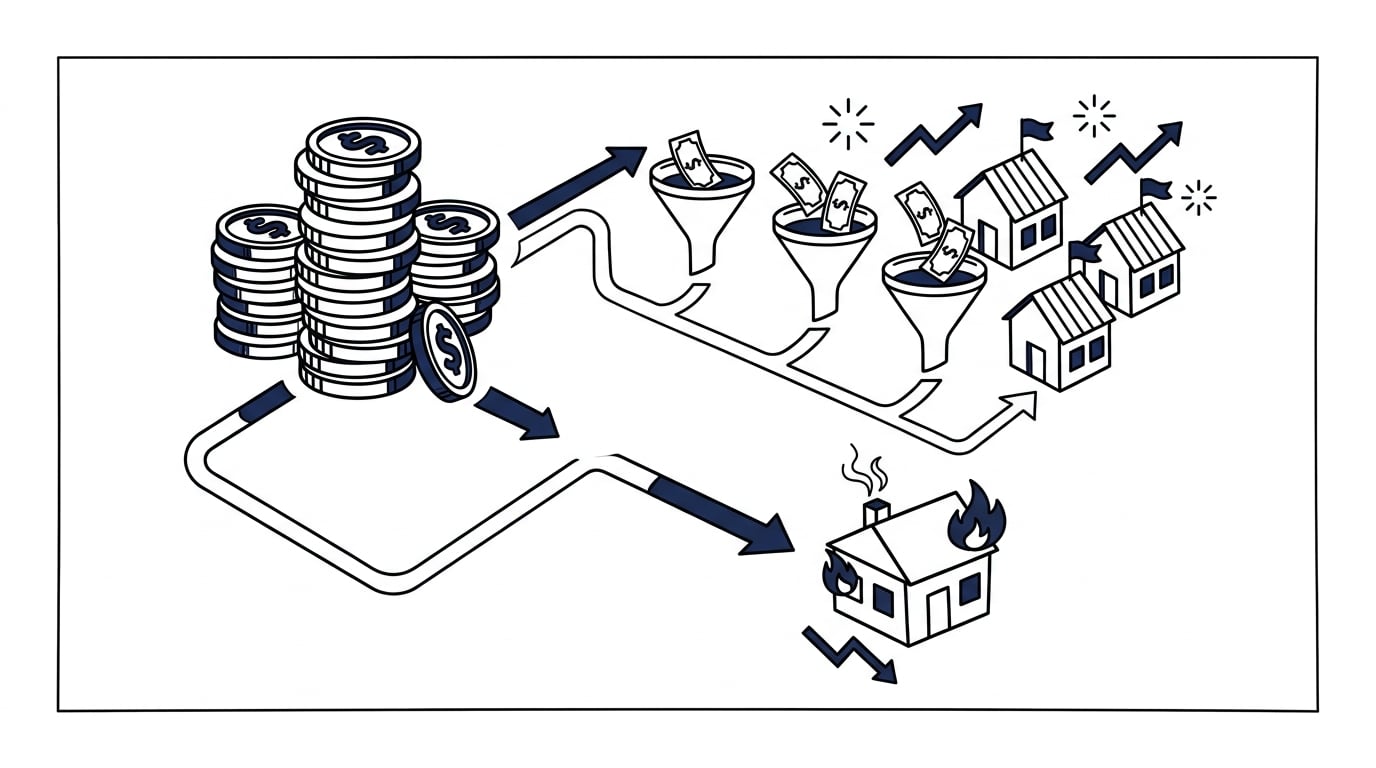
Most agents who land a $10,000 realtor marketing budget hand it straight to lead portals, hoping for quick wins. Sadly, they often watch hundreds of cold leads ghost them while their bank account hits zero. Instead of blindly buying expensive internet contacts, top producers invest this money into reliable setups that build trust, engage local homeowners, and revive the past clients already sitting in their phone.
- A $10,000 realtor marketing budget yields the highest return when split across database reactivation, essential software, content creation, and retargeting ads.
- Buying cold portal leads requires a massive setup to see a return due to intense competition and low response rates.
- Reactivating an existing database of 500 contacts costs a fraction of new lead generation and often surfaces deals within 30 days.
- Pairing a virtual assistant with AI tools can generate 90 days of localized content for under $2,000.
- Tracking marketing spend requires a simple spreadsheet measuring cost per lead, cost per appointment, and return on investment over a six-month window.
Why do most agents waste a $10,000 marketing budget on cold leads?
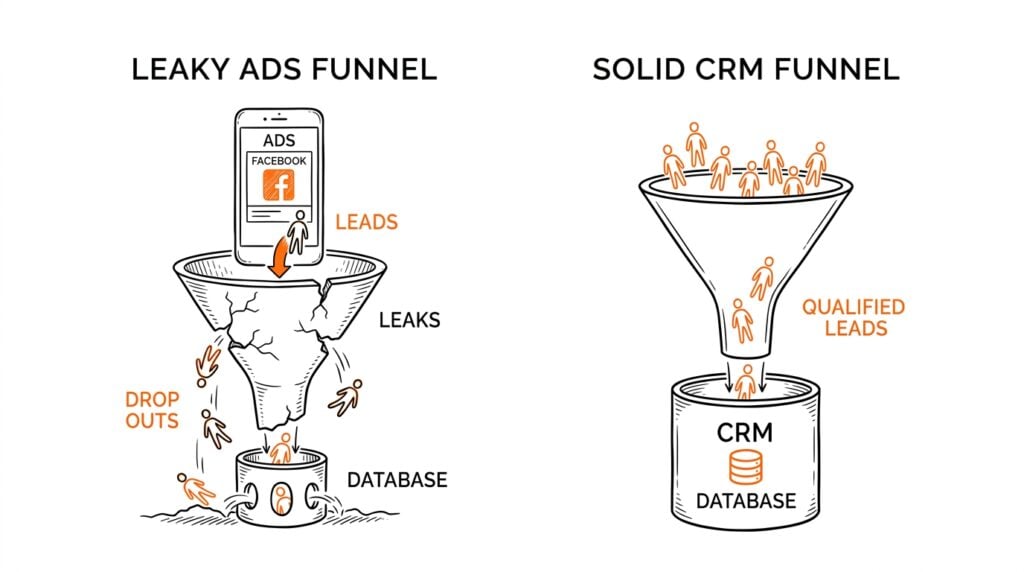
Agents waste their realtor marketing budget on cold leads because they buy into the myth that volume equals closed deals. Buying 200 portal leads at $50 each burns cash quickly, especially when 80% of those contacts ignore your texts on day one. Succeeding with these leads requires a massive team and perfect timing to see a positive return.
Agents feel pressure to generate immediate business when cash hits the bank account. Handing $10,000 to Zillow or Realtor.com seems like an easy fix until the leads arrive and prospects never respond. If a lead registers on a portal at 9:00 PM and you reach out five minutes later, they likely already spoke to the agent who called at 9:01 PM. This kicks off a six-month chase for a ghost. The National Association of Realtors reports that the typical agent earns 16% of their business from repeat clients and 20% through referrals from past clients. Meanwhile, portals sell the exact same internet lead to three other agents in your zip code. This creates a race to the bottom where you offer to show houses to people lacking pre-approval and loyalty. “You cannot build a predictable pipeline on cold portal leads unless you have the setup to call them within two minutes of registration and follow up for six months,” says Rohan Attravanam, founder of nurtureBEAST. Soon, the money vanishes without a single closed deal to show for the effort. Buying stranger leads only works when you have the systems to catch them.
How much of your $10,000 budget should go to software and tools?
Set aside exactly $2,000 of your realtor marketing budget for software and tools. This covers a reliable CRM, basic video editing software, and an email marketing platform for a full year. Avoid shiny apps that complicate your daily workflow. You need a centralized system to manage follow-up.
| Budget Category | Recommended Spend | Primary Purpose |
|---|---|---|
| Core CRM Platform | $1,200 | Database management and follow-up sequences |
| Video & Content Tools | $400 | Editing software and AI generation credits |
| Communication Add-ons | $400 | Dedicated phone lines and email sending limits |
| Total Software | $2,000 | Year-round operational foundation |
Many agents buy subscriptions they never open, like paying $99 a month for a landing page builder used twice all year or $150 a month for a mass email tool that lands in the spam folder. Cancel them before the monthly bills stack up to $500. A solid follow-up process needs a single system, not a dozen separate logins. A good CRM handles the database, texts, and emails in one place. GoHighLevel is a strong option for solo agents who want everything connected. Allocate $2,000 to lock in your core software tools for the entire year. This gives you the runway to focus on calling and meeting clients instead of troubleshooting connecting apps. It also prevents shiny object syndrome because your system is already set. Use a top real estate CRM to centralize your operations.
Why is warming up your existing database cheaper than buying new leads?
Warming up your database is cheaper because those contacts already know your name. Spending $1,500 on database reactivation can pull three deals out of 500 old contacts sitting in your phone. You skip the trust-building phase entirely and move straight to finding out their current timeline.
Most agents sit on a goldmine of old leads while swiping their credit card for new ones. Past clients, open house visitors from last fall, and friends of friends inside your phone contacts already know you, even if they forgot you sell real estate. Reaching them costs pennies compared to buying a fresh lead. You can run a simple re-engagement campaign today by sending a text offering a neighborhood market update about recent zoning changes. Another option is mailing a piece to past buyers showing how much equity they gained since 2020.
To spark immediate conversations, try sending this exact script to your contact list right now:
Database Reactivation Text Script:
Hey [First Name], saw a house list in your neighborhood for [Price]. Made me think of you. You guys still loving the backyard?
That simple question sparks a conversation, which naturally leads to a referral. According to the National Association of Realtors, 89% of buyers would use their agent again or recommend them to others. Organizing 500 people in your database unlocks massive untapped commission. Set up an automated database reactivation sequence to make this effortless.
How can your VA use AI to build 90 days of content for under $2,000?
Your VA can use AI to build 90 days of content by turning one local market report into dozens of social posts and emails. This costs under $2,000. It keeps you top of mind without hiring an expensive agency. AI makes your virtual assistant highly efficient and valuable.
Agents often think they need a full production crew to create local content. Hiring a local agency for $3,000 a month usually results in generic stock photos of keys on your Instagram with zero engagement. Instead, turn your virtual assistant into a massive asset. Simply record a five-minute video explaining why home values in the Oak Park neighborhood jumped 12% last quarter after the school boundary shift. Your VA takes that single video and runs it through an AI transcription tool.
Give your assistant this prompt to generate your marketing materials:
AI Prompt Template for Your VA:
Take this 5-minute transcript about [Local Neighborhood]. Pull out the 3 most controversial or surprising points. Draft one 300-word email newsletter and three short social media captions focusing strictly on how this affects home values for current residents.
Skip the generic “Happy First Day of Autumn!” posts and answer the hyper-local questions prospects actually search for. Explain why the school zoning change on Oak St dropped home prices by 4%. Spending $2,000 pays the VA for their time and the required software subscriptions so they can handle the formatting, scheduling, and posting. This delivers three hyper-local posts a week that answer real questions buyers and sellers in your market ask. A real estate VA equipped with AI replaces the need for a large marketing team.

Should you spend your remaining $4,500 on local retargeting ads?
Yes, spend your remaining $4,500 on local retargeting ads. Running simple $15-a-day video ads to local homeowners who visited your site builds trust faster than cold calling. Consistent online visibility establishes you as the local authority long before a physical meeting takes place.
With your software set, your database active, and your content flowing, it is time to amplify the message. Do not run ads asking strangers to buy a house. Instead, run ads to people who already interacted with your content. When a local homeowner watches your video about the school boundary shift on Oak Street, you spend $15 a day to show them a second video explaining three upcoming developments on 5th Avenue that will change local traffic patterns by 2026. Cold calling expired listings takes hours of rejection, while retargeting works in the background while you sleep. Once a prospect visits your website to read a market report, a tracking pixel catches them. For the next 30 days, they see your market update videos before every YouTube video they watch. This makes you unavoidable in a specific zip code. This $4,500 portion of your realtor marketing budget lasts for months at a $15 daily spend. It keeps your face in front of the people most likely to transact, warming them up slowly until they are ready to call you for a listing appointment.
How do you track if your $10,000 budget is actually making you money?
You track your $10,000 realtor marketing budget using a simple spreadsheet to measure the return. You monitor the cost per lead, cost per appointment, and total commission earned over a six-month window. This math tells you exactly which strategy generated the highest return on investment.
Agents often look at their bank account balance to measure marketing success, which tells you nothing about which specific strategy worked. You need to know exactly where the closed deals originated.
Use this basic framework to build your tracking system:
ROI Tracking Spreadsheet Columns:
- Lead Source (e.g., Database Reactivation, Retargeting Ads)
- Total Spend (Over 90 days)
- Appointments Set
- Cost Per Appointment (Total Spend ÷ Appointments Set)
- Closed GCI (Gross Commission Income from that source)
If you spend $1,500 on a VA and get four appointments, your cost per appointment is $375. Closing one of those for a $9,000 commission proves the system works, so you scale it up. Alternatively, if a lead source costs $1,000 per appointment and you only close one out of ten, you are losing money. A database reactivation that costs $1,500 and generates three appointments leading to one $12,000 commission yields a massive return. Conversely, if retargeting ads cost $4,500 and generate zero appointments after three months, turn them off immediately. Make decisions based on actual appointments and signed contracts rather than vanity metrics like likes and video views. Treat the money like an investment portfolio where you cut the losers and feed the winners.
What does a complete $10,000 marketing plan look like step by step?
A complete $10,000 realtor marketing budget allocates $2,000 for core CRM software, $1,500 for database reactivation, $2,000 for VA content creation, and $4,500 for local retargeting ads over 90 days. Every dollar goes toward building local relationships and closing deals instead of chasing cold internet clicks.
Avoid spending the entire amount on day one. Map the spend over a 90-day schedule starting with a month dedicated strictly to foundation. During this first month, buy the CRM, organize the messy contacts, and launch the database reactivation campaign for a total of $3,500. Take time to clean up your messy CRM database so the emails actually reach the inbox. The second month focuses on content production where you record raw videos and your VA uses AI to repurpose them into multiple formats. You spend $1,500 on VA hours and software to start posting consistently across channels. The third month focuses on amplification by turning on $15-a-day retargeting ads targeting the people watching your local content. The remaining $5,000 covers ad spend and ongoing VA support over the next several months. As this runs, your daily job shifts from wondering where the next lead will come from to calling people who replied to the VA’s email newsletter. Afternoons are spent meeting homeowners who watched your retargeting ads. The budget does the heavy lifting of finding interested prospects so you can step in and close the deal. This builds a machine that works for you, avoiding the trap of a one-time marketing blast that fades away in two weeks.
Frequently asked questions
How quickly will I see a return on my marketing spend?
Most agents see the fastest return from their database reactivation campaigns, often landing an appointment within the first 30 days. Longer-term strategies like local retargeting ads typically take three to six months to consistently produce listing appointments.
Can I run this plan without hiring a virtual assistant?
Yes, but doing it alone means you will spend hours editing videos, writing emails, and scheduling posts instead of meeting with clients. Hiring a virtual assistant allows you to focus purely on recording short videos and closing deals while they handle the repetitive publishing tasks.
What if I have a smaller marketing budget?
If you have less than $10,000, start by investing solely in a reliable CRM and database reactivation. This is the cheapest way to pull immediate deals out of your existing contacts before spending money on ads or content creation.
Related reading
- Stop Renting Real Estate Leads: 4 Hidden Costs to Know – Explains why buying portal leads drains your budget and hurts your long-term pipeline.
- Database Reactivation: 5-Touchpoint Plan for Realtors – Gives you the exact messages to send to wake up the old leads sitting in your phone.
- 4 Workflows to Use AI to Help Your Real Estate VA Work Faster – Shows you how to train your assistant to build local content without an expensive agency.
The Bottom Line
A $10,000 realtor marketing budget is enough to build a predictable, repeatable business if you stop handing it to lead portals. You buy the right software, wake up the contacts already sitting in your phone, equip your VA with AI to produce local content, and run cheap retargeting ads to stay top of mind. By focusing every dollar on building trust, you ensure your $10,000 budget reliably yields a measurable outcome: 10 transactions over the next six months.
If you want to see how nurtureBEAST handles your database follow-up and content engine – take the quiz to find out what’s killing your real estate business or visit nurturebeast.com.