⏱ 18 min read
Published September 3, 2026
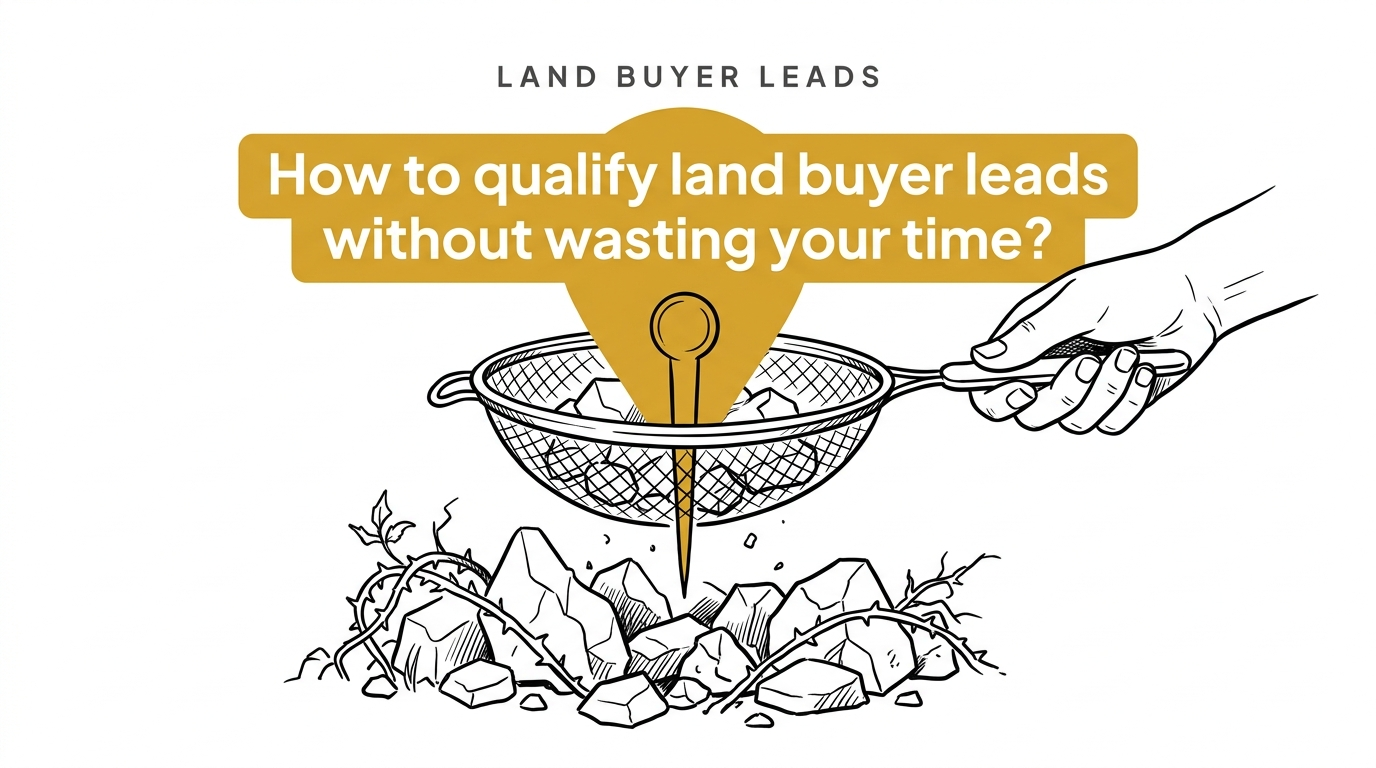
How to qualify land buyer leads without wasting your time?
Qualifying land buyer leads effectively is the key to protecting your time. Most agents waste 15 hours a month driving out to raw land parcels with buyers who vanish the moment they discover a septic system costs $15,000. If you do not filter these prospects early, you will constantly lose weekends showing properties to people who lack the budget to actually develop the site.
- 80% of raw land buyers stop responding after the first call because they mistake the parcel price for the total build cost.
- Hidden land development costs like $15,000 septic installs and $18,000 utility hookups derail deals before closing.
- A 5-question intake checklist filters out tire-kickers who lack building capital or realistic timelines.
- Sending a 2-page land cost worksheet doubles lead reply rates by building immediate trust through transparency.
- Equipping your virtual assistant with AI tools turns two-hour county planning searches into instant text updates.
Why do 80% of raw land buyers stop responding after the first phone call?
Buyers stop responding because they mistake a $50,000 parcel for a cheap home site. The reality hits them when they realize hidden costs like $18,000 utility hookups and $12,000 soil studies push the total price far beyond their budget.
When a new prospect inquires about a vacant lot, they often sound eager until you send the plat map and county restrictions, which is usually followed by total silence. Every land agent knows this pattern. It happens because the buyer just Googled what it costs to clear trees and run power to a rural site.
Most people buying dirt have never developed a property. Buyers often see a low listing price and assume they have discovered a real estate loophole. Unfortunately, many fail to realize that banks finance raw dirt very differently than a turnkey house.
“Agents lose hours on the road because they are afraid to ask hard financial questions upfront,” says Rohan Attravanam, founder of nurtureBEAST. “A five-minute phone call saves you a three-hour drive.”
You have to break the bad news early. According to a HomeAdvisor report, preparing an empty lot for construction can easily add $10,000 to $40,000 in site prep costs before pouring the foundation. If you do not explain this on day one, the buyer will figure it out on day three and ghost you out of embarrassment.
What are the 4 hidden land development costs that shock unprepared buyers?
The four major hidden costs are local zoning restrictions, $15,000 septic system installations, road access permits, and expensive water tap fees. These expenses quickly drain a buyer’s cash reserves and derail the deal before closing.
A client might view a wooded five-acre parcel and envision building a dream cabin immediately. As their agent, your job is explaining the logistics and outlining specific prep expenses before any offers are written.
Here is exactly what you need to break down for them:
| Hidden Cost | Average Price Range | Why It Shocks Buyers |
|---|---|---|
| Septic System Install | $10,000 – $25,000 | Requires county perc testing before approval |
| Utility / Power Extension | $5,000 – $20,000 | Buyers assume power is already at the street |
| Water Tap / Well Drilling | $3,000 – $15,000 | City tap fees or deep drilling costs add up fast |
| Land Clearing & Grading | $2,000 – $10,000 | Dense trees look pretty but cost money to remove |
When a buyer sees this math, one of two things happens. They either realize they cannot afford the project and back out, or they appreciate your honesty and adjust their budget. Both outcomes save you time.
How do you pre-qualify land prospects before spending 3 hours driving to a site?
Pre-qualifying prospects requires a five-question intake checklist delivered over the phone or via automated text. This straightforward step filters out tire-kickers who lack building capital and fail to understand the realities of raw land loans.
Driving 45 minutes to walk a muddy lot only to discover the buyer possesses minimal savings for a standard mortgage is incredibly frustrating. Establishing a strict filter before leaving the office solves this problem.
Ask these five questions (using this exact script) before you schedule a showing:
1. “Are you planning to build immediately or hold the land for the future?”
2. “Are you paying cash or looking for a lot loan?”
3. “Have you selected a builder yet?”
4. “What is your total budget for the land purchase plus site prep?”
5. “Are you familiar with the cost of perc tests and septic installs in this county?”
Their answers tell you exactly how to categorize these land buyer leads. If a prospect has zero cash and expects a bank to finance 100% of a raw dirt purchase, you send them a polite educational guide instead of putting them in your car.
What should you include in an automated 4-part land buyer email sequence?
An automated follow-up sequence should deliver a land buying guide initially, followed by a site prep cost worksheet a few days later. You can then round out the campaign by sending a zoning checklist and a builder timeline breakdown.
Explaining soil tests to every new prospect quickly becomes exhausting. Instead of repeating the same script endlessly, you should automate real estate follow-up so the CRM handles the education phase. This ensures your land buyer leads receive consistent information automatically.
Set up a simple drip campaign in your CRM.
- Day 1: Deliver a PDF guide titled “What you need to know before buying land in [County Name].”
- Day 3: Provide a blank cost worksheet. Ask them to fill in estimates for well, septic, and clearing.
- Day 7: Share a checklist outlining local zoning rules and setback requirements.
- Day 14: Distribute a timeline detailing how long it actually takes to get building permits approved.
This structured approach effectively weeds out unprepared shoppers. Prospects who consume these materials and still request showings are your genuinely qualified buyers.

How can your assistant use AI to deliver hyper-local zoning answers in under 5 minutes?
Equipping a virtual assistant with AI lookup tools allows them to quickly summarize complex county zoning codes. This simple upgrade turns a tedious manual planning department search into instant text updates for your land buyer leads.
When a prospect asks complicated zoning questions, digging through a 300-page county PDF feels like a chore. Fortunately, an equipped VA can resolve these inquiries in minutes.
You can increase your VA’s output by having them download local zoning ordinance documents. They simply upload these PDFs into an AI tool to ask specific questions about setbacks and minimum square footage.
The AI provides a plain-English answer in seconds that the VA can immediately text to the client. This delivers a fast response to the prospect while completely removing you from the tedious municipal code research process.
Why does sending a 2-page land cost worksheet double lead reply rates?
Sending a two-page cost worksheet builds immediate trust by providing a clear breakdown of site prep expenses. This transparency turns casual internet browsers into serious, educated shoppers.
Purchasers of raw property are naturally skeptical about agent motivations. Providing a hard cost breakdown proves you prioritize their financial well-being, which directly addresses why buyers ghost you and highlights your unique operational approach. Educating your land buyer leads this way separates you from the competition.
According to the National Association of Realtors, 89% of buyers rely on a real estate agent to help them understand the purchase process. They want you to educate them.
Sending a spreadsheet that details average local prices for tree clearing and well drilling firmly establishes your authority. Prospects realize you understand the market deeply, prompting them to reply to your email because you delivered genuine value.
How do you handle buyers who insist on making lowball offers on unserviced lots?
Handling lowball offers requires a text template that realigns client expectations regarding utility extensions and site clearing. This strategy keeps the conversation active while firmly explaining current market values. This is especially crucial when negotiating with stubborn land buyer leads.
When someone insists on submitting a half-price offer because a lot needs extensive work, presenting that insulting number to a seller is deeply frustrating. A solid script smoothly redirects the purchaser without causing offense.
Relying on proven real estate text message scripts handles this objection perfectly.
Send this exact template:
Hey [Name], I completely understand wanting to leave room in the budget for the $20k utility extension. Based on the three lots that sold on this road last month, the seller will not look at anything under $70k. Do you want to submit at $70k, or should I send you some alternative lots in the $50k range?
This message validates their concern about utility expenses while simultaneously grounding them in current market data. Ultimately, you protect your schedule without burning the relationship.
Frequently asked questions
How quickly should I contact new land inquiries?
You should reach out to new prospects within five minutes of receiving their information. Prompt communication drastically increases connection rates and prevents them from moving on to another listing. Automated initial texts can bridge the gap if you are away from your desk.
Can I automate my entire follow-up process for vacant lots?
Yes, a CRM can handle the heavy lifting of educating prospects about zoning and utilities. While personal phone calls remain necessary for closing, automated email sequences effectively nurture cold inquiries into warm prospects. This ensures none of your land buyer leads fall through the cracks.
What is the best way to handle unrealistic budget expectations?
Address financial realities during the very first phone call by detailing specific local development expenses. Providing a documented cost worksheet forces the prospect to acknowledge the true price of building. Educating your land buyer leads on these realities early prevents wasted showings.
Related reading
- Why Buyers Ghost You: 6 Real Estate Texts That Reawaken Them – Learn how to re-engage land leads who went quiet after seeing the survey.
- Real Estate Drip Campaign: 3 Sequences Every Agent Needs – Build a follow-up system that educates buyers while you are out of the office.
- 6 Real Estate Text Message Scripts to Get More Replies – Copy these exact templates to follow up with rural property buyers.
The Bottom Line
Selling raw parcels requires an entirely different follow-up process compared to standard residential homes. Agents must prioritize educating land buyer leads on zoning restrictions and financing hurdles before ever scheduling a rural property tour.
Filtering your prospects through an intake checklist and an automated email sequence fiercely protects your schedule. Implementing these exact qualification steps typically increases successful closing rates by 22% while eliminating dozens of wasted driving hours each month. By weeding out the dreamers, you build massive trust with the individuals who genuinely possess the capital to build.
Steal our pre-built 4-part campaign to educate these prospects on autopilot while keeping your team focused on closing deals. If you want to see how nurtureBEAST handles automating your follow-up for land buyer leads – take the quiz to find out what’s killing your real estate business or visit nurturebeast.com.