⏱ 19 min read
Published October 1, 2026
Should you join a realtor team when you need more leads?
Many new agents decide to join a realtor team specifically to secure immediate leads, hoping to jumpstart their careers. However, they soon realize they have traded half of their future income and full ownership of their database for contacts they could have generated and nurtured on their own. Instead of building lasting personal equity, they are effectively renting their career from someone else.
- Taking a 50% team split on a $10,000 commission check drops your take-home pay to just $3,000 after brokerage fees and taxes.
- Most team contracts state that every contact entered into the shared CRM remains the property of the team lead.
- Setting up simple email and text systems turns open house visitors into steady deals without sharing your commission.
- Equipping an assistant with simple AI tools lets a solo agent run a 30-deal pipeline at a fraction of the cost of a team split.
Why do new agents join a team just for leads?
Most new agents sign a 50/50 split because they need income fast and lack a follow-up system to turn open house visitors into clients. They trade high splits for the promise of instant business and pre-booked appointments.
Getting a real estate license rarely results in immediate phone calls from ready buyers. Brokerage training typically pushes agents to cold call friends and family, which often feels awkward and uncomfortable. Most agents simply want to help people find homes without aggressively bothering their personal network.
Joining a team looks like the fastest way to start those conversations. A team lead usually provides internet leads and CRM access. They might also offer office space, making it feel like a safe environment to learn the industry.
However, those leads come at a massive cost to long-term career growth. Essentially, an agent in this position is renting a career rather than building one. Agents who stop relying on brokerage leads can establish a business they actually own, provided they learn proper follow-up techniques.
What happens to your commission when a team provides the lead?
Taking a 50% team split on top of a 20% brokerage cut turns a $10,000 commission check into $3,000 before taxes. The workload remains identical, but the payout shrinks drastically.
Imagine sitting at the closing table with buyers after handling home inspections and negotiating roof repairs. When the appraisal came in low, keeping the buyer calm was critical. Throughout the transaction, driving across town multiple times to let contractors inside was just part of the job.
A large settlement check should follow that level of effort. Then the title company sends the settlement statement.
The math is brutal for buyer agents on a team. Closing a $330,000 house might generate a $10,000 gross commission. The team lead takes $5,000 right off the top for providing the initial internet lead. Next, the brokerage takes 20% of the remaining half, leaving $4,000. After setting aside money for taxes, the final take-home pay is less than $3,000. Before you join a realtor team, it is critical to understand how giving away half of the money makes it very hard to survive.
Working nights and weekends for minimum wage is not sustainable. The median gross income of Realtors was $56,400 in 2022 according to NAR. Keeping the full commission is essential for business growth.
Who actually owns your client database when you leave a team?
Most team agreements state that every contact entered into the team CRM stays with the team lead when you walk away. Years of hard work go toward building an asset that belongs to someone else.
An agent might spend two years grinding on a team, helping 30 families buy homes and building strong relationships. Learning about their kids and their dogs creates a sense of personal connection.
It is natural to assume those buyers are personal clients because they know your name and have your cell phone number saved.
Read the independent contractor agreement very carefully. The team lead pays for the CRM subscription, meaning they own the data inside it. Deciding to leave a real estate team usually means starting over at zero. Exporting contacts is strictly forbidden, leaving agents unable to email past clients from a new address.
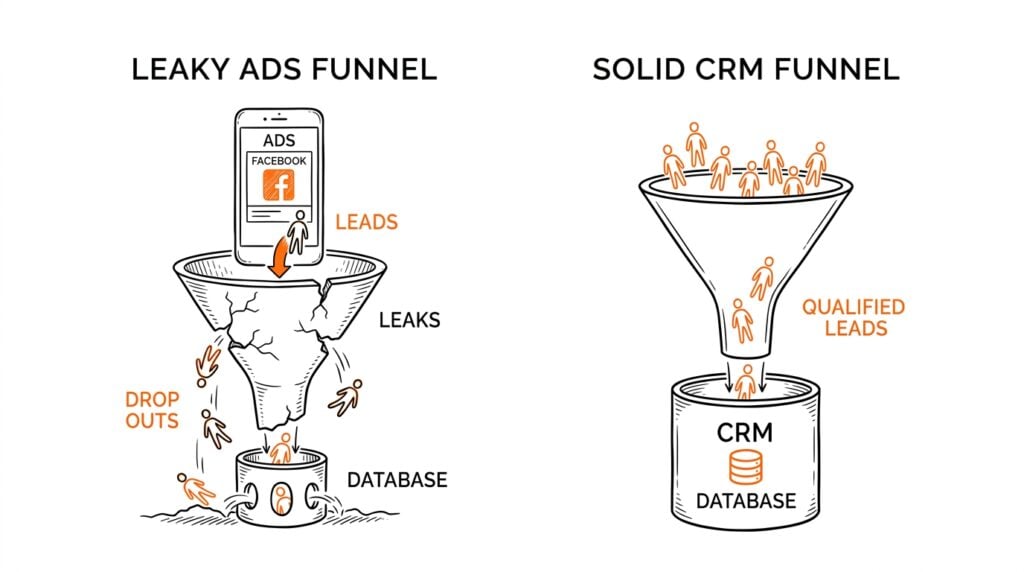
“Agents don’t have a lead problem. They have a follow-up problem,” says Rohan Attravanam, founder of nurtureBEAST. “Your database is a goldmine. You are just giving your gold to someone else.”
Good real estate database management is the only way to build a sustainable business. Owning the CRM means owning the relationships. Those considering whether to join a realtor team often overlook this critical detail.
Are you giving away your brand equity by building content for a team?
Posting neighborhood tour videos on a team channel builds the team lead’s authority while leaving your personal brand at zero. Someone else becomes famous in the local market based on your effort.
Shooting a video about new downtown restaurants might require four hours of scripting and filming outside. After that, editing the clips on a phone takes even more time. The final result looks great and pulls a thousand views on YouTube, prompting viewers to call the office to ask about moving to that specific area.
Who do those leads ask for when they call? They ask for the name on the channel. Even though your face is on the video, the team lead gets the brand equity and the phone calls.
When people search your name on Google, nothing comes up, making you invisible in your own market. Solo agents need complete ownership of their content. Shooting a 2-minute video explaining why home values in the Oak Park neighborhood jumped 12% last quarter after the school boundary shift should be posted on a personal channel. Building a recognizable name ensures people call directly. When you join a realtor team, hard work often builds someone else’s legacy.

How can a solo agent build a lead pipeline without a team lead?
Setting up automated email and text follow-up turns 20 open house visitors a month into steady deals without sharing half your commission. A reliable system is the only requirement for staying in touch with people.
Hosting an open house for three hours on a Sunday might bring five couples through the front door. Four names and phone numbers end up on a paper sign-in sheet.
Calling them on Monday morning often results in voicemail. As the week gets busy showing houses to active clients, remembering to call those leads again on Thursday slips through the cracks, and they go completely cold.
Buying internet leads is not necessary to build a pipeline. Running follow-up automatically solves the problem. Instead of choosing to join a realtor team for provided contacts, setting up an automated sequence handles the heavy lifting.
Create a simple text sequence for open houses. A visitor signs in on a tablet, and the system texts them 10 minutes after they leave.
Use this proven text script to follow up:
“Hi [Name], thanks for stopping by the open house on Main St! I know you mentioned you’re looking for a larger backyard. Would you like me to send over 3 off-market listings in the neighborhood that have bigger lots?”
The system then sends an email on Tuesday with three similar houses in the same zip code. The real estate lead generation process relies entirely on consistent communication over a long period. Keeping 100% of the commission is the reward when they finally buy a house six months later.
How does equipping your assistant with AI outperform joining a team?
Giving your assistant simple AI tools for content and follow-up lets a solo agent run a 30-deal pipeline without paying team splits. AI makes capable humans highly effective.
Administrative work easily becomes overwhelming. Juggling three active buyers, writing two listing descriptions, and sending a weekly market newsletter to the database feels impossible to manage alone.
Joining a team might seem like the only way to get support and reclaim free time.
A team lead is not required for operational help. Hiring a virtual assistant equipped with the right AI tools provides the necessary support.
A well-trained assistant can draft emails and write social media posts. They can also manage calendar scheduling in half the time. This frees the VA from mundane tasks so they can call warm leads. Combining a VA with AI creates an unstoppable engine for a real estate business. The output matches a big team, but the agent keeps the full commission check.
What should you calculate before signing a team contract?
Comparing the $40,000 paid in annual team splits against the $3,000 cost of your own CRM system reveals the true cost of team leads. Building your own system is much cheaper than renting one.
A team lead might promise an extra 10 closings this year just for joining, pointing to a shiny dashboard full of incoming internet leads.
The offer sounds appealing initially because those 10 extra deals would boost overall income.
Run the numbers first and look at the real costs of the split. NAR reports that 26% of Realtors are part of a real estate team. Many agents never evaluate these basic figures before they join a realtor team.
| Expense | Team Structure (50% Split) | Solo Agent (Own System) |
|---|---|---|
| Gross Commission (10 Deals) | $100,000 | $100,000 |
| Split Paid Out | $50,000 | $0 |
| Tech & CRM Cost | $0 | $3,000 |
| Total Cost | $50,000 | $3,000 |
| You Keep | $50,000 | $97,000 |
Paying $47,000 a year just for convenience is a massive tax on the business. Spending $3,000 on a good system makes much more financial sense. Keep the other $47,000 in the bank account where it belongs.
Learn the first steps in real estate team building when the time comes to hire an assistant. Giving away profits to someone else just because a follow-up system is not in place yet is an expensive mistake.
Frequently asked questions
Do I have to join a realtor team to get access to good real estate leads?
No, you do not need to join a realtor team to generate high-quality leads. Solo agents can run local open houses and use automated follow-up systems to capture and convert their own traffic without paying massive splits.
What is a typical commission split when you join a team?
While it varies, many new agents accept a 50/50 split on buyer leads provided by the team. Once you account for brokerage fees and taxes, this structure can reduce your take-home pay to a fraction of the gross commission.
Can I keep my clients if I decide to leave the team later?
In most cases, the team lead retains ownership of any contacts entered into the team’s CRM. Review your independent contractor agreement thoroughly, as leaving often means starting your database from scratch.
Related reading
- Should you leave a real estate team over high lead splits? – Understand the signs that you are outgrowing your team structure.
- Stop relying on brokerage leads and build your own pipeline – Learn how to stop waiting for the phone to ring.
- Real Estate Database Management: 4 Must-Have Pieces – Discover how to organize your contacts to generate consistent deals.
The Bottom Line
Joining a team is the most expensive way to get leads in real estate. Agents who choose this path give up database ownership and sacrifice their personal brand, all while surrendering half their income for a temporary fix. Most realtors do not have a lead problem; they have a follow-up problem. A solo agent operating a strong database alongside an AI-equipped assistant consistently outperforms someone renting internet leads from a team lead. Keep the commission and build a lasting personal asset. By implementing an automated system, a solo agent closing 10 deals retains $97,000 of a $100,000 gross commission, directly increasing take-home pay by 94% compared to a standard 50/50 team split.
If you want to see how nurtureBEAST handles automated follow-up and content systems so you can build your own pipeline without giving away half your commission – take the quiz to find out what’s killing your real estate business or visit nurturebeast.com.