⏱ 19 min read
Published March 30, 2026
Open House Follow-Up: 4 Visitor Types You Must Convert
Last Updated: March 30, 2026
You did the open house. You set up the signs, made the copies, stood there for three hours answering the same questions. You collected a sign-in sheet with 14 names on it. And then – if you’re like most agents – those 14 names sat in a pile until you felt guilty enough to throw them away.
That’s not a lead problem. That’s a follow-up problem. And the agents who figure it out turn open houses into one of their most consistent deal sources.
Key Takeaways
- Most open house leads die not because they weren’t interested – but because agents follow up once and quit
- There are 4 distinct visitor types at every open house, and each one needs a different follow-up approach
- The first 72 hours after an open house are the highest-leverage window you have
- Automation handles the repetitive touches; personal outreach closes the deals
- Every open house contact should enter a long-term database sequence, not just a one-time follow-up attempt
Table of Contents
- Why Open House Leads Die
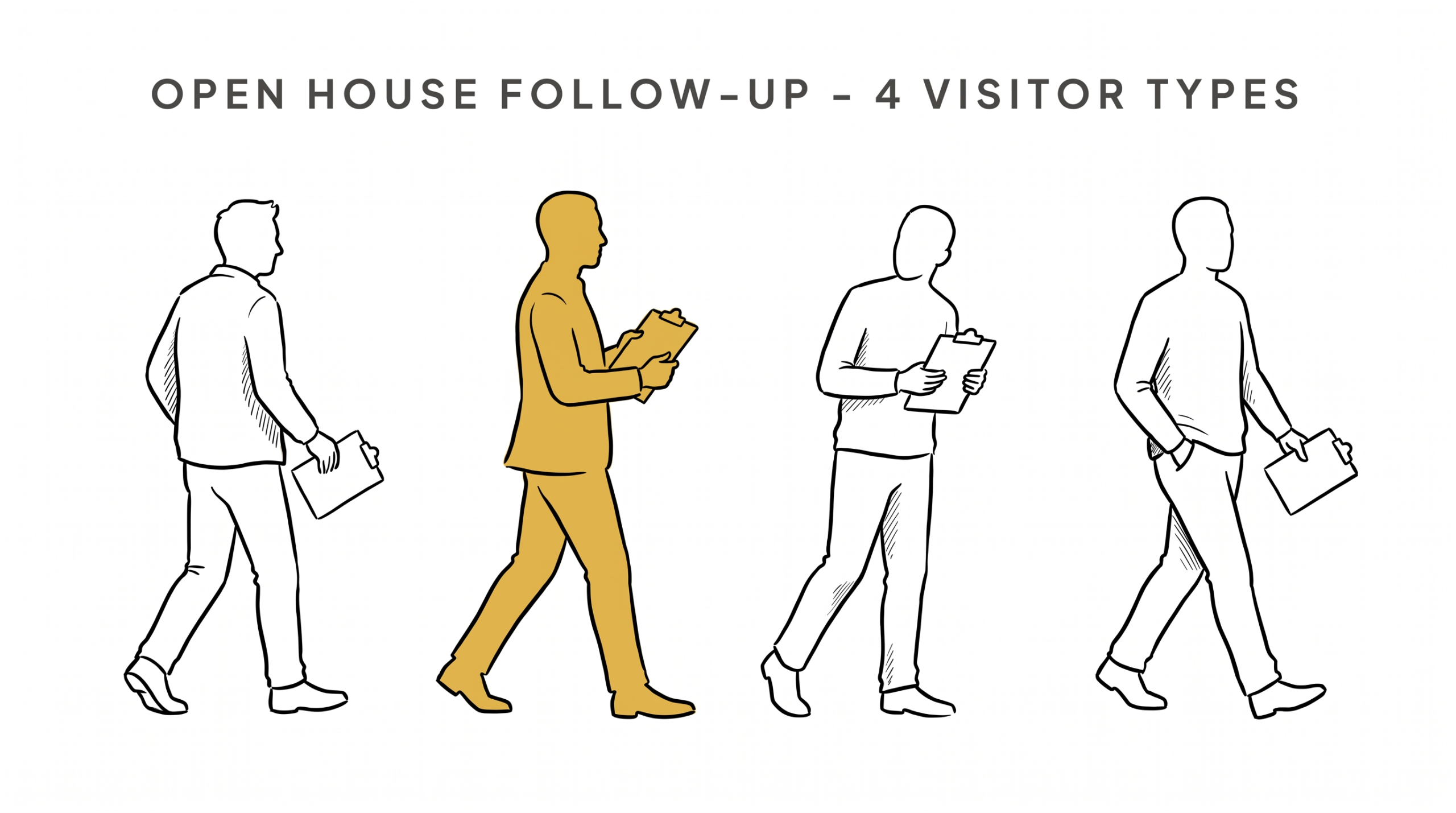
- The 4 Types of Visitors and How to Handle Each
- Capturing Contact Info the Right Way
- The 72-Hour Follow-Up Sequence
- Automating Open House Follow-Up
- Turning One-Time Visitors Into Long-Term Database Contacts
- FAQ
Why Open House Leads Die
The average real estate lead requires 8–12 follow-up attempts. The average agent follows up 1–2 times and stops. It takes an average of 8 follow-up attempts to reach a prospect, yet 44% of salespeople give up after just one (RAIN Group) – open house leads are no exception, and they deserve the same persistent follow-up system as any other lead source.
Open house leads are no different – except they’re warmer than most. These are people who physically showed up to a property on a Saturday afternoon. They are not cold internet leads who clicked a Facebook ad by accident. They took time out of their weekend to be there.
And yet most agents treat them worse than Zillow leads.
Here’s why: there’s no system. After the open house, the agent is tired, has showings to prep for, and “will get to it Monday.” Monday becomes Tuesday. Tuesday becomes next week. By then, those visitors have already signed with someone else or moved on entirely.
The agents who convert open house visitors don’t have more energy. They have a better process – one that kicks in automatically the moment the open house ends.
The 4 Types of Visitors and How to Handle Each
Not every person who walks through your door is the same lead. Before you can follow up effectively, you need to know who you’re talking to.
Type 1: Unrepresented Active Buyers
These are your hottest leads. They’re looking, they don’t have an agent yet, and they showed up in person. Ask directly at the open house: “Are you working with an agent?” If the answer is no, this person goes to the top of your follow-up list. Personal text or call within 24 hours – not an automated email.
Type 2: Potential Sellers
Many open house visitors are neighbors scoping out the market before they decide to list. They’re not going to tell you that. Ask: “Do you live in the area?” and “Have you thought about what your home might be worth right now?” If they live nearby and show any curiosity about pricing, tag them as a seller lead and drop them into a home value nurture sequence.
Type 3: Buyers Already Working With an Agent
These visitors are doing research, not shopping for representation. Be helpful, don’t pitch. If they like the house, their agent gets the co-op. But if they’re 6 months from buying and their agent is doing nothing – people switch. Stay visible.
Type 4: Just Browsing / Neighbors / Curious
They have no near-term intent but they live in the market. Add them to your community newsletter or market update list. One of them will be a seller in 18 months. The agent who’s been showing up in their inbox is the one who gets the call.
Capturing Contact Info the Right Way
If your sign-in process is a paper sheet on a clipboard, you’re already behind.
A digital sign-in – tablet at the door, simple form with name, phone, email, and one qualifying question – does two things: it captures cleaner data, and it lets you tag and segment instantly. Some agents use a simple Google Form synced to their CRM. Others use their CRM’s built-in open house app.
The qualifying question matters. Something like “Are you currently working with a real estate agent?” or “How soon are you looking to make a move?” gives you the context you need to follow up correctly.
Offer something in exchange for the info. Not a prize – a relevant tool. “I’ll send you a full neighborhood market report after the open house.” People who want that are real leads. People who don’t – their info wasn’t going to help you anyway.
Capture: name, phone, email, timeline, agent status. That’s it. Keep the form short or people won’t fill it out.
The 72-Hour Follow-Up Sequence
The first three days after an open house are the most valuable window you have. Here’s how to use them. Open house visitors who receive a follow-up within 24 hours are 4x more likely to convert (NAR) – speed is the single biggest differentiator in open house follow-up, and most agents never achieve it because they have no automated system to handle volume.
Within 2 hours of open house closing:
Send an automated thank-you text or email to every contact. Keep it short: “Thanks for stopping by [address] today – I hope you enjoyed the tour. If you have any questions about the home or the neighborhood, I’m happy to help.” This is not a sales pitch. It’s a touchpoint that keeps you top of mind while they’re still thinking about the house.
Day 1 (24 hours):
Manually reach out to your Type 1 leads – unrepresented active buyers. A personal text, not a template: “Hey [Name], it was great meeting you at [address] yesterday. I know you mentioned you’re looking in [area] – I have a couple of listings that might be a better fit if you’re open to seeing them. Want me to send them over?” Simple. Direct. Human.
Day 2:
For potential seller leads, send a personalized market update for their specific street or neighborhood. If you captured their address during sign-in, this is easy to put together. If not, a general neighborhood CMA works. The goal is to give them a reason to reply.
Day 3:
A second automated email goes to everyone who hasn’t responded. Subject line: “Quick question about your home search.” Body: One sentence asking if they have any questions or if the home was a fit. Keep it short. You’re looking for a reply, not trying to close a deal over email.
Anyone who still hasn’t responded after 72 hours goes into your long-term nurture sequence – they’re not dead leads, they’re just not ready yet. Pair this with an AI database reactivation system to turn your cold list into booked appointments.
Automating Open House Follow-Up
Manual follow-up for 14 open house contacts doesn’t sound like much. But when you’re doing open houses every weekend, you’re adding 50+ contacts a month to a pile that never gets worked.
That’s where automation earns its keep. A well-built real estate follow-up system handles the repetitive touches so you only spend personal time on the leads who respond or show intent.
What gets automated:
- The immediate thank-you message (triggered the moment someone submits the sign-in form)
- Day 2 and Day 3 follow-up emails
- Monthly market update emails for long-term nurture contacts
- Home value drip campaigns for potential seller leads
What stays personal:
- Your same-day outreach to unrepresented buyers
- Any conversation that starts (a human responded; a human replies)
- The listing appointment call when a seller lead shows interest
Is Your Real Estate Business Leaking Revenue?
Most agents are losing deals they don’t even know they have. Find out exactly where your business is broken and get a custom plan to fix it.
Turning One-Time Visitors Into Long-Term Database Contacts
Here’s the mindset shift that changes everything: open house visitors are not just leads for that specific property. They’re database assets.
The person who came through your open house in March and didn’t buy anything might list their home in November. The neighbor who was “just curious” last summer might call you in spring when they’re finally ready to downsize. But only if you’re still in their world.
Text messages have a 98% open rate vs. 20% for email (Gartner) – your same-day follow-up to the most promising open house leads should always start with a personal text, not a mass email.
Every open house contact gets added to your long-term database and enrolled in a sequence. This doesn’t mean spamming them. It means: monthly or bi-monthly market updates, occasional neighborhood news, and one or two personal check-ins per year. Low volume, high value.
A real estate CRM makes this possible without requiring you to remember any of it. Set up the sequence once. Every new open house contact gets enrolled. You show up in their inbox consistently without lifting a finger after the setup is done.
The agents who dominate their market aren’t the ones doing the most open houses. They’re the ones who actually follow up after them – and they use systems to make sure it happens every time, not just when they remember.
For a complete look at how to build this into your overall lead strategy, see the real estate lead generation strategies guide.
FAQ
How soon should I follow up after an open house?
Within 2 hours for the automated thank-you message; within 24 hours for a personal call or text to your hottest leads (unrepresented buyers). The faster you follow up, the higher your response rate – people remember you while the experience is still fresh.
What if someone gave me a fake phone number or email at the open house?
It happens. A digital sign-in with a verification step (like a confirmation text) reduces this. More importantly, focus energy on the contacts who gave real info and showed genuine interest. Don’t waste time chasing contacts who weren’t real leads to begin with.
How many times should I follow up before stopping?
For active buyers and potential sellers, follow up at least 5–7 times before moving to a passive long-term sequence. Most agents stop at 1–2. The leads that convert are usually the ones who got the 4th or 5th touchpoint.
Should I follow up differently based on the price point of the home?
Yes and no. The sequence structure is the same; the tone and content adjust. For luxury homes, your follow-up should feel more concierge and less transactional. For entry-level properties, directness and speed tend to work better.
Do I need a CRM to run an open house follow-up system?
Not technically – but without one, you’ll constantly fall behind on follow-up. A spreadsheet and manual outreach work until you’re doing 3+ open houses a month. After that, you need automation or the contacts pile up and go cold.
The Bottom Line
Open houses generate real leads. Most agents just never do anything with them. A simple 72-hour follow-up sequence, the right categorization at sign-in, and a long-term nurture system for everyone who doesn’t convert immediately – that’s the difference between an open house that produces nothing and one that fills your pipeline.
Stop letting sign-in sheets collect dust. See how NurtureBeast helps agents build this system automatically → nurturebeast.com