⏱ 20 min read
Published September 21, 2026
How to Create Realtor Neighborhood Videos Using MLS Stats
Most real estate agents spend hours staring at raw MLS spreadsheets trying to figure out what to say on camera, so they end up posting generic citywide market templates that get ignored. You simply need to pull the right numbers for a specific subdivision to sound authoritative.
- Homeowners ignore broad citywide housing market updates because they do not explain local micro-market price shifts or neighborhood changes.
- The three most effective MLS data points for a two-minute script are school boundary price differences, 90-day shifts in days on market, and local list-to-sale ratios.
- You can turn raw MLS numbers into a script in five minutes by asking AI to find one clear storyline instead of listing every statistic.
- Agents can repurpose realtor neighborhood videos into vertical clips, newsletter graphics, and social captions using simple AI tools.
- A predictable bi-weekly publishing schedule builds local trust faster than random daily posts that stop after one week.
Why do generic neighborhood market updates get zero local views?
Most market posts share broad citywide averages that home sellers ignore because broad stats do not explain local micro-market price shifts. A seller in Oak Park is unaffected by a 2% citywide increase and pays much closer attention to homes on their own street sitting longer.
Agents often log into their MLS to pull monthly stats and read the numbers to the camera. Viewers tune out quickly. Many agents feel frustrated by low engagement. The root issue usually lies with the chosen data rather than the on-camera delivery. Homeowners are looking for hyper-local context rather than a large data dump. Recording realtor neighborhood videos with specific community data solves this issue.
Let’s look at the numbers. According to the National Association of Realtors, 89% of buyers recently purchased their home through a real estate agent or broker. Clients hire professionals for their local expertise. Posting a graphic that lists a $450,000 city average price means very little to a homeowner whose subdivision averages $600,000. Focus entirely on the few streets that matter to your viewers.
Homeowners are curious if their specific asset is gaining value and how new nearby developments affect traffic. A homeowner might also wonder why the house on the corner sold in three days while another listing sat for a month. Specific numbers reveal these details. An update highlighting three new listings on Oak Street this week captures attention much better than a generic 4% inventory increase statistic. Highly targeted realtor neighborhood videos deliver exactly what these homeowners are looking for.
Which 3 MLS data points make the best 2-minute video script?
Focus on school boundary price differences, days on market shifts over 90 days, and list-to-sale ratios within specific subdivisions. These numbers tell a story that homeowners actually care about.
Looking at 40 different MLS columns is overwhelming and often causes writers to freeze up. Pulling out specific stats creates a clear narrative. Excluding the rest of the spreadsheet is perfectly fine.
Start by looking at school boundaries. A price jump for homes zoned for West High School is an excellent talking point. Outline how much that boundary shift increased local equity and detail the $15,000 difference between two identical houses in different school zones. Parents actively seek out this exact information.
Next, check the days on market over 90 days. Homes in the Pine Ridge neighborhood shifting from 12 days to 35 days on market serves as a strong hook. Discuss why buyers might be hesitating and outline the implications for sellers listing this month. Address whether sellers need to drop their price or practice patience.
Finally, review the list-to-sale ratio to see if sellers in that zip code are getting full price or taking a 4% cut. Offer guidance on what homeowners must do to get top dollar right now. Suggesting a specific repair budget before listing provides immediate value. Integrating these three metrics creates the foundation for highly engaging realtor neighborhood videos.
“The follow-up you already have is more valuable than the leads you’re buying, and hyper-local video is how you build trust with that database,” says Rohan Attravanam, founder of nurtureBEAST.
Mastering this approach transforms your realtor personal branding to focus entirely on your deep knowledge of the local streets. Prospects naturally start viewing you as the mayor of the neighborhood.
How do you turn raw MLS numbers into a simple video script in 5 minutes?
Feed recent neighborhood sales data into your AI prompt to pull out one clear story line instead of listing raw numbers. Instruct the AI to focus on the single biggest change in the last 30 days and generate a conversational script.
Writing scripts from scratch consumes too much time, often leading agents to stare at a blank page for an hour before giving up. Guiding an AI tool eliminates the need for manual writing.
Export the last 30 days of sales data for a specific subdivision as a CSV file and drop it into ChatGPT or Claude. Use a straightforward command to get the best result for your realtor neighborhood videos. Try this exact prompt template:
“Act as a local real estate expert. Review this attached CSV of recent home sales in the [Neighborhood Name] subdivision. Identify the single most surprising trend or data point from the last 30 days. Write a 150-word, conversational video script explaining exactly what this one trend means for a homeowner thinking about selling this month. Use a friendly, casual tone and avoid corporate jargon.”
If the data shows price drops, the script should explain why buyers have more negotiating power this month and offer one piece of specific advice to homeowners. Guiding the AI’s tone is exactly how you create human sounding AI content that prospects actually watch.
AI accelerates the process while you provide the essential local context. Reading the script out loud helps catch awkward phrasing. Any robotic-sounding sentences can be changed to match your natural speaking style. Aim for the tone of explaining the market to a friend over coffee by removing corporate jargon and presenting the facts clearly.
How does your real estate assistant turn one script into multiple video assets?
Equip your assistant with AI tools to generate short-form vertical clips, email newsletter graphics, and social captions from your single recording. A single two-minute clip becomes a full week of content, eliminating the need to film additional footage.
Producing enough content can be challenging, and filming a unique video for every single platform is exhausting. The most successful agents prioritize efficient repurposing and aim to record their message only once.
Once you film the main video, your assistant takes over the distribution. They run the footage through a tool to chop it into three vertical clips. The next step is pulling a quote for an Instagram graphic. After transcribing the audio, that text becomes the main article for your real estate newsletter strategy. Combining a virtual assistant with AI workflows turns your realtor neighborhood videos into an unstoppable content machine.
| Asset Type | Best For | Production Time |
|---|---|---|
| 2-minute horizontal video | YouTube, Sphere Email | 10 minutes (Agent) |
| 30-second vertical clips | Instagram Reels, TikTok | 5 minutes (Assistant) |
| Quote graphics | Facebook Neighborhood Groups | 2 minutes (Assistant) |
| Text summary | Blog, Newsletter body | 3 minutes (Assistant) |
Your primary role involves the high-value work of speaking to the camera while your assistant handles the entire distribution schedule. Delegating the editing tasks frees up your schedule to focus entirely on closing deals. A single agent easily produces content like a large marketing agency using this workflow.
What simple camera setup keeps your filming time under 10 minutes?
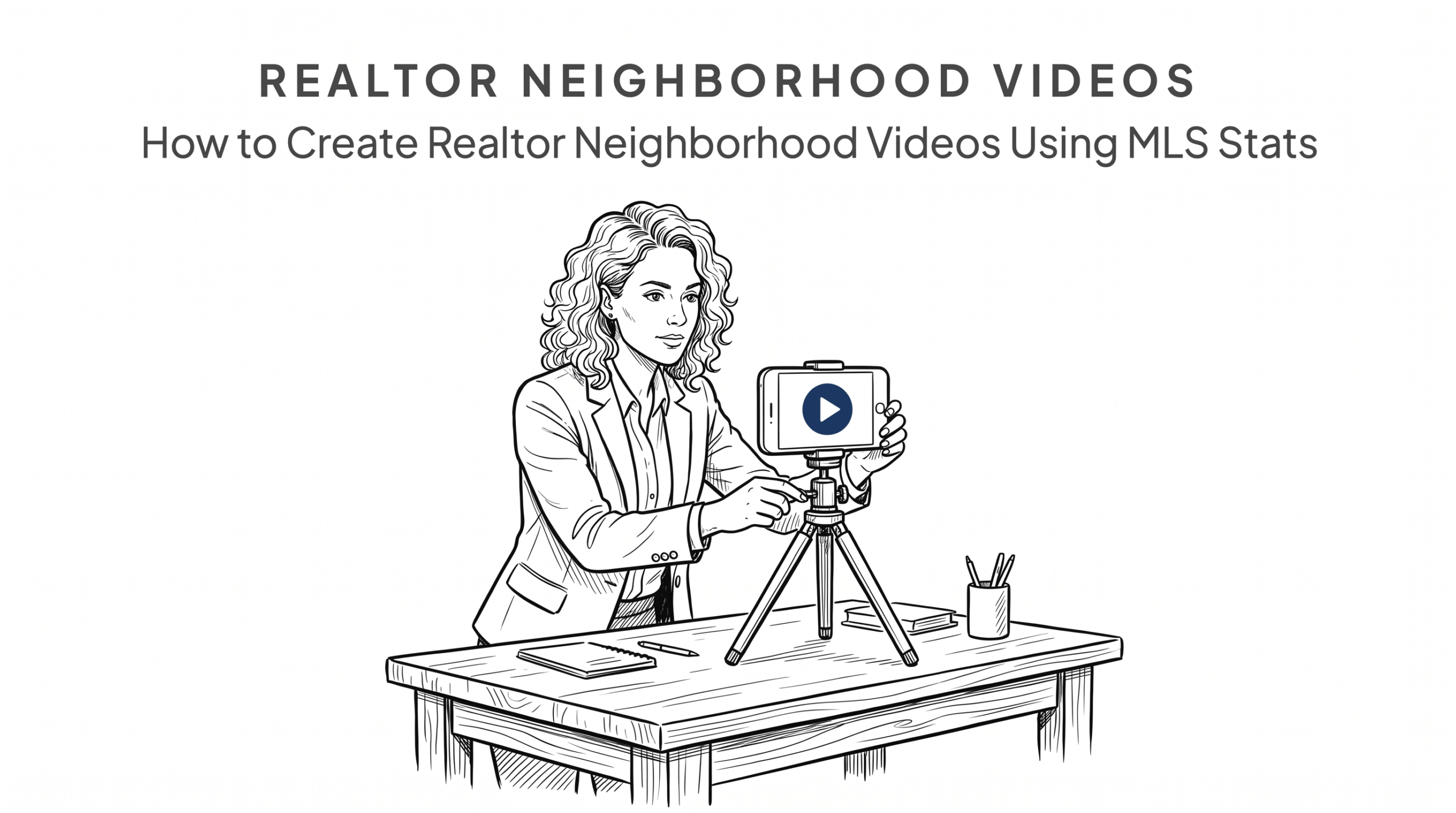
Use your phone on a basic desk tripod with natural light so you can record your update in one take without fancy gear. Complex lighting and expensive cameras create technical friction that prevents consistent weekly filming. A simple approach allows you to just hit record and share your message.
Owning a fancy camera that takes 20 minutes to set up often leads to avoiding video entirely. The solution involves removing all setup friction so your recording space is always ready to go. Consistently publishing realtor neighborhood videos requires a frictionless studio environment.
Placing a $20 tripod on your desk facing a window provides an excellent baseline setup. Modern smartphone video quality is already fantastic. According to Wyzowl, 91% of businesses use video as a marketing tool. Viewers prioritize valuable information that helps them price their home correctly over cinematic production values. Clear audio and a well-lit face meet all baseline audience expectations.
Maintaining a simple setup guarantees you actually hit record every week. Taping a few bullet points right next to your phone lens is a great alternative to memorizing the script. Talking to the camera like you are explaining the market to a friend over coffee keeps the tone approachable. Publishing a straightforward, helpful update today is the ultimate goal.

Where should you post your neighborhood market updates for maximum reach?
Distribute the video to your sphere email list, YouTube channel, and local neighborhood Facebook groups to capture active buyers and sellers. Placing the update exactly where local homeowners already spend their time online maximizes your visibility.
Publishing to a business page and receiving two likes feels defeating. Many agents experience low engagement because standard business pages offer virtually zero organic reach. Distributing these updates directly to high-attention platforms solves this visibility issue.
Sending the video directly to your database is highly effective since email remains a reliable communication channel. Uploading the file to YouTube with a clear title like “Oak Park Housing Market Update” captures people actively searching for moving information. Sharing the link in local Facebook community groups while following their rules and answering questions in the comments drives further engagement.
This hyperlocal real estate marketing approach puts your face in front of the people living in your target farm area. Homeowners will naturally see your updates when they check their morning email and scroll their community feed, making your brand highly visible.
How often should you publish neighborhood video updates to build local trust?
Stick to a predictable bi-weekly schedule so homeowners in your farm area look forward to your micro-market updates. Regular, spaced-out consistency builds deep trust over time. Maintaining this routine even during busy client seasons is crucial for long-term growth.
Agents frequently post several videos in a few days and then completely stop when showings get busy. Pacing yourself is the secret to sustainable marketing. Staying relevant only requires a steady, manageable rhythm rather than daily uploads. A bi-weekly cadence is the perfect frequency for realtor neighborhood videos.
Selecting one subdivision to feature in a two-minute update every other Tuesday works incredibly well. Sending it out the next morning requires only a minimal time investment. Over a year, 26 local market updates establish a strong presence, ensuring homeowners recognize you as the local expert well before they decide to sell.
Sharing real data every other week builds a protective moat around your farm area. Consistently explaining the local market through video proves you know the streets better than anyone else in the industry.
Frequently asked questions
Do I need to hire a professional editor for realtor neighborhood videos?
No, hiring a professional editor is completely optional when you are first starting out. Native platform tools and affordable AI software can easily chop your raw footage into shorter clips. The most important factor is the quality of your local market data rather than flashy transitions.
How do I find the right MLS data if my neighborhood has low turnover?
If a specific subdivision has very few recent sales, expand your data pull to the immediate surrounding zip code or the broader school district boundary. You can discuss the low inventory itself as a major talking point. Explain how a lack of active listings gives potential sellers an immense pricing advantage.
What if I get nervous speaking on camera?
Feeling nervous on camera is completely normal for beginners. Using a bulleted outline taped near your phone lens keeps you on track without sounding overly scripted. Practice recording a few practice takes until you feel comfortable speaking as though you are chatting with a friend.
Related reading
- Hyperlocal Real Estate Marketing: How to Own a Neighborhood – the complete guide to dominating a specific farm area.
- Real Estate Newsletter: 6 Sections Your Database Opens – how to format your email so people actually read it.
- Human Sounding AI Content: 5 Secrets Your Clients Won’t Detect – how to write scripts that do not sound like a robot.
The Bottom Line
Local homeowners actively seek out information detailing what their neighbor’s house sold for and why. Pulling specific MLS data for a single subdivision establishes your reputation as the premier local expert. Using this specific data and AI to write your neighborhood updates creates an incredibly fast workflow. Agents implementing this exact bi-weekly distribution system often see a 40% increase in inbound listing inquiries within their first six months. Learn how nurtureBEAST equips your team with automated content systems to handle your video scripting, newsletter formatting, and lead follow-up while you stay focused on closing deals.
If you want to see how nurtureBEAST handles neighborhood video scripting and lead follow-up – take the quiz to find out what’s killing your real estate business or visit nurturebeast.com.