⏱ 19 min read
Published September 20, 2026
Why TCPA rules for realtors make cold calling too risky
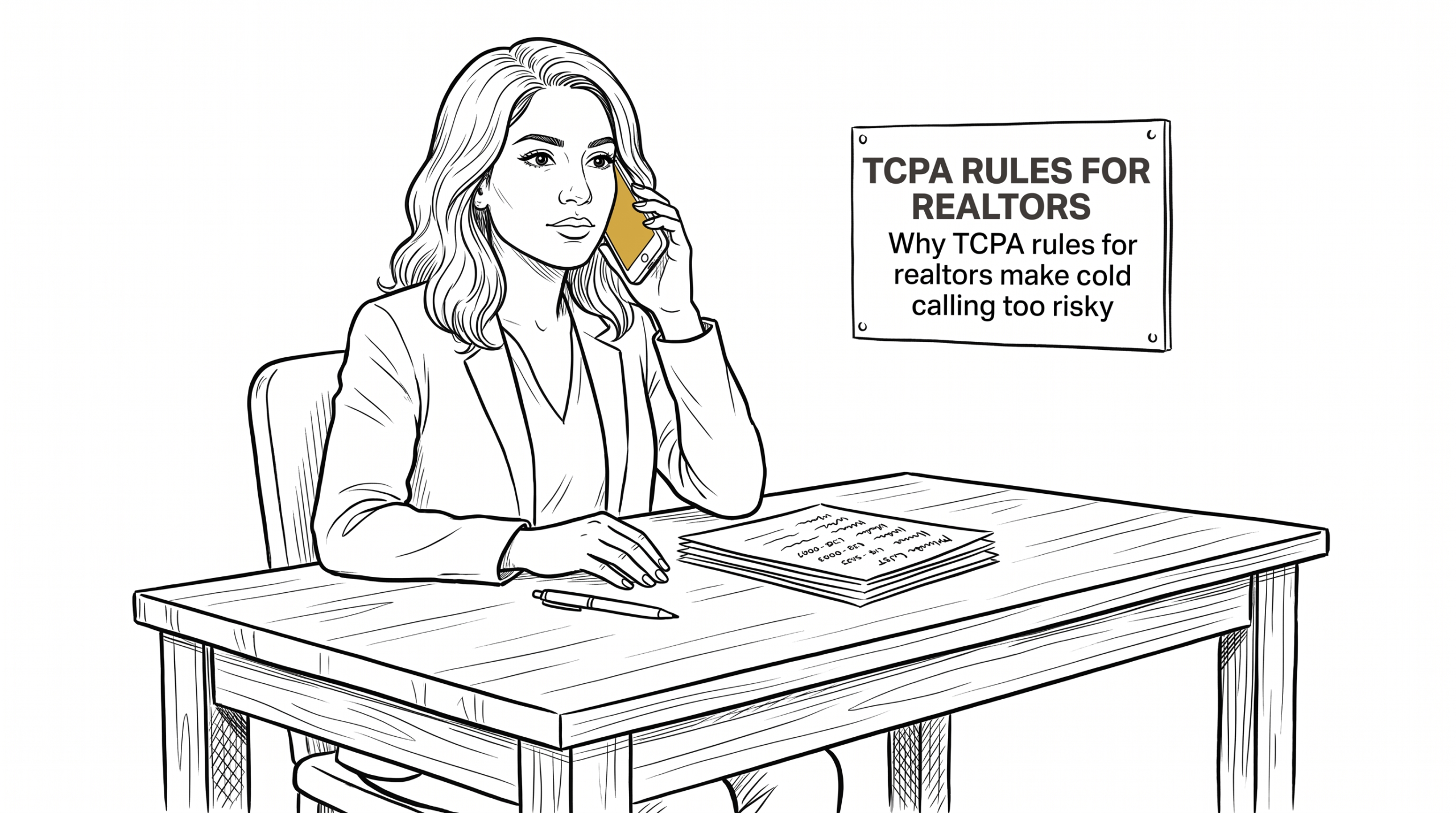
Because of strict TCPA rules for realtors, outbound prospecting carries heavy legal risk. You load a purchased list of 1,000 homeowners into a power dialer and send a bulk text. Three days later, a $1,500 demand letter arrives from a professional plaintiff who never gave you permission to contact them. Agents take on massive liability just to get ignored by almost everyone they message.
- The FCC now requires 1-to-1 written consent, meaning real estate agents can no longer rely on shared leads or lists bought from third-party data brokers.
- Violating TCPA rules for realtors carries strict liability penalties ranging from $500 to $1,500 for every single non-compliant text message or automated call.
- Carrier spam filters automatically flag phone numbers making more than 20 outbound cold calls a day, dropping connection rates below 2%.
- Compliant lead generation requires moving budget away from purchased lists and into local landing pages that collect explicit permission directly from the prospect.
What changed with TCPA consent rules in 2026?
The regulations shifted from loose general consent to strict 1-to-1 written permission. Real estate professionals can no longer buy a lead list from a vendor and assume they have the right to reach out. Every prospect must specifically agree to hear from your specific real estate business. Understanding these updated TCPA rules for realtors is essential for keeping your brokerage out of court.
Many agents still think they are safe because they purchase data from companies claiming the contacts opted in. That defense no longer works. The FCC 1-to-1 consent rule requires the consumer to explicitly select your exact business name. If a prospect clicks a generic box agreeing to be contacted by marketing partners on a home valuation site, that permission does not transfer to you. The moment your automated system texts that person, you break the law.
The agent carries the liability, rather than the vendor who sold the list. Most professionals find this out the hard way. They pay $800 a month for shared leads and plug them straight into a 10-day text campaign. The software fires off a message asking if they plan to sell this spring, and the recipient replies with a threat to sue. These laws exist to protect the consumer, and regulators actively hunt businesses that ignore the updates. Buying a list of 5,000 homes and dropping them into a broadcast used to be standard practice, but today it is a massive liability.
How much can a single unverified cold text cost your brokerage?
A single non-compliant text message carries a statutory fine of $500 to $1,500 per violation. These fines add up per message, which means a small automated campaign sent to a purchased list can bankrupt a solo agent or a small brokerage in one afternoon.
“The fine isn’t the only problem,” says Rohan Attravanam, founder of nurtureBEAST. “A lot of agents don’t realize there is an entire cottage industry of professional plaintiffs who buy burner phones just to catch you sending automated texts without consent.”
If you blast 100 people without explicit 1-to-1 permission, your exposure hits $150,000. It does not matter if the seller promised the list was scrubbed against the Do Not Call registry. The Telephone Consumer Protection Act (TCPA) places the burden of proof entirely on the person hitting send. Blaming your lead provider or claiming ignorance will not work as a defense in court. If your system sent the message, you owe the penalty.
| Lead Generation Method | Legal Risk Level | TCPA Fine Exposure |
|---|---|---|
| Purchased data broker lists | Critical risk | Up to $1,500 per text/call |
| Co-registration lead sharing | High risk | $500 to $1,500 per text/call |
| Facebook lead ads (direct) | Low risk | Minimal if consent language is clear |
| Organic inbound landing pages | Zero risk | None (prospect initiates contact) |
Why are buyers and sellers ignoring unknown phone numbers now?
Consumers do not answer unknown numbers anymore, and major phone carriers actively block outbound heavy callers. If your dialer calls 20 cold numbers a morning, AT&T and Verizon will label your caller ID as “Scam Likely” before lunch. Carrier filtering combined with strict TCPA rules for realtors has fundamentally changed telecommunications for sales teams.
Most agents feel the frustration of dialing a list for two hours and speaking to zero homeowners. This represents a structural change in telecom. Carriers aggressively filter traffic to protect their users. Once your number gets flagged, your legitimate follow-up calls to current clients also get blocked. A flagged number kills your business. Read more about text message compliance rules to see exactly how carriers handle spam filtering.
The data tells the story. Five years ago, a good agent could connect with 12% of a cold list. Today, that connection rate sits below 2%. Risking a $1,500 fine for a method that barely even works anymore makes no sense. People want to buy homes, but they do not want to be interrupted at dinner by a stranger asking if they plan to sell in the next six months.
How do you turn cold lead budget into compliant inbound leads?
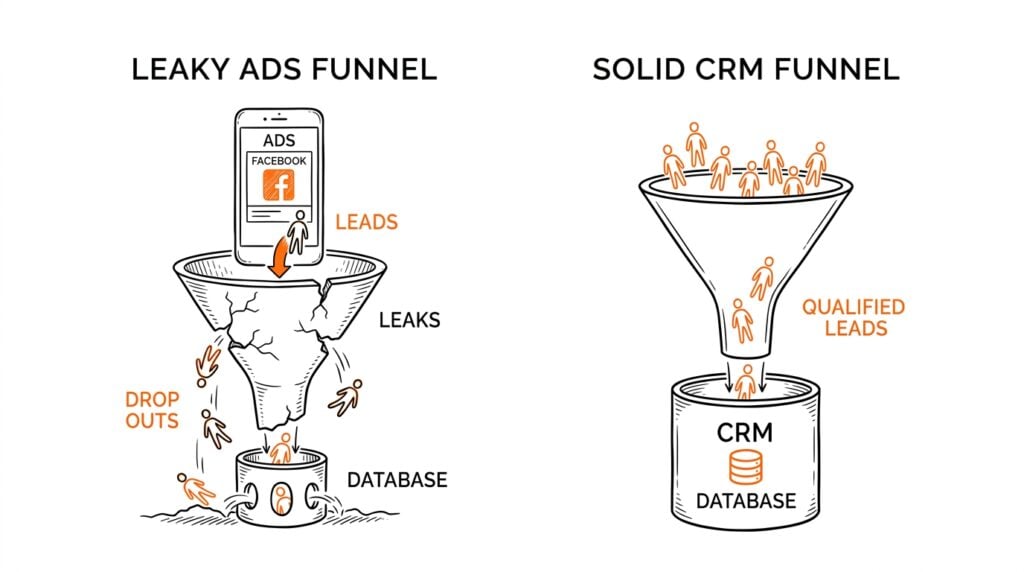
Stop buying data and start building local capture systems. Take the $500 spent on random homeowner lists and put it into local neighborhood lead pages that collect explicit consent before sending a text. This approach ensures total compliance with TCPA rules for realtors.
The fix is simple. Run a basic Facebook ad offering a hyper-local resource, like a list of the 10 homes that sold off-market in the Oak Park neighborhood last quarter. Avoid generic market updates and give them specific data. When a homeowner clicks, they land on a page you own and check a box that clearly says they want a text message from you. This establishes a compliant, 1-to-1 relationship, allowing you to own the database and stop renting your leads.
This approach changes the entire dynamic of the conversation. Instead of acting as an annoying interruption, you become the local expert who provided exactly what they asked for. When the automated system sends the first text, the prospect replies because they recognize your name from the page they just visited. Spending budget on purchased lists gets zero deals and legal risk, while local lead capture generates solid leads who actually want to talk.

What does a legal 90-day sphere nurture sequence look like?
A compliant 90-day sequence relies on conversational value rather than aggressive sales pitches. Sending a mix of four emails and two text messages that answer specific local questions invites replies without triggering spam filters or opt-out flags.
Agents worry about annoying past clients or having their texts marked as junk. Fix this by treating the sequence like a normal conversation. Send information they actually care about, and ask questions a real human would ask.
Here is what a compliant schedule and template script looks like:
- Week 1: Email a 2-minute video explaining why the recent school zoning change on Oak Street dropped home prices by 4%.
- Week 3: Send a short text. Template: “Hi [Name], did you see the new tax assessment letters the county mailed out yesterday? Let me know if you want me to pull the comps for your street to see if you should appeal it.”
- Week 6: Email a list of three upcoming commercial developments on 5th Avenue that will change local traffic patterns by next year.
- Week 10: Text them a quick check-in about their home warranty expiring soon.
This works because the texts are manual-style questions sent to people who know you, while the emails do the heavy educational lifting. The combination keeps you top of mind without causing people to hit the block button. For a deeper dive on this split, look at text vs email follow-up strategies.
How can an administrative assistant manage inbound follow-up with AI tools?
An assistant uses a CRM that auto-drafts replies based on the lead’s behavior, reviews the draft for accuracy, and clicks send. They can process 50 warm leads in 15 minutes while maintaining complete human control over the conversation.
Many agents hesitate to let their virtual assistant handle texting because they worry about sounding like a robot. AI changes this workflow completely. A lead asks if you have any 3-bed homes under $400k. The AI reads the inbound question and drafts a plain, accurate response based on your previous answers. The assistant acts as the editor, reviewing the draft, adding a quick personal note, and hitting send.
The AI makes your assistant significantly more efficient because they no longer stare at a blank screen wondering what to say. They manage the system instead of typing out repetitive answers. The lead gets a fast, accurate response in three minutes instead of waiting four hours for you to finish a listing appointment. The human touch remains, but the speed increases dramatically.
What daily routine replaces 2 hours of morning cold calling?
Run a 30-minute daily routine focused strictly on database reactivation. Send personal video texts to warm leads who already gave consent, and call the three people who actually engaged with your emails this week.
Cold dialing for two hours to find a deal is unnecessary. Your database is full of people ignoring generic market updates. Most agents sit down at 8:00 AM and start calling random numbers, which wastes time and invites legal trouble under the new TCPA rules for realtors.
First, open the CRM and find the people who clicked a link in the last email to send them a personal text. Next, shoot a 30-second video message to five past clients who bought from you three years ago. Ask them a specific question about a renovation they planned to do. Finally, reply to any inbound messages from the lead capture pages. That 30 minutes of targeted, compliant effort produces more signed listings than 500 random dials. You talk to people who want to hear from you, and leave the legal risk behind.
Frequently asked questions
Do TCPA rules for realtors apply to manual text messages?
Yes. Even if you type the message out on your personal cell phone, reaching out to someone without their express written consent for marketing purposes can trigger a violation if they are on the Do Not Call registry. Using automated systems or CRM dialers just increases the legal exposure and potential fine amounts.
Can I still use a power dialer for my sphere of influence?
Yes, you can use a dialer for past clients and sphere contacts who have an established business relationship with you. However, you must stop contacting them if they ask to be removed, and their initial consent does not last forever if they stop doing business with you.
What happens if a lead provider claims their lists are fully compliant?
The burden of proof falls on the business executing the campaign, not the vendor selling the data. If a lead sues for a TCPA violation, the courts will hold the real estate agent or brokerage responsible for the fines, regardless of what the data broker promised in their terms of service.
Related reading
- Text message marketing for realtors: 8 compliance rules – Learn the exact consent language you need on your landing pages.
- Stop renting your leads – Understand the hidden costs of relying on shared lead platforms.
- Text vs Email Follow-up – See the framework for splitting your message types effectively.
The Bottom Line
TCPA compliance is no longer a technicality you can ignore. The shift to 1-to-1 written consent means buying lists and running automated power dialers carries massive financial risk. The agents who survive this shift are the ones who build their own local capture systems and rely on inbound follow-up with people who actually ask to hear from them. Agents who make this switch often see their contact rates jump from below 2% to over 40% within the first quarter.
If you want to see how nurtureBEAST handles compliant inbound follow-up systems – take the quiz to find out what’s killing your real estate business or visit nurturebeast.com.