⏱ 19 min read
Published September 4, 2026
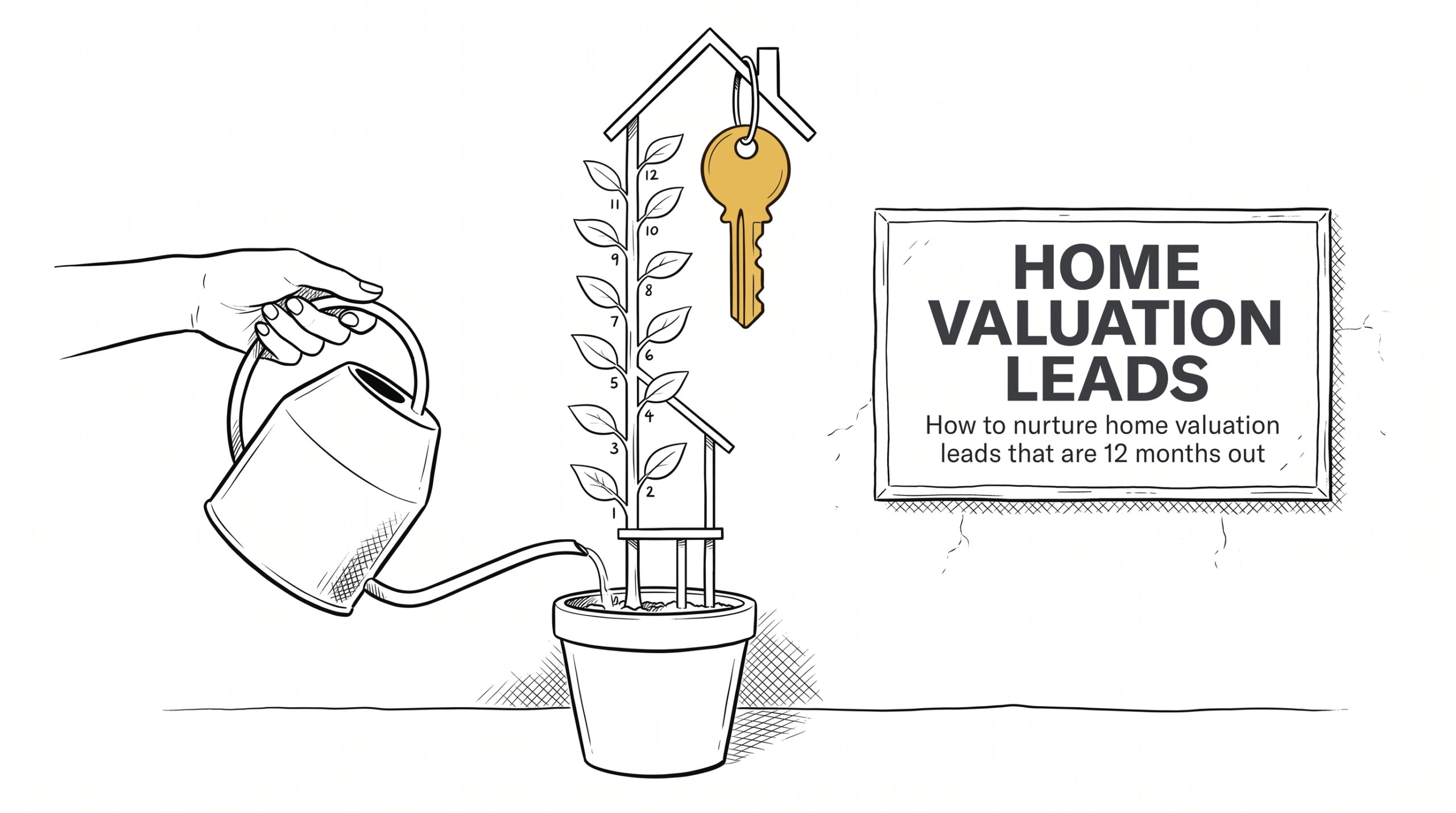
How to nurture home valuation leads that are 12 months out
Most real estate agents mishandle home valuation leads. They call a new prospect twice and get no response. After that, they mark the lead as dead and assume the homeowner isn’t serious. Twelve months later, that same homeowner lists their house with a competitor. The agent misses out on a $15,000 commission simply because they failed to maintain contact during the research phase.
- Home valuation leads take 6 to 18 months to convert into an active listing.
- Agents lose 15 hours a week manually calling long-term seller prospects who do not want to talk.
- An automated month-one update with a 3-page CMA and local home equity estimate keeps you top of mind without being pushy.
- Tracking engagement signals like opening three market reports in 10 days alerts you exactly when a seller prepares to list.
Why do online home valuation leads take so long to convert?
Online home valuation leads take 6 to 18 months to convert because these prospects sit in the early research phase. They figure out their equity position long before they decide to prep the house for sale or interview agents.
Most agents see a home valuation request and think they have a listing appointment waiting. The prospect sees the request as a casual check on their net worth. A homeowner often fills out an online form after a minor life event. A sudden job promotion or a moving truck spotted three doors down can prompt them to see if their equity covers a down payment on a bigger house. They do not want a salesperson in their living room right now.
When you call these leads expecting them to list next week, they ignore you. According to the National Association of Realtors, typical sellers live in their home for a full 10 years before moving. The moment they check their home value online happens a year before they put a sign in the yard. Before making a move, homeowners need to research new neighborhoods and figure out their financing options. A fast pitch right now frustrates them and guarantees they block your number.
Why does manual follow-up fail on 6-month seller leads?
Manual follow-up fails on 6-month seller leads because agents cannot sustain the volume over a year. The process burns 15 hours a week chasing people who do not want to talk, leading to agent burnout and dropped leads.
You cannot manually track a prospect for 14 months without dropping the ball. Most agents try by setting a reminder in their CRM to call a lead every 30 days. This usually means spending the morning block dialing numbers and leaving voicemails for people who feel annoyed by the interruption. After three unanswered calls, most agents assume the lead went cold and stop trying.
The numbers tell a different story. Zillow reports that 75% of sellers prefer an agent who reaches out at the right time with helpful data. When you rely on sticky notes or manual CRM tasks, you never hit that right time. You spend 15 hours a week chasing the wrong people. Meanwhile, the prospects who need help forget your name. You need a system that does the heavy lifting for you while you sleep. To fix this, you must automate real estate follow-up so the process runs without you.
| Follow-up Method | Best for | Watch out for |
|---|---|---|
| Manual cold calls | Ready-to-list hot leads | High rejection rate and burnout |
| Automated property alerts | Keeping buyers engaged | Sellers ignore generic buyer searches |
| Long-term automated CMA nurture | 6 to 18 month valuation leads | Requires a complete setup on day one |
What should your month-one home value update look like?
Your month-one home value update should deliver a personalized 3-page CMA summary and a clear local equity estimate. This builds trust immediately by giving the prospect exactly the data they requested without a high-pressure sales pitch.
Most agents send an automated email asking for a 15-minute phone call. Homeowners usually ignore these requests and send them straight to the trash because they are looking for hard numbers rather than a conversation. Your first touch needs to deliver that data plainly. Send a short email with a PDF attachment. Include a tight 3-page CMA showing three recent comps on their specific street. Add a clear breakdown of what their house might sell for minus typical closing costs. This gives them a concrete equity number they can use for their planning.
“The agents who win these listings give the homeowner the exact math they asked for without demanding an appointment in return,” says Rohan Attravanam, founder of nurtureBEAST. This approach establishes your authority on day one. You become the helpful neighborhood expert they rely on. You can systemize this early touchpoint by sending automated real estate market reports every 30 days.
How often should you text seller prospects in months two through six?
You should text seller prospects once every 45 days during months two through six. These texts must contain hyper-local market data, like recent neighborhood sales or zoning changes, rather than generic check-ins.
You know the feeling of staring at a dead pipeline. You look at a list of 50 seller leads from last spring and wonder if any of them plan to move. Sending a text asking if they have any real estate needs guarantees you stay on read. You need to send information they care about.
Every 45 days, your system should send a short plain-text SMS. Mention that the house three doors down sold for $15,000 over asking price, or share how a new elementary school zoning bumped local values up by 4%. Give them a specific piece of neighborhood news that impacts their bottom line. Keep the message under 30 words. Give them the option to reply if they have questions, but do not ask for a call. You want them to view your texts as valuable market updates.
Text Template to Steal:
Hi [Name], the house three doors down from you just sold for $15,000 over asking. Let me know if you want to see the details and interior photos.
If you need more examples, use these real estate nurture texts to build your campaigns.

How can your assistant run this long-term nurture without extra work?
Your assistant can run this long-term nurture by applying pre-built CRM tags that trigger 14-month automated sequences. This allows your team to manage hundreds of leads while stepping in when a prospect replies.
A lot of solo agents hire a virtual assistant and hand them a terrible job. They ask the VA to cold call a list of 12-month valuation leads. The VA faces rejection all day, and you get zero appointments. AI does not replace your VA. It transforms your VA into a highly effective operator. Have your assistant qualify the inbound leads and apply a specific tag like “Long Term Seller.” That single tag triggers the 14-month automated email and text sequence.
Your assistant shifts their focus to monitoring the inbox. They jump in to reply to the homeowners who ask a question. The VA handles the low-level communication and alerts you when someone wants to talk about listing. This frees you to focus on the high-value conversations that lead to signed agreements. Empowering your team this way turns a real estate VA into an AI assistant.
What trigger tells you a seller lead is finally ready to list?
A seller lead prepares to list when they trigger specific behavioral alerts, such as opening three market reports in 10 days or checking their home value twice in one week.
The hardest part of managing a database involves knowing who to call today. You have 400 contacts and you have time to talk to 10. Without a system, you guess. You need your CRM to flag the exact moment a cold lead turns hot. Set up lead scoring rules in your system. When a prospect ignores your emails for eight months, let them sleep.
When that same prospect suddenly clicks on the CMA link three times on a Tuesday, your system must notify you immediately. That sudden spike in activity means they talked to a contractor about repairs, or they looked at a house they want to buy. That marks the exact moment you pick up the phone. A solid real estate lead scoring system guarantees you never miss a seller raising their hand.
How do you turn a 14-month nurture lead into a signed listing presentation?
You turn a 14-month nurture lead into a signed listing presentation by calling them immediately after a behavioral trigger and referencing the specific data they reviewed to start a natural conversation.
The moment you get the alert, you make the call. The prospect feels warm because they received helpful data from you for over a year. Since you spent a year providing helpful data, they recognize your name and appreciate your neighborhood expertise. You do not need a cheesy script. Keep the conversation direct and focused on the data.
Call them and point out the activity. You can use this exact script:
The Behavioral Trigger Call Script:
Hi [Name], I noticed you were looking at the recent sale on Oak Street. Did you see how much they got for the renovated kitchen?
You start a natural conversation about the market. They naturally transition into talking about their own plans to sell. Because you spent 14 months providing value without pressure, you become the first agent they want to interview. You walk into the listing presentation as a trusted advisor, and you walk out with a signed contract.
Frequently asked questions
Do home valuation leads actually convert?
Yes, but they require patience. Most online home valuation leads take anywhere from 6 to 18 months to convert into a listed property because they are in the early research phase.
Should I call every new home valuation lead?
While a quick introductory call is fine, pestering them with follow-up calls will lead to burnout and rejection. It is better to rely on an automated system that delivers value through monthly market reports.
What data should I send a seller prospect?
Provide hyper-local data such as recent comps on their specific street, current equity estimates minus closing costs, and updates on neighborhood changes like new school zoning.
How do I know when a long-term lead is ready to list?
Use your CRM to track engagement metrics. When a lead suddenly opens three market reports in a short window or checks their home value multiple times in a week, they are likely preparing to sell.
Related reading
- Automate Real Estate Follow-Up – Shows the three tracks you must build to handle inbound volume.
- Automated Real Estate Market Reports – Explains the six sections your local updates need to include.
- Real Estate Nurture Texts – Provides SMS scripts that avoid sounding salesy.
The Bottom Line
Home valuation leads are a long game. When you force an appointment on day one, you lose the deal. When you try to follow up manually for a year, you lose your mind. You need an automated system that delivers hyper-local data for 14 months so you become the first agent they call when they decide to sell. Implementing a long-term nurture sequence can boost your conversion rate on old leads by up to 30%, turning forgotten contacts into predictable revenue.
If you want to see how nurtureBEAST handles 14-month seller follow-up sequences – take the quiz to find out what’s killing your real estate business or visit nurturebeast.com.