⏱ 21 min read
Published March 30, 2026
Expired Listing Strategy: 6 Plays That Win the Seller
Last Updated: March 30, 2026
Expired listings are one of the most misunderstood lead sources in real estate. Agents avoid them because the conversations feel uncomfortable, or they approach them the same way everyone else does – with a listing presentation and a pitch – and get nowhere. But these are sellers who already want to sell. They’ve already been through the process. They’re motivated, they understand agency, and they’re often frustrated enough to make fast decisions.
The agents who consistently win expired listings don’t pitch harder. They diagnose first.
Key Takeaways
- Expired sellers are pre-motivated – they already want to sell, they just had a bad experience
- Day 1 outreach beats Day 3 by a wide margin, but how you approach the call matters more than when
- The agents who win expireds ask questions first and present solutions second
- Most expired sellers hear from 10–20 agents the day their listing expires; being different is more important than being first
- Objections like “I’m going with my cousin” are almost always negotiable if you’ve done the diagnostic work
Table of Contents
- Why Expired Listings Are Underrated
- What Expired Sellers Actually Want
- Finding and Qualifying Expired Listings
- Timing Your Outreach: Day 1 vs. Day 3
- What to Say: The Diagnose-First Approach
- The Follow-Up Sequence After First Contact
- Handling the Most Common Objections
- FAQ
Why Expired Listings Are Underrated
Most agents skip expired listings because they assume the sellers are bitter, difficult, or unrealistic about price. Sometimes that’s true. But the data tells a different story: a substantial percentage of expired listings relist within 90 days – often with a different agent at a different price. These sellers are still in the market. They’re just looking for someone who can explain what went wrong and offer something different.
Compare that to a cold internet lead who filled out a form with no specific intent. The expired seller has already committed to selling. They’ve already staged, priced, and endured showings. Their motivation level is often higher than a fresh lead who’s “thinking about selling sometime next year.”
Only 2% of sales happen at the first point of contact. (Sales Insights Lab) With expired listings, the seller has already been through the process – they are far warmer than a cold internet lead, and the agents who approach them with a diagnostic follow-up sequence rather than a one-shot pitch win a disproportionate share of these listings.
The barrier isn’t motivation. The barrier is trust. The previous agent burned them – or at minimum, failed them. Your job is to establish that you’re different without just saying “I’m different.” Anyone can say that. Very few can prove it in a 10-minute conversation.
Expired listings fit naturally into a broader lead generation approach. For context on how they stack up against other sources, read Real Estate Lead Generation: 12 Strategies That Don’t Require Zillow.
What Expired Sellers Actually Want
Before you can win an expired listing, you have to understand what the seller is experiencing.
They listed their home. It sat on the market – maybe 60, 90, or 120 days. Showings came and went. No offers, or offers that fell through. Their life went on hold. They had to keep the house ready to show. And then the listing expired, which feels like public failure.
Now their phone is ringing with agents who all say the same thing: “I can sell your home.” After hearing that 15 times in one morning, they stop believing it.
What expired sellers actually want:
- An explanation – What went wrong? Why didn’t it sell? Was it price, marketing, staging, agent effort, timing?
- A credible diagnosis – Not blame-shifting, not flattery. An honest, professional assessment of the specific factors that prevented a sale.
- A concrete different approach – Not “I’ll do more marketing.” What marketing? What specifically will be different? What will you do that the last agent didn’t?
- Trust that you’ll communicate – One of the most common complaints expired sellers have about their previous agent is radio silence. They want someone who will actually call them back.
Walk into every expired conversation with those four things in mind and you’ll have more productive conversations than 90% of agents calling the same list.
Finding and Qualifying Expired Listings
How to find them:
Expired listings appear in the MLS daily. Set up an automated MLS alert for expired status changes in your target market. Most MLS platforms allow you to filter by status change, so you can receive a daily email of every listing that expired the previous day.
Third-party tools like REDX, Vulcan7, and Landvoice can pull expired listings with phone numbers already appended, which saves significant time on the research side.
Qualifying before you call:
Not every expired listing is worth pursuing. Before making contact, look at:
- Days on market: A listing that expired after 200+ days at the same price was almost certainly overpriced. That’s a seller who may not be realistic yet.
- Price history: Did they take any price reductions? If not, they may have resisted market feedback throughout the listing period.
- Property condition: Based on photos and any notes in the MLS, does the property appear marketable? Some expireds are expired for obvious physical reasons.
- Neighborhood comps: Can you quickly identify what a realistic price looks like? Going into the call without this is going in blind.
Spend 3–5 minutes on each expired before you call. It will dramatically improve the quality of your diagnostic conversation.
Timing Your Outreach: Day 1 vs. Day 3
The conventional wisdom is to call expired listings as early as possible on the day they expire. The theory is that first contact wins.
The reality is more nuanced. Day 1 contact volume is highest – expired sellers often receive 10–20 calls in the first few hours. Everyone leads with the same pitch. The seller is overwhelmed, guarded, and often rude because they’ve had the same conversation nine times already.
Day 1 strategy works best if you can differentiate immediately. Don’t lead with “I can sell your home.” Lead with: “I’m not calling to pitch you. I actually wanted to ask what happened – I’ve worked this neighborhood and I was surprised when your listing expired.” This is disarming because it’s honest and curious rather than salesy.
Day 3 strategy is often underrated. By day 3, the flood of calls has stopped. The seller has had time to process, to be disappointed, and to start thinking practically about what’s next. A call on day 3 from an agent who leads with a diagnosis often gets a better conversation than 10 day-1 calls that felt the same.
Best approach: attempt contact on day 1, follow up with more depth on day 3 if you didn’t connect. Persistence plus differentiation beats speed alone.
What to Say: The Diagnose-First Approach
The script that loses every time: “Hi, I’m [name] with [brokerage]. I saw your listing expired and I’d love to show you how I’d market your home differently.”
The script that works: “Hi [name], this is [name] – I specialize in [neighborhood/area]. I noticed your listing expired and I’m curious – from your perspective, what do you think went wrong?”
Then stop talking. Let them answer.
This question does three things. First, it positions you as someone who listens instead of pitches. Second, it gives you the information you need to actually diagnose the situation. Third, it surfaces the seller’s real concerns, which may be very different from what you assumed.
Common answers you’ll hear:
- “The agent didn’t market it enough.” (What does that mean to them? How did they expect marketing to work?)
- “We just didn’t get any serious buyers.” (Was it the price? The condition? The timing?)
- “The agent was unresponsive.” (Communication issue – this is fixable and you can address it directly.)
- “We probably need to drop the price, but I’m not sure by how much.” (They’re already starting to reason about it.)
After you understand their diagnosis, you can offer yours – with specific data. “Based on the comps and the days-on-market data in your neighborhood, I think there were two factors at play. Here’s what I see…” Now you’re a professional offering expertise, not a salesperson competing for their attention.
For how follow-up sequences work after this first contact, see Real Estate Follow-Up System: How to Build One That Actually Works.
The Follow-Up Sequence After First Contact
It takes an average of 8 follow-up attempts to reach a prospect, yet 44% of salespeople give up after just one. (RAIN Group) With expired listings specifically, the agents who win are almost always the ones who stayed in the sequence longer than everyone else.
Most expireds won’t list with you after one conversation. Build a follow-up sequence:
Day 1–2: Initial contact attempt (call or door knock). If you connect, have the diagnostic conversation. If you don’t connect, leave a brief, curious voicemail: “I noticed your listing just expired and had a quick question about the neighborhood – no pitch, I promise. [Number].”
Day 3: Follow-up call if you haven’t spoken. Send a handwritten note or email with a market analysis – specific data about recent sales in their neighborhood with a note: “Thought this might be helpful as you’re thinking through what to do next.”
Day 5–7: Email or text with a specific observation about their property based on your research. Something like: “Looking at your previous listing, I think the photography was underselling the backyard – I’ve seen that be a factor in this price range.”
Week 2: Check-in call. “Just wanted to see if you’ve made any decisions on next steps.” At this point, if they’re re-listing, the decision is imminent.
Monthly for 3 months: If they haven’t listed, add them to a monthly check-in sequence. Many expireds relist 60–90 days later after regrouping.
Track all of this in your CRM. For database and follow-up management, see Real Estate Database Management: How to Organize Your Contacts So Nothing Falls Through.
Handling the Most Common Objections
“I’m going with my cousin/neighbor/friend who’s an agent.”
This is the most common and most frequently uncontested objection. The right response is not to back off. “I completely understand – and honestly, if [cousin] is the right person for the job, that might be the best decision. My only question is: is [cousin] able to give you an honest diagnosis of why this listing failed? That’s what I’d want someone to be able to do for me.” You’re not attacking the cousin. You’re planting a seed about what the seller actually needs.
“I’m just going to take it off the market for a while.”
“That makes total sense – the timing might not be right. Would it be okay if I sent you market updates for your neighborhood over the next few months so you can track what similar homes are selling for?” Now you have permission to stay in touch. Many of these sellers re-enter the market 3–6 months later.
“The last agent told me the same things you’re saying.”
“I hear that – and I’d be skeptical too. What would it take to actually believe it? What specifically did you need from your last agent that you didn’t get?” Let them define success. Then tell them whether you can deliver it.
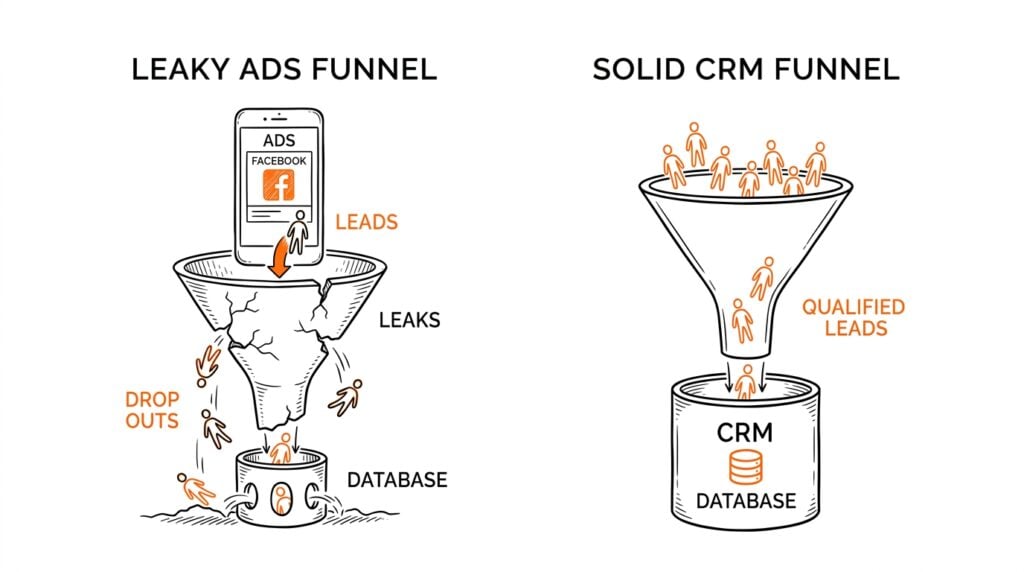
Is Your Real Estate Business Leaking Revenue?
Most agents are losing deals they don’t even know they have. Find out exactly where your business is broken and get a custom plan to fix it.
FAQ
Is it legal to contact expired listings directly?
In most markets, yes – provided you comply with the National Do Not Call Registry. Check your state’s specific rules and scrub your contact lists against the DNC registry. Many agents use tools like REDX or Vulcan7 that include DNC scrubbing.
Should I door knock expired listings or call them?
Both work. Door knocking creates a stronger first impression and is much harder to ignore than a phone call, but it requires more time per contact. Calling allows higher volume. Some agents call first and door knock as a follow-up if they can’t reach the seller by phone.
What if the expired listing was obviously overpriced?
Bring the data, not the judgment. Show the seller the comp analysis that explains why the price didn’t work, frame it as market feedback rather than the seller’s fault, and present a realistic price range. The sellers who were overpriced often know it – they just need permission from a credible agent to adjust.
How many expired listing leads should I be working at once?
Most agents can actively work 10–15 expired leads at a time before follow-up quality degrades. Use a CRM to manage the sequence so nothing slips.
What’s the conversion rate on expired listings?
Conversion rates vary widely by market and approach, but agents with strong systems typically convert 5–15% of expired leads they actively pursue into listings. That’s significantly higher than most internet lead sources.
The Bottom Line
Expired listings are not damaged goods – they’re motivated sellers who had a bad experience and need a better agent. The approach that wins is curiosity over pitch, diagnosis before solution, and persistent follow-up over weeks rather than days.
Most agents call once, get rejected, and move on. Build a system that keeps you in front of these sellers for 90 days and you’ll close listings your competitors abandoned. Nurtured leads produce a 20% increase in sales opportunities on average (Demand Gen Report) – expired sellers who say ‘not yet’ are not lost leads, they are nurtured leads in progress.
Is Your Real Estate Business Leaking Revenue?
Most agents are losing deals they don’t even know they have. Find out exactly where your business is broken and get a custom plan to fix it.