⏱ 18 min read
Published May 21, 2026
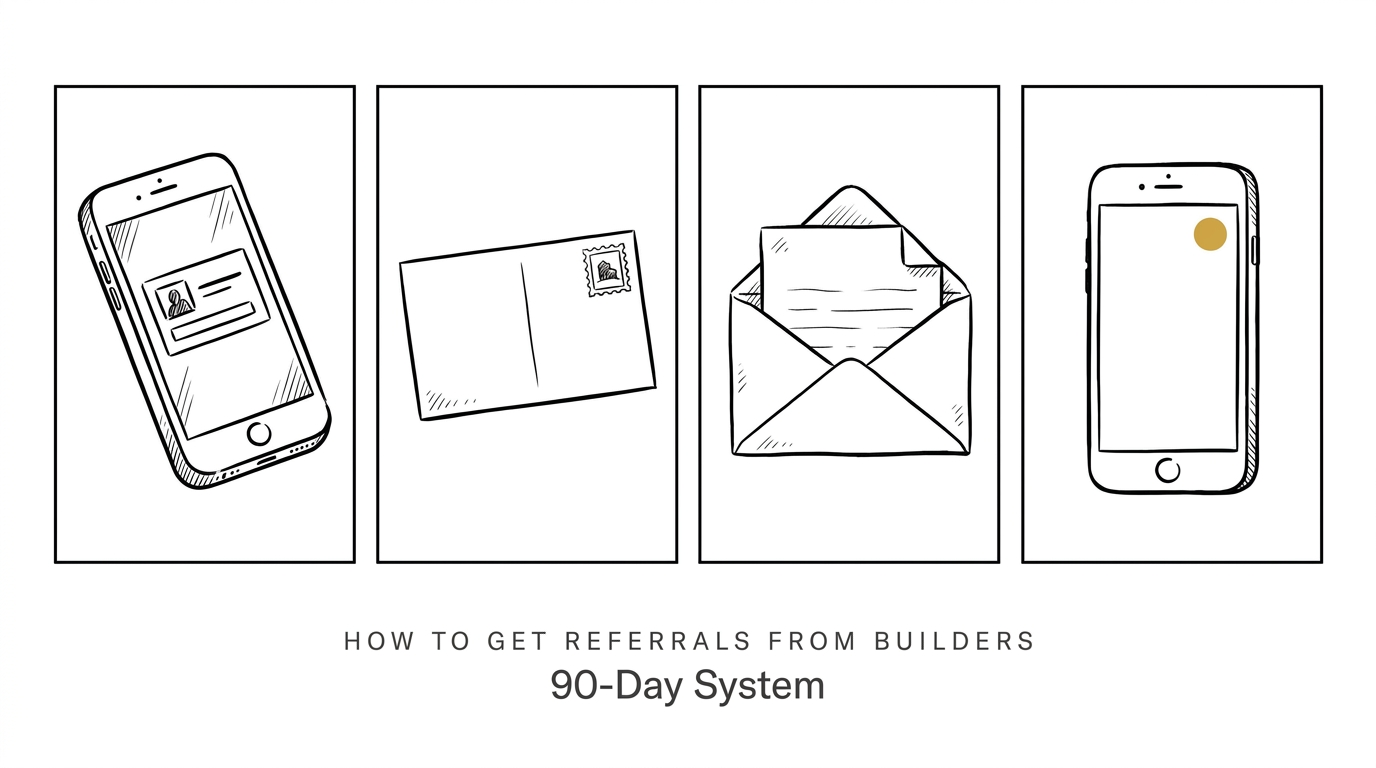
How to Get Referrals From Builders: 90-Day System
How to get referrals from builders comes down to one thing: showing up after the first call. Most agents don’t. They hear “not right now,” move on, and hand the relationship to whoever calls back two months later. The difference between agents who win builder business and agents who don’t is rarely skill. It’s follow-up consistency.
Why Are Builder Referrals Different From Every Other Lead Type?
Builder referrals run on a 3-12 month decision cycle. Builders aren’t evaluating listings or responding to urgency. They’re watching whether you know the local market, move inventory reliably, and show up consistently. Consumer-style follow-up damages these relationships because builders read a “just checking in” text for exactly what it is: a commission chase.
Residential buyers decide in 30-60 days. Builders sit on a relationship for months before sending a single referral. Most have worked with the same agent for years, which means breaking in requires patience, not a pitch.
Understanding how to get referrals from builders starts with accepting that timeline.
This is relationship-first business. The real estate referral network model applies here. Builders are one of the highest-value referral pools available, but only if you treat them differently than buyer leads.
What Are the 4 Mistakes Agents Make After the First Builder Call?
The four mistakes that kill builder relationships: no second touchpoint, a salesy tone, no CRM tag, and treating builders like buyer leads. Each one signals you don’t understand how builder relationships work. Agents who want to know how to get referrals from builders need to clear these habits before running any sequence.
1. No second touch.
Most agents quit after one attempt. With builders, one call rarely opens a relationship. Their cycle runs in months.
2. Wrong tone.
Sending an “I have buyers ready!” email to a builder is like asking about vacation time in a job interview. Lead with value. Market data, permit trends, neighborhood absorption rates – that’s the language builders use.
3. No CRM tag.
Builders in a generic buyer pipeline get the wrong sequence. A builder receiving your pre-approval drip will not call you back.
4. Treating them like a buyer lead.
Builders don’t need conversion to a showing. They need to see you’re informed, consistent, and not going to disappear after a slow quarter.
What Does a 90-Day Builder Nurture Sequence Look Like?
A 90-day builder sequence runs six to eight touchpoints across 12 weeks, alternating between value-forward emails, single-stat SMS messages, and two personal phone calls. The cadence is consistent without being aggressive. Most agents skip this entirely, which is why the ones running any sequence tend to win.
Here’s the week-by-week structure:
Week 1 – The call. Introduce yourself. Ask about current projects and what buyer profiles they’re seeing. Don’t pitch. Listen.
Week 2 – Value email. Send a short market snapshot: median days on market, list-to-sale ratios, active inventory for the ZIP they build in. Subject line: “Quick market numbers for [Neighborhood Name].”
Week 4 – Data text. One relevant stat via SMS. Specific: “Seeing 14-day average time on market in [ZIP] this month. Strong if you’re planning Q3 releases.”
Week 6 – Personal check-in call. Short call, no pitch. Ask how a specific project is going. Reference something from your first conversation. Most agents skip this call. It’s the one that starts shifting the relationship.
Week 8 – Local intel text. Something hyperlocal they probably haven’t seen: a new development filing, a competitor’s price drop, a neighborhood shift. You become the resource.
Week 10 – Email with sold comps. Pull 3-5 recent sales near their build sites. Frame it around buyer demand.
Week 12 – Second check-in call. By now they know your name. This call runs warmer. Ask what’s coming down the pipeline. You’ve earned the right to ask.
Repeat the cycle with updated data. The real estate drip campaign model applies here. Consistent touchpoints timed around relevance, not desperation.
What to Say in Each Touchpoint (and What to Skip)
Every touchpoint has one job: prove you know the market and aren’t hunting a commission. Agents who figure out how to get referrals from builders quickly learn that message framing matters as much as timing.
Email subject lines that work:
- “Q2 absorption numbers for [Neighborhood]”
- “[City] permit activity – what I’m seeing”
- “Recent sales near [Street/Subdivision]”
Subject lines that damage the relationship:
- “Following up on our last conversation”
- “Still looking to help with your sales”
- “Checking in!”
SMS that works: One specific fact, no ask. “Inventory in [ZIP] dropped 18% month over month. Buyers are moving fast. Figured you’d want to know.” No call to action needed.
What to skip: Anything that sounds like you need them. Position yourself as someone who has data and wants to share it. Referrals come naturally once builders see you as a resource.
The Trigger Events That Signal a Builder Is Ready to Move
You don’t have to wait for them to call. These signals mean a builder is active and your timing matters.
Permit filings. New residential permit applications are public record in most counties. According to the U.S. Census Bureau’s Building Permits Survey, over 1.4 million new residential units were permitted in 2023 alone. A builder pulling permits in your target ZIP is in active build mode. Check your county assessor portal weekly or set a Google Alert.
New subdivision filings. Plat filings with the county recorder signal a builder is preparing a new phase. That’s 6-18 months of potential referral inventory ahead.
Social posts. Builders post progress shots, groundbreaking photos, and “now selling” announcements. Follow them on Instagram and Facebook. A groundbreaking post is your cue to reach out.
Market shift signals. When rates drop or inventory tightens in their area, call. “Rates moved and buyer urgency is picking up in [Area] – wanted to loop you in.” That’s value. That’s the call they remember.
Wire Google Alerts for each builder’s name plus your target neighborhoods. You’ll know when to reach out before they think to call you.
How to Tag and Track Builder Relationships in GHL
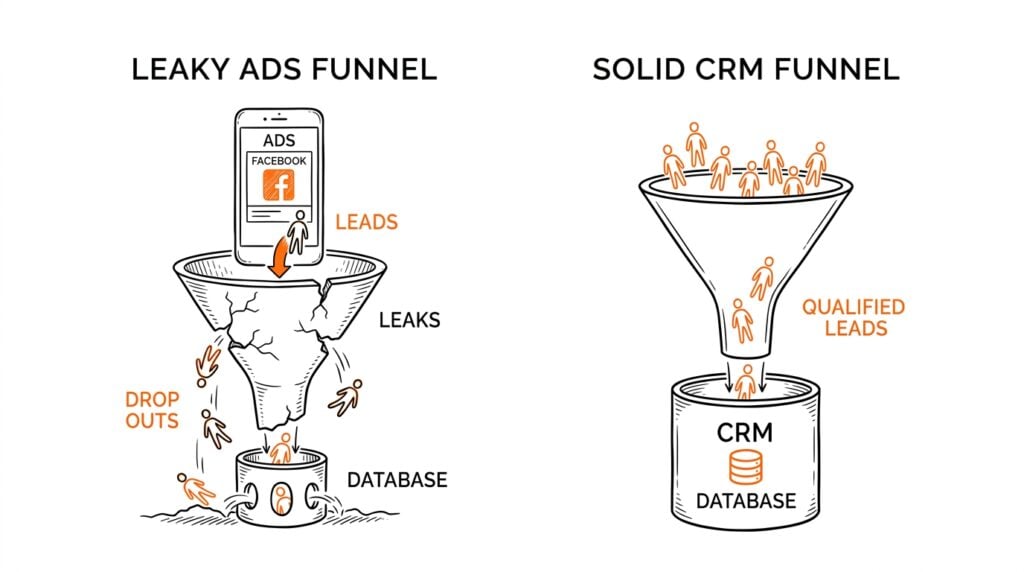
Builder contacts need their own pipeline in your CRM. Dropping them into a generic buyer sequence is one of the fastest ways to lose a relationship you spent three months building.
Pipeline stages:
- Contacted
- Conversation started
- Relationship building (active nurture)
- Warm (they’ve engaged more than once)
- Referral partner (they’ve sent or discussed sending business)
Custom fields to add:
- Builder name and company
- Current projects (subdivision or address)
- Preferred contact method
- Last personal call date
- Referral history
Lead source tag: “Builder – [Region]” or “Builder – [Subdivision Name].” This lets you filter your pipeline and see exactly how many builder relationships are active at any time. Nothing falls through the cracks.
The GoHighLevel for real estate post covers the core CRM setup if you’re still getting the system configured.
- ✓Week-by-week 7-touchpoint sequence (weeks 1-12)
- ✓Exact email subjects + body copy (weeks 2 and 10)
- ✓SMS scripts for weeks 4 and 8 – one stat, no pitch
- ✓Call talking points for all 3 phone touchpoints
- ✓GHL pipeline stages, custom fields, and lead source tags
How to Automate the Sequence So You Only Build It Once
Build the workflow once and let it run. Agents serious about how to get referrals from builders don’t manually track 20 relationships across 12-week cycles. They automate the cadence and show up personally for the two calls that move things.
Enrollment trigger: Tag applied (“Builder Lead”) or contact added to the Builder pipeline stage.
Email and SMS cadence: Map your week-by-week sequence as a GHL workflow. Email at week 2, SMS at week 4, email at week 10. The scheduling runs on its own.
Task reminders for personal calls: Automate task creation at weeks 6 and 12. The system reminds you to make a human call. You show up; the automation handled the warm-up.
Pause rules: If they reply or call you, pause the sequence and move them to the next pipeline stage manually. Automated emails mid-conversation will undo the rapport you built.
The real estate follow-up system framework gives you the full three-track model. Builder leads deserve their own dedicated fourth track.
This is where a system like nurtureBEAST helps. The sequences are already built. Data emails go out on schedule. Your VA handles the relationship calls – the ones that actually move things forward. You handle the conversations that matter.
Frequently asked questions
How long does it take to get a referral from a builder?
Most builder relationships take 3-6 months before a referral comes through. Builders move on project timelines, not sales timelines. Agents who stay consistent through a full 90-day sequence typically get a referral conversation by the end of it, though the actual referral may follow weeks later.
How to get referrals from builders without being pushy?
Lead every touchpoint with data, not an ask. Market snapshots, permit trends, and sold comps position you as a resource rather than a commission chaser. Once you’ve delivered value consistently for 8-10 weeks, asking what’s coming down the pipeline doesn’t read as pushy. It reads as a natural next step.
What CRM should agents use to track builder relationships?
GoHighLevel works well for builder nurture because it combines email, SMS, pipeline tracking, and task reminders in one place. Agents running how to get referrals from builders at scale need dedicated pipeline stages and custom fields to prevent builders from falling into generic buyer sequences.
Do builders need a separate drip sequence from buyer leads?
Yes. Builders receiving buyer-facing content will disengage. The message tone, subject lines, and call timing in the 90-day sequence above are specific to builder relationships. A separate pipeline stage and enrollment trigger in GHL keeps builders isolated from buyer and seller drip campaigns.
Related reading
- Real Estate Referral Network: 3 Pools That Send Leads – Builders are one of the three highest-value referral pools covered here in full.
- Real Estate Follow-Up System: 3 Tracks Every Agent Sets – The builder sequence is a fourth track worth adding alongside your core three.
- GoHighLevel for Real Estate: 4 Features That Matter – GHL pipeline and tagging setup for agents building their builder track for the first time.
The Bottom Line
Builder referrals aren’t hard to win. They’re slow. Most agents give up at call one. Agents who stay consistent for 90 days – with real market data, real check-in calls, and a clean CRM setup – almost always win the relationship.
You won’t do this manually across 20 builders. Build the sequence once, automate the cadence, and show up personally for the calls that move things. That’s how to get referrals from builders without burning hours every week on follow-up that could run on its own.
Is Your Real Estate Business Leaking Revenue?
Most agents are losing deals they don’t even know they have. Find out exactly where your business is broken and get a custom plan to fix it.