⏱ 18 min read
Published March 31, 2026
Real Estate Referral Network: 3 Pools That Send Leads
Last Updated: March 31, 2026
Most real estate agents say referrals are their best lead source – and then have no system for generating them. They count on past clients to “remember to mention them” whenever someone brings up real estate. That is not a referral strategy. It is wishful thinking. Building a real estate referral network means creating a system that keeps you top of mind with the right people, makes it easy for them to refer you, and follows up fast enough when a referral comes in that the person referring you feels good about having done it. This guide builds that system.
Key Takeaways
- 87% of real estate sales come from referrals or repeat clients – the agents winning this business have a system, not just good relationships
- Referrals come from three groups: past clients, sphere of influence, and professional network (agents, lenders, attorneys)
- The system has three components: regular touches, a clear ask, and fast follow-up when a referral is sent
- Your CRM is what makes this systematic instead of random
- Referral asks should be soft, specific, and tied to value you just delivered – not a generic “send me business” pitch
Table of Contents
- Why Most Agents Get Referrals by Accident
- The Three Referral Pools
- The Regular Touch System
- How to Ask for Referrals Without Being Awkward
- Agent-to-Agent Referrals
- Following Up When a Referral Comes In
- FAQ
Why Most Agents Get Referrals by Accident
87% of real estate sales come from referrals or repeat clients (NAR, 2023). That number is not because agents have great referral programs. It’s because real estate is inherently a relationship-driven transaction and people naturally turn to trusted connections when making a major financial decision.
The problem: without a system, referrals are random. You get them when your name happens to come up and the person happens to remember you. The gap between “my clients like me” and “my clients consistently send me business” is a system.
Agents with a referral system generate more referrals because they stay visible. The past client who bought a home from you three years ago is not thinking about you on a Tuesday in February. But if you sent them a neighborhood market update last month and a holiday card in December, you’re in their recent memory when their coworker mentions they’re thinking about selling.
That is all a referral system is: structured visibility with people who already trust you.
The Three Referral Pools
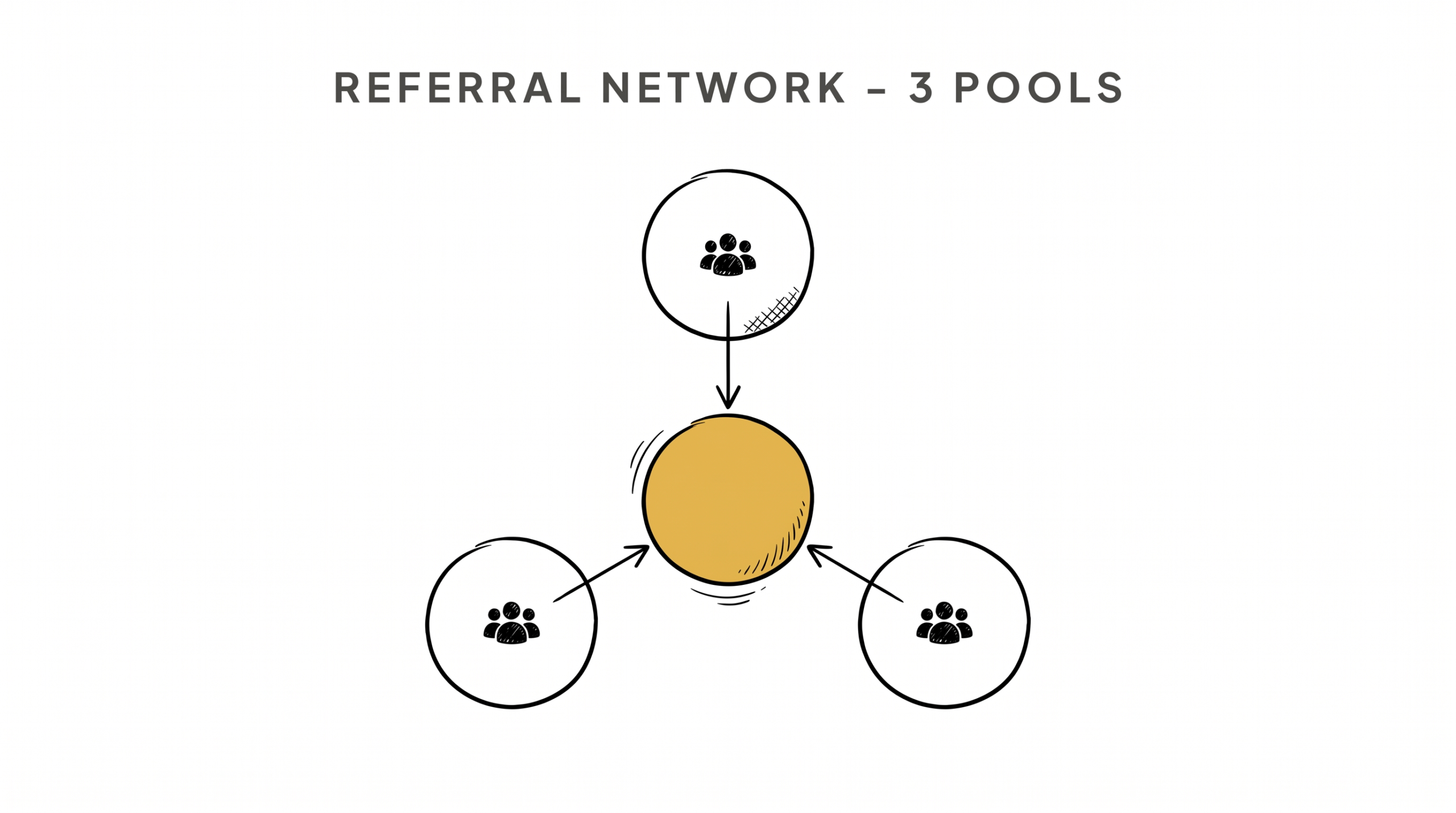
A referral network has three distinct segments, each requiring slightly different cultivation.
Past Clients. Your highest-trust group. They have firsthand experience with your work. When they refer you, they’re putting their reputation on the line, which means they only do it when they genuinely trust you. Treat this group as VIPs in your CRM. They deserve more frequent touches (monthly at minimum), more personalized content, and the clearest referral ask. See our guide on how to stay top of mind with past real estate clients for the full touch cadence.
Sphere of Influence. Friends, family, former coworkers, neighbors. They may not have transacted with you directly, but they know you and generally want you to succeed. This group is slightly lower-trust than past clients but still significantly higher-converting than cold leads. They need regular, personal-feeling outreach – not just drip emails.
Professional Network. Lenders, title reps, attorneys, financial planners, insurance agents, CPAs. These are professionals who work with the same clients you serve and can send you qualified referrals – often repeatedly. A relationship with one good mortgage lender who sends you three referrals a year is worth a lot. These relationships need investment: lunches, co-marketing, mutual referrals.
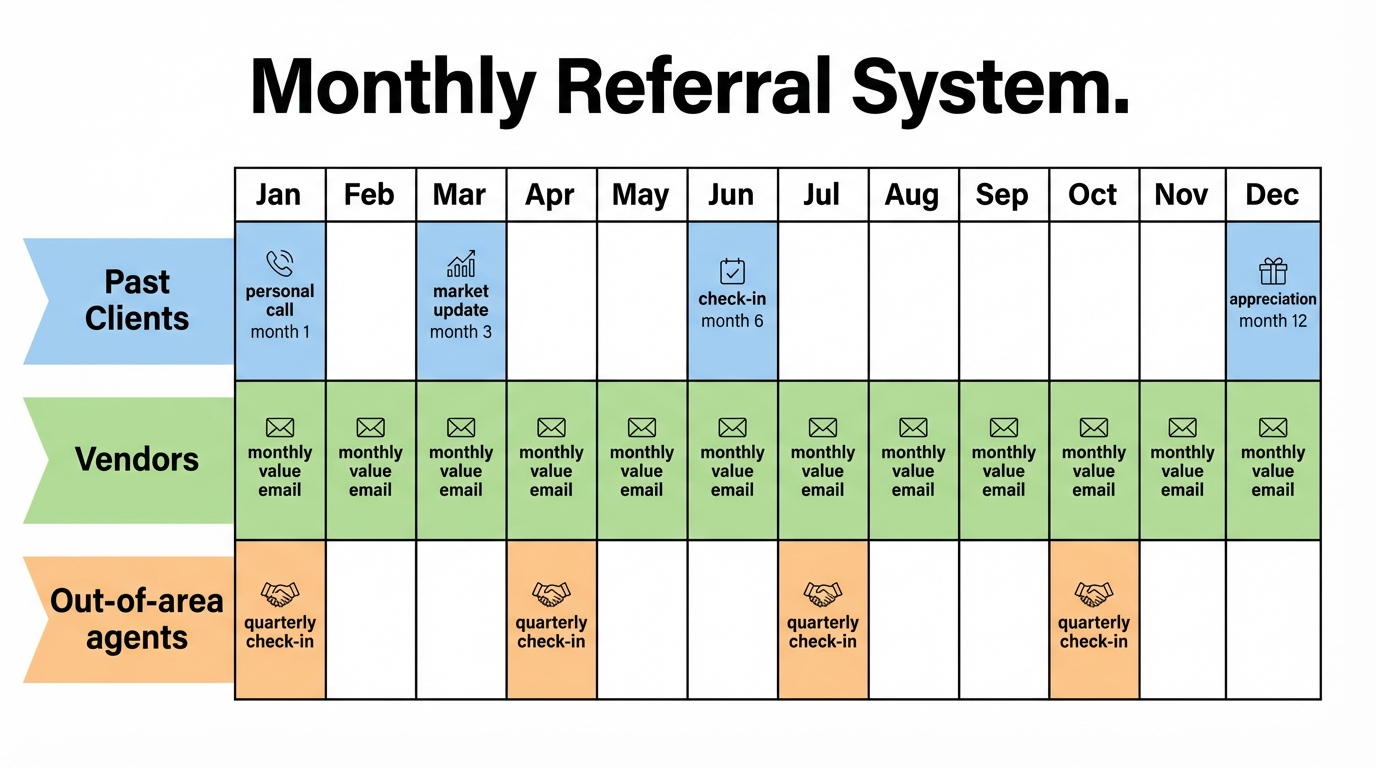
The Regular Touch System
Referrals come from relationships that are warm. Warm means recent contact. If you haven’t spoken to or reached someone in six months, you are not in their recent memory.
For past clients (monthly):
- Month 1: Market update email specific to their neighborhood or the area they bought/sold in
- Month 2: Brief check-in text: “Hey [Name] – how’s the house treating you? Anything I can help with?”
- Month 3: Relevant local news, event, or market story
- Month 4+: Repeat, varying the format
For sphere (quarterly):
- Handwritten card or personal text on milestone dates: birthdays, home purchase anniversaries
- Seasonal market updates via email
- One genuine in-person or phone touchpoint per year
For professional network (monthly):
- A coffee or lunch meeting once per quarter with top referral partners
- Share their content on social media
- Send business their way proactively – referrals are reciprocal
Your real estate CRM should have tasks and reminders for all of this. If you are doing this manually from memory, you are missing touches. Build it into your automation.
How to Ask for Referrals Without Being Awkward
The reason agents avoid asking for referrals is that the generic version – “I’d love it if you’d send business my way!” – feels like a pitch. It makes people uncomfortable.
A better ask is specific, soft, and tied to something you just did.
Right after closing: “This was a great experience working together. If you know anyone else thinking about making a move – a neighbor, coworker, family member – I’d love the chance to help them the same way I helped you. No pressure at all, but I want you to know I’m always available for anyone you trust.”
In a check-in call: “I’ve been expanding my business this year and I’m specifically looking for more buyers/sellers in [area]. If anyone in your circle mentions real estate, I’d love if you’d mention me. Even just passing my number along is enough.”
In writing (post-card, email, text): “As always – if anyone you know is thinking about buying or selling, I’d be grateful for the introduction. My clients are the best referral source I have.”
The key is asking directly and then stopping. Don’t over-explain. Don’t promise to “take great care of them.” Trust is the close, not the pitch.
Agent-to-Agent Referrals
One underutilized referral source is other real estate agents, specifically:
Out-of-area agents. When your client’s friend is relocating from another state, the agent in that market often doesn’t have a connection in your market. Being on those agents’ “trusted agents in [your city]” list means referrals whenever someone moves to your area. Join state and national associations, engage in agent Facebook groups, and build relationships at conferences.
Agents leaving the business. When a part-time agent retires or becomes a broker-only, they often have a database they’re walking away from. Being the agent they refer their former clients to is a significant opportunity.
Agents with clients outside their specialty. A commercial agent who gets a residential client. A buyer’s agent whose client now needs to sell. An agent whose client needs a rental while their home is being built. These agents want to help their clients – they just can’t.
Agent-to-agent referrals typically involve a 20-25% referral fee, which is standard. Factor this into your business model. A referral fee paid is still better than no transaction.
Following Up When a Referral Comes In
How you handle a referral determines whether you get another one.
Contact the referred person within the hour. When someone gives you a referral, they expect their friend to hear from you quickly. A referral that sits for two days makes the person who sent it look bad. This is a speed to lead problem: have your CRM trigger an immediate alert and text the moment a referred lead is entered.
Tell the referrer when you’ve made contact. A quick message: “Hey – I just connected with [Name]. Really appreciate you making the introduction. I’ll take good care of them.” This closes the loop and reinforces the referral behavior.
Tell the referrer when it closes. After the transaction, a handwritten note and a small gift (a gift card, a local experience, something thoughtful) does more for your referral pipeline than any marketing campaign. People refer agents who make them feel appreciated.
FAQ
How often should I ask past clients for referrals?
Two to three times per year is appropriate. More than that feels pushy. The ask should always feel natural – tied to a check-in or a moment of delivered value, not a cold message out of nowhere.
Should I have a formal referral program with rewards?
Simple rewards (gift cards, charitable donations in the client’s name) are appreciated but not necessary. Most clients refer because they genuinely want to help their friend, not because they’re chasing a $50 gift card. Don’t over-complicate it.
How do I track who has referred me?
Tag everyone who sends a referral in your CRM with a “Referral Source” field. This tells you which relationships are most productive and helps you prioritize who gets extra investment in the relationship.
What’s the best way to reconnect with past clients I’ve lost touch with?
A simple check-in: “Hey [Name] – it’s been a while. I was thinking about you and wanted to see how things are going with the house.” No agenda. Just a genuine reconnect. Most people respond well to this. See our database reactivation guide for the full sequence.
Is a referral network worth investing in over paid lead sources?
Referrals convert at a dramatically higher rate than any paid source – often 30-50% vs. 1-3% for online leads. They also close faster and require less nurturing. The ROI on referral cultivation is almost always higher than paid lead generation.
The Bottom Line
A referral network is not built by being likeable. It is built by staying visible with the right people, making a clear and comfortable ask, and responding so well when a referral comes in that the person who sent it looks good for having done so.
The system is a CRM with past clients, sphere, and professional network tagged and segmented. Automated touches running on a consistent schedule. A soft ask embedded into check-ins. And fast, grateful follow-up when someone sends you business.
Is Your Real Estate Business Leaking Revenue?
Most agents are losing deals they don’t even know they have. Find out exactly where your business is broken and get a custom plan to fix it.