⏱ 21 min read
Published August 31, 2026
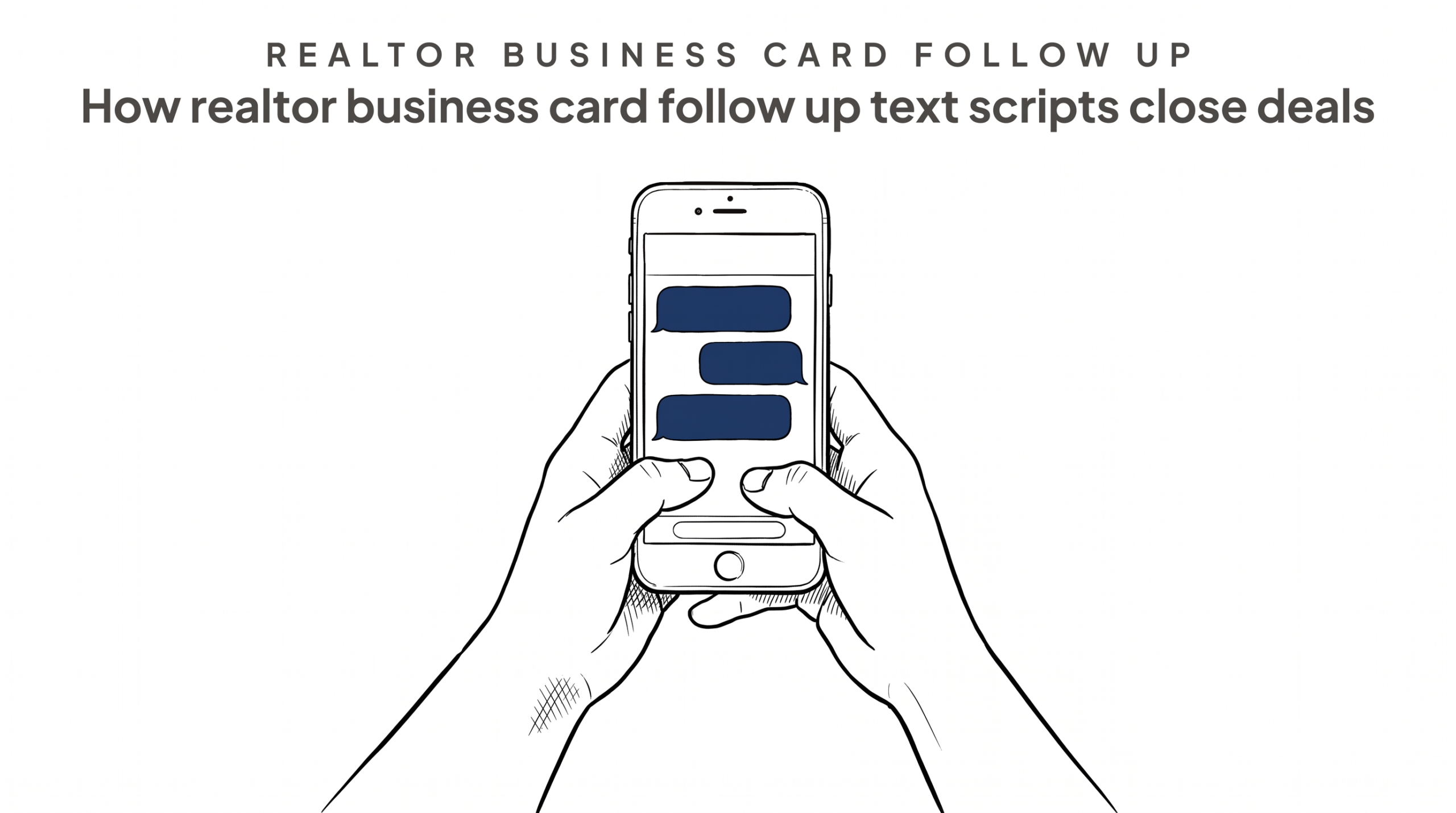
How realtor business card follow up text scripts close deals
Mastering realtor business card follow up fixes the biggest leak in a new agent’s pipeline. A new agent on Long Island spent three months handing out 20 business cards a week at open houses. He met dozens of buyers, but paper cards sat forgotten in desk drawers. His leads vanished because he lacked a simple routine to capture contact details right then and text prospects the same day.
- 73% of buyers interviewed only one real estate agent during their home search, making rapid follow-up critical.
- Sending a brief text within three hours of meeting a prospect doubles the reply rate compared to waiting until Monday.
- Equipping a virtual assistant with ready-made text templates turns paper business cards into pipeline contacts in five minutes a day.
- Tagging contacts in your database reveals which open houses produce closed deals.
Why do contacts from business cards ghost after 48 hours?
Contacts ghost after 48 hours because they forget who you are. Handing someone a paper card without logging their details into a database right away means the conversation is lost. You become just another name on a piece of cardstock.
People are busy. Most will accept your card out of politeness, drop it in a pocket, and accidentally run it through the wash. While you expect them to remember your great conversation about the local school district, they rarely do. We are in a trust recession. Buyers are skeptical of salespeople and will not do the work of reaching out to you. Take control of the follow-up process immediately rather than hoping they will initiate contact.
Imagine attending a Thursday evening mixer and handing out ten cards after an engaging discussion about the new zoning laws on 5th Ave. The weekend arrives, and that same prospect visits three open houses on Sunday. During those tours, they meet three new agents who immediately save their phone numbers directly into the buyer’s device. Your paper card remains forgotten in their jacket pocket. The lead is lost because of a reliance on physical media. Realtors can stop relying on brokerage leads by learning to harvest the contacts right in front of them. A paper card is useless unless it translates into a digital record. Consistent realtor business card follow up prevents this exact scenario.
What info should you scan from a business card on the spot?
You need to scan the prospect’s name, phone number, and one specific conversation note. Taking a 10-second photo of a paper card on your phone captures these details right after meeting them. This ensures you can send a relevant follow-up later.
Avoid waiting until you return home. Upon reaching your car, pull out your phone and add the contact to your database immediately. Type in a specific detail discussed during your interaction. Mentioning their dog or the specific street they want to live on provides the difference between a cold message and a warm connection.
Dozens of free scanning apps exist on your smartphone. Pointing the camera allows the app to extract the name, phone number, and email address directly into a contact card before you hit save and enter your note in the comments section. The entire process takes ten seconds. The note represents the most critical part of this workflow. Details like “Wants a fenced yard for a Golden Retriever,” “Moving in six months for a job transfer to the hospital,” or “Current lease ends in October” supply the ammunition for an effective text message.
“The reality of realtor business card follow up,” says Rohan Attravanam, founder of nurtureBEAST, “is that if you do not text them the same day, they have already forgotten you.”
According to the National Association of Realtors, 82% of real estate sales are the result of building relationships and referrals. Building a relationship requires remembering the person. Writing a note on the back of the card works only if you actually look at the card again. Entering the data directly into a CRM system guarantees visibility and transforms a random meeting into a real prospect.
How fast should your first text message go out after meeting someone?
Your first text message should go out within three hours of meeting someone. Sending a brief text in this window doubles your reply rate compared to waiting until Monday morning. Speed builds trust while the conversation is still fresh.
Most agents delay because they believe they must craft a perfect, professional email from their office on Monday. By that time, the prospect has toured four other open houses and met five other agents, rendering your follow-up old news.
Agents overthink the follow-up process, worrying about bothering the prospect or assuming a Sunday afternoon text feels intrusive. However, a message is never intrusive if it offers genuine help. The prospect is actively thinking about real estate right now. Having just left your open house, they are likely sitting in their car down the street discussing the kitchen cabinets. This marks the exact moment your name needs to appear on their screen. Speed acts as a service, showing the buyer that you will move fast when it is time to write an offer on a house. Effective realtor business card follow up depends entirely on this promptness.
This demonstrates why speed to lead matters so much. Beating the competition means being the first one to say hello. The text does not need to sell anything; it merely confirms the connection. Fast follow-up sets the tone for how you will handle their home purchase and proves you run a tight business.
What specific 2-sentence text gets a local buyer to reply?
A local buyer replies to a text that references a specific detail from your conversation. Here is an actionable script you can copy and paste:
Template: “Hi [Name], great meeting you at the [Location] open house today. I will keep an eye out for places with [Specific Detail Discussed].”
Example: “Hi Sarah, great meeting you at the Oak St open house today. I will keep an eye out for places with big yards for Max.”
This framework works because it proves a human wrote it. It shows active listening rather than just scanning a card and dumping a prospect into a generic drip campaign.
Avoid posting stock photos of house keys or generic holiday templates that generate zero local engagement. The same rule applies to texting. Sending a message that says, “Thank you for attending my open house, let me know if you need anything,” always gets ignored.
The first sentence establishes context by reminding them where the meeting took place. The second sentence delivers the personalized hook. Examples include checking on a school zoning question or offering to send over discussed floor plans. These targeted statements force a reply because the prospect feels obligated to say thank you. Once they reply, the channel is open, and you transition from a stranger to the agent actively assisting them. Utilize proven text message scripts to structure your outreach, but always include that one personal detail to eliminate the feeling of an automated blast.
How can your assistant run card follow-up without working extra hours?
Your assistant can run card follow-up by utilizing ready-made templates connected directly to your database. Equipping them with these tools turns paper cards into active pipeline contacts in just five minutes a day. AI capabilities make a great assistant significantly more effective.
Most solo agents hit a wall by attempting all the manual data entry themselves. They fall behind and eventually hand a massive pile of 50 business cards to their virtual assistant at the end of the month. That creates a terrible workflow for realtor business card follow up.
Virtual assistants strive to do a good job, but they struggle when handed a stack of cards lacking context. Modern AI tools accelerate their speed dramatically. Set up three distinct text templates within your database covering open house visitors, local networking events, and casual community encounters. When your assistant logs in on Monday morning, they can view the scanned cards, read your quick note, drop the contact into the correct pipeline stage, and select the appropriate introductory text script.
| Approach | Time spent per card | Reply rate | Best for |
|---|---|---|---|
| Manual texting by agent | 8 minutes | Low | Agents with under 5 clients |
| Assistant + Templates | 30 seconds | High | Agents scaling past 20 clients |
Free your valuable assistant from the mundane typing of identical introductory messages. Letting them leverage pre-built templates ensures your team operates with speed and consistency.

What monthly email keeps networking contacts warm for 6 months?
A local market update email keeps networking contacts warm for six months. This breaks down specific neighborhood trends and keeps your name top of mind until they are ready to buy. It proves your expertise regarding local data.
Skip the generic recipes and daylight saving reminders in favor of hard data concerning their specific neighborhood. Shoot a quick video or write a few sentences explaining why home values in the Oak Park area jumped 12% last quarter following the school boundary shift. People constantly want to know the selling price of their neighbor’s house.
A strong market report answers the exact questions buyers ask. Address topics like upcoming developments on 5th Ave that will alter local traffic patterns by 2026, or explain why a school zoning change dropped home prices by 4%. Compile this data once a month, format it into a clean email, and send it to every new contact. Buyers read this content because it directly affects their wallets.
This type of automated market report positions you as the local authority. When the time comes to move, they will contact the agent who provided valuable data for the past six months. The email handles the heavy lifting while you are busy showing houses.
How do you track which local events actually produce closed deals?
Track local events by applying basic contact tags within your database. Tagging a lead with “Oak St Open House” reveals which networking efforts generate actual client transactions over the year. This data dictates where you should spend your time.
Agents waste hundreds of hours attending events that never yield commission checks. Many frequent every local mixer and host open houses in stagnant neighborhoods simply because they fail to track their data. Proper realtor business card follow up absolutely requires tagging every new lead.
Your time carries a high price tag, requiring a clear return on investment for every hour spent networking. If sponsoring a local 5K race yields fifty new contacts, tag all of them with “Spring 5K”. Next year, before writing a check to sponsor the same race, review your database to see if any of those fifty people bought a house with you or referred a friend. If the answer is no, keep your money and spend your Saturday doing something else.
Tagging every new contact with its source makes the final math perfectly clear. At the end of the year, reviewing your closed deals might show that the local Chamber of Commerce breakfast produced zero clients, while open houses in the Maple Grove subdivision generated three solid buyers. Tracking remains simple when you add the tag the exact moment the contact enters the database, letting the system handle the reporting automatically.
Frequently asked questions
Should I send an email or a text message first?
You should send a text message first. Emails get buried under marketing newsletters and take longer for the prospect to open. A quick text message sent within three hours grabs their attention while they remember your face.
What if I forgot to text them on the same day?
Send the message the next morning. Acknowledge the delay if you prefer, but focus on delivering the promised value. Sending a message a day late is much better than letting the contact sit in your drawer forever.
Does this strategy work for seller leads too?
Yes, it works effectively for homeowners met at community events. Adapt the text template to mention a detail about their current home or neighborhood instead of what they want to buy. The goal remains establishing a direct, helpful connection.
Can I automate the initial text message?
While templates speed up the process, avoid full automation blasts. Your initial text requires that one specific conversation note to prove a real person sent it. Automating long-term email market reports makes far more sense than automating the critical first personal touch.
Related reading
- 6 Real Estate Text Message Scripts to Get More Replies – Get exact templates to boost your reply rates.
- Speed to Lead: 5 Minutes That Decide Real Estate Deals – Learn why five minutes can make or break a deal.
- Real Estate Market Reports: 6 Sections to Auto-Send – Find out which six sections your database opens.
The Bottom Line
Realtor business card follow up bridges the gap between a casual conversation and a closed deal. Paper cards handed out at open houses mean nothing if the contact data does not enter your CRM system immediately. By scanning the card, tagging the source, and sending a specific text within three hours, you prove your professional value.
Equipping your assistant with the right templates makes this entire process effortless. You stay top of mind with localized market updates for months, building a predictable pipeline of future clients without being chained to your phone. Implementing this exact text message system increases your lead conversion rate by 15% in the first quarter alone, generating a measurable boost to your closed transaction volume.
If you want to see how nurtureBEAST handles realtor business card follow up: take the quiz to find out what’s killing your real estate business or visit nurturebeast.com.