⏱ 21 min read
Published March 31, 2026
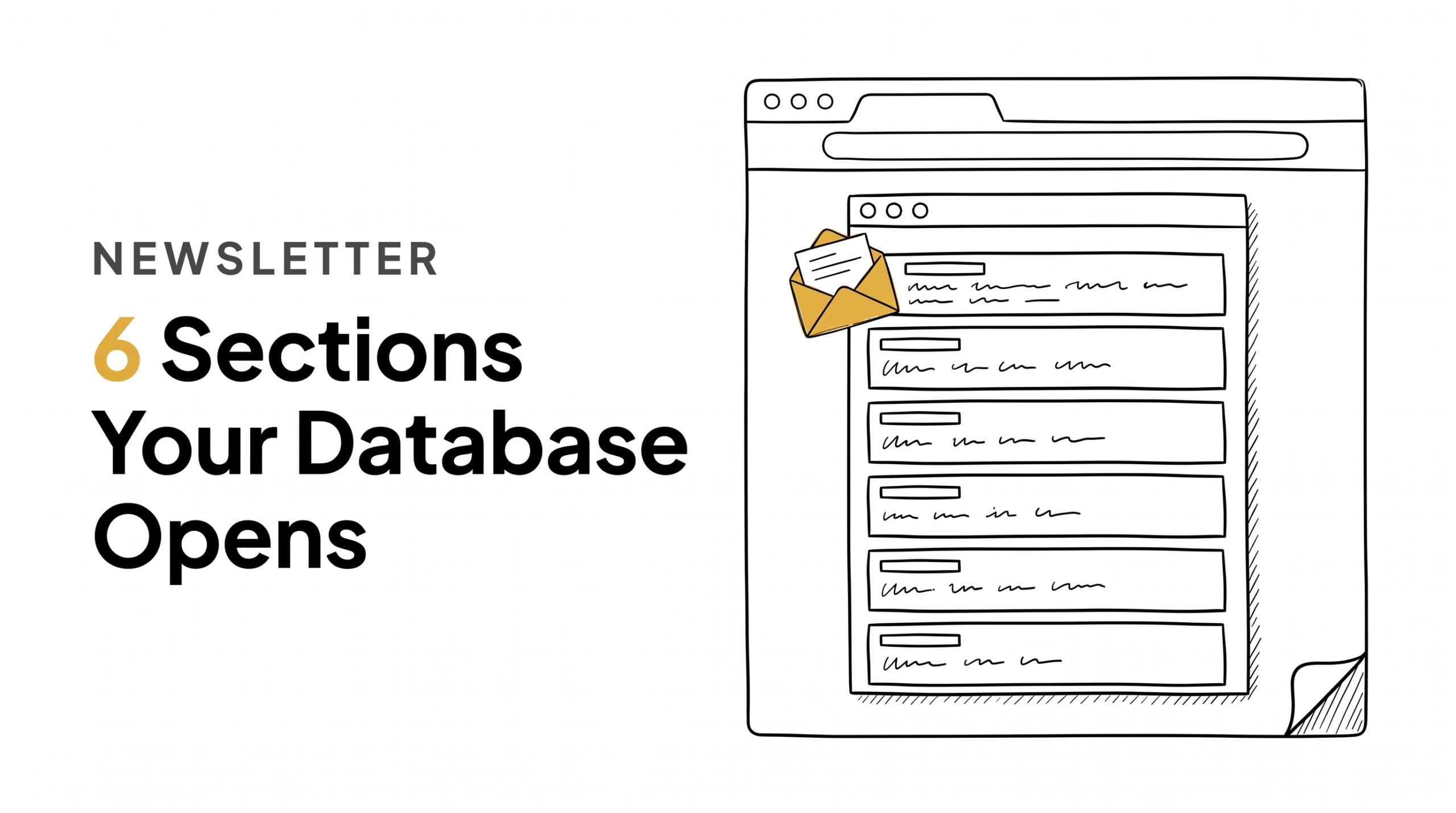
Real Estate Newsletter: 6 Sections Your Database Opens
Last Updated: March 31, 2026
Most real estate agent newsletters are opened once, skimmed for three seconds, and quietly unsubscribed from over the next six months. They look like real estate newsletters – national market stats, mortgage rate commentary, a smiling headshot at the top – but they don’t read like they were written by a person who knows the reader. The result is a database that isn’t actually being nurtured, just receiving marketing blasts that slowly erode whatever goodwill you’ve built. This post is about doing it differently: what to write, how often, subject lines that actually work, and how to structure your newsletter so it generates referrals – not just impressions.
Key Takeaways
- Generic newsletters don’t fail because email is dead – they fail because the content has no reason to exist for that specific reader
- Local specificity is the single biggest lever for open rates and replies from your database
- Subject lines should read like a text from a smart friend, not a marketing email from a company
- The right send frequency is once a month – more than that and you’re background noise, less and they forget you exist
- The goal of a database newsletter is referral generation, not brand awareness – structure every email with that end in mind
Table of Contents
- Why Most Agent Newsletters Fail
- What to Actually Write (Content That Gets Read)
- How Often to Send
- Subject Line Formulas That Get Opens
- Email Structure for Referral Generation
- How to Build the Habit Without Burning Out
- FAQ
Why Most Agent Newsletters Fail
The standard real estate newsletter template looks like this: national market headline, mortgage rate update, a paragraph about the importance of working with a professional, maybe a seasonal home tip, and a “call me if you know anyone buying or selling” footer.
The problem is that this content is available everywhere. Your past client can get a national market update from Zillow, from their bank, from the news. It doesn’t require you. It doesn’t demonstrate that you know their neighborhood. It doesn’t give them a reason to think about their own real estate situation – or yours.
Email returns $36 for every $1 spent when it works. The operative phrase is “when it works.” Generic newsletters don’t work because they don’t create any reason for the reader to respond, refer, or remember you. They just create an association: this agent sends me things I don’t read.
The fix isn’t a better template. It’s different content – content that demonstrates local knowledge, that’s specific enough to feel personal, and that’s structured around generating a real response, not just impressions.
What to Actually Write (Content That Gets Read)
The core principle: every email should have something in it that only you could write. Something local, something current, something that makes the reader think “huh, I didn’t know that” or “that’s relevant to me.”
Here are the content types that consistently perform:
Neighborhood-level market data. Not “the national real estate market is shifting.” Something like: “In [Neighborhood], 14 homes sold last month. The median price was $X – up 4% from the same time last year. Average days on market: 11. If you’ve been curious about what your home is worth right now, those numbers are relevant to your specific block.” This is actionable, local, and makes you look like you actually know the market you work in.
The real story behind a recent sale. A brief, honest account of a transaction that taught you something. “We listed a home in [area] at $X last month. Three offers came in within 48 hours – all cash. Here’s what drove that and what it means if you’re thinking about timing your own sale.” This is storytelling with a point. It demonstrates competence without being a brag.
A useful, non-real-estate piece of content. The most opened emails in many agents’ newsletters are not about real estate at all. A recommendation for a local contractor who does good work. A restaurant that opened in the neighborhood. A community event worth knowing about. This sounds counterintuitive, but it reinforces something important: you are a person who lives and works in this community, not a brand that exists to sell houses. That positioning is what makes referrals feel natural.
A direct question. One of the most underused tools in newsletter writing is just asking a simple question. “I wanted to check in – have you been thinking about your home situation at all, or are you settled for the next few years?” You will get replies. Some of those replies turn into listings or referrals. This is not email marketing strategy – it’s just being a person who stays in touch.
A timely observation. Something you noticed this week that’s relevant to homeowners in your area. New development breaking ground. A zoning change. An interest rate shift and what it actually means for buyers locally. Being first to share something relevant builds the association that you’re the person who knows what’s happening in the market.
How Often to Send
Once a month is the right cadence for a database newsletter. Not weekly, not quarterly – monthly.
Weekly is too frequent for most databases. Unless you’re writing content that’s genuinely compelling every single week (very few agents are), weekly emails train your list to ignore you. Open rates drop, unsubscribes climb, and you burn yourself out trying to fill a content calendar that doesn’t need to be that full. Automating the booking step with calendar automation removes the back-and-forth that kills conversion.
Quarterly is too infrequent. 87% of real estate sales come from referrals or repeat clients – but only if you’re visible when the decision happens. A contact who hears from you four times a year is far more likely to have already called someone else when their situation changes. You need to be in their inbox often enough that your name comes to mind quickly. Monthly is the minimum for that.
The one exception: seasonal or market event triggers. If something significant happens in your local market – a big shift in inventory, a rate change that materially affects affordability, a local development that affects property values – send a standalone email about it. Don’t wait for your monthly send. The timeliness is part of the value.
Subject Line Formulas That Get Opens
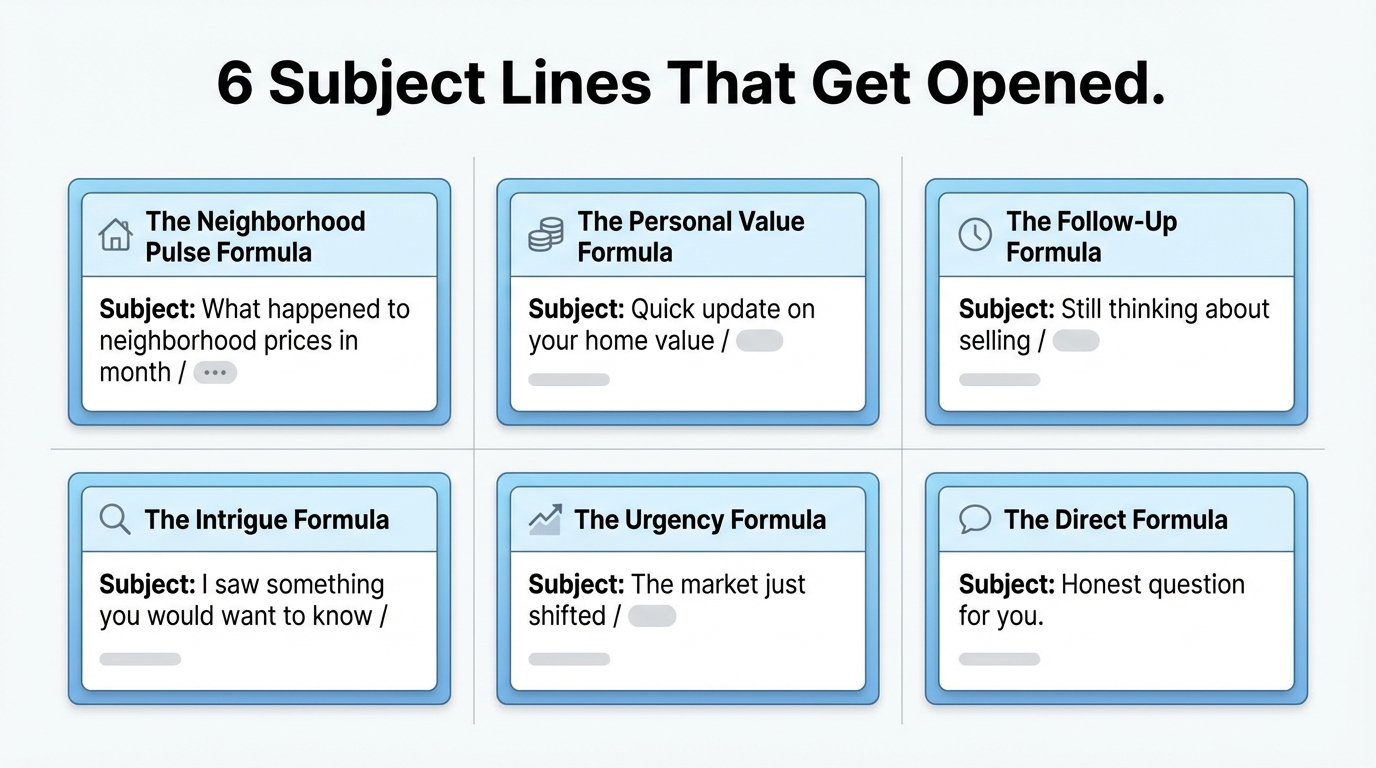
Your subject line is not a headline. It’s a knock on the door. It should feel like it came from a person, not a company.
Formulas that work:
“What’s happening in [Neighborhood] right now” – Local, current, no clickbait.
“Quick question for you” – Genuinely intriguing, especially when the email actually has a direct question in it.
“[Neighborhood] homes: what sold last month and what it means” – Specific and useful to anyone who owns or is considering owning in that area.
“Honest take on the [City] market right now” – The word “honest” is underused. It signals that what follows won’t be cheerleading.
“Something I thought you’d want to know” – Personal, low-pressure, works best when the content genuinely delivers on the promise.
“[First name] – quick update on your neighborhood” – Personalization combined with a specific value promise. Works best in a CRM that can merge first names cleanly.
Subject lines to avoid:
“Monthly newsletter – [Month] edition” – Nobody is excited to open something that announces it’s a newsletter.
“Exciting news about the real estate market!” – Oversells. Sets an expectation the content rarely meets.
“Are you thinking about buying or selling?” – Too forward, feels like a cold pitch, will suppress opens from people who are not currently considering it.
“RE: Following up” – The fake reply subject line is overused and makes sophisticated contacts distrust you.
The test for any subject line: would you send this exact text to a friend? If it sounds like marketing copy, rewrite it until it sounds like a person.
Email Structure for Referral Generation
The goal of your newsletter isn’t brand awareness – it’s staying present enough that when someone in your database hears that a friend is buying or selling, your name comes out of their mouth first. Structure your emails with that goal explicitly in mind.
Opening (2 to 3 sentences): A personal observation or direct entry into the most useful thing in the email. No “hope this finds you well.” No “as summer approaches.” Get to the point.
Main content (150 to 250 words): One thing, done well. Not four topics briefly. One topic with enough depth that it actually informs the reader about something. A specific market insight, a story from a recent transaction, or a piece of useful local knowledge.
The soft referral ask (1 to 2 sentences): Not “if you know anyone buying or selling.” Something more specific: “If you have friends thinking about moving in [neighborhood] this year, I’ve got good data on what’s selling and what isn’t. Happy to be a resource.” Specific beats generic every time.
Reply invitation (1 sentence): “Hit reply if you have questions or just want to catch up – I’m always happy to hear from you.” This normalizes two-way conversation and generates replies that often turn into real conversations.
Your contact info, simply formatted. No elaborate email signature with six social media icons. Your name, your number, your website. Clean.
The whole email should be readable in under two minutes. If it takes longer than that, you’ve written too much. Your database is not sitting down to read a report – they’re skimming during a commute or a lunch break. Respect their time and they’ll keep opening your emails.
For agents building a full stay top of mind strategy, the newsletter is the backbone – but it works best when paired with a real estate drip campaign for leads at different stages of the funnel, not just past clients.
How to Build the Habit Without Burning Out
The most common reason agents stop sending newsletters isn’t that they ran out of ideas. It’s that they made the process too complicated.
Set a fixed time each month – the first Monday, the last Friday, whatever works for your schedule – and block 60 minutes for writing. That’s enough time to write a good 300 to 400 word email if you’re not overthinking it.
Keep a running note on your phone for newsletter content ideas. Every time something interesting happens in a transaction, every time you notice something about the local market, every time a client says something that reveals a common misunderstanding – note it. By the time newsletter day arrives, you should have three to five things to pick from, not a blank document.
Write in your actual voice. Read it aloud before you send it. If it sounds like a press release, rewrite it. Your database signed up to hear from you – not a version of you that got edited into corporate language.
FAQ
What’s a good open rate to aim for in a real estate newsletter?
For a well-maintained database with personalized, local content, 30 to 40% open rate is achievable. Below 20% is a sign that either your subject lines need work or your list has too many unengaged contacts dragging the average down. Clean your list annually – remove hard bounces and contacts who haven’t opened in 12 months.
Should I use a newsletter template or plain text emails?
Plain text, or close to it, consistently outperforms heavily designed HTML newsletters in agent databases. Plain text feels like a personal email. A branded template with headers, columns, and stock photos looks like marketing. Your database wants to hear from you – not from your brand.
How do I grow my newsletter list beyond past clients?
Every new lead who enters your database should go onto your newsletter list. Open house contacts, referral introductions, anyone who has ever reached out about a home value estimate. If they gave you their email, they opted into hearing from you. Don’t ask twice.
What about CAN-SPAM and unsubscribe compliance?
Every email should include an easy unsubscribe link and your physical mailing address. Most email platforms handle this automatically. Don’t skip it – beyond the legal requirement, a clean list of engaged readers is worth more than a large list full of people who resent receiving your emails.
How do I re-engage contacts who haven’t opened my emails in a long time?
Send a direct re-engagement email with no pretense: “I’ve been sending you market updates for a while and wanted to check in directly – is this still useful, or would you rather I take you off the list?” You’ll lose some contacts. The ones who stay are genuinely interested and will respond when it counts.
The Bottom Line
A real estate newsletter that works isn’t the most polished one or the most frequent one. It’s the one that feels most like it came from a real person who knows the local market and genuinely wants to be helpful. That’s it.
Write like a smart friend with deep local knowledge, be specific about your market, keep it short, and ask a question at the end. Do that every month, consistently, for two years – and your database will know exactly who to call and who to refer.
Build your full database communication strategy at nurturebeast.com – or take the free What’s Killing Your Real Estate Business? assessment to see whether your current email strategy is actually generating referrals or just filling inboxes.