⏱ 16 min read
Published May 14, 2026
Shiny Object Syndrome: 3 Reasons Agents Stay Broke
Real estate shiny object syndrome is the strategy-hopping pattern where busy agents try cold calling for two weeks, social media for two weeks, door knocking for two weeks, and quit each one before compounding kicks in. The fix: pick one channel, run it 90 days, layer in nurture and content. Two things below: the math on what hopping costs, and the 3-layer stack that makes one channel produce more than five abandoned ones.
You cold called Monday. Posted a Reel Tuesday. Showed up at a networking mixer Wednesday. Tried circle prospecting Thursday. Door knocked a new subdivision Friday. Four months in, zero closings. You’re not lazy. You’re the hardest-working broke agent in your market, and shiny object syndrome is the reason.
The $47K Mistake You Don’t See on Your P&L
Every time you abandon a lead gen strategy at week two, you pay a tax that never shows up on your books.
Start with the obvious stuff. You ran Facebook ads for 11 days, spent $600, pulled in 14 leads. Then you watched a YouTube video about cold calling and killed the campaign. Those 14 leads got one touchpoint and never heard from you again. Most of them would have converted in months two or three with proper follow-up. Instead, they’re rotting in a dead spreadsheet.
Multiply that across every strategy you’ve tried this year. Three months of scattered lead gen costs you $15K-$20K in direct spend on half-baked campaigns. But the real damage is the leads that cooled because nobody followed up. A single deal in most markets runs $8K-$12K in GCI. Miss four or five of those per year because you restarted from zero every three weeks, and you’re staring at $47K in lost commission you can’t trace to a line item.
The worst part? You feel productive the entire time. You’re always starting something. You never finish anything.
Why does every YouTube coach sound right?
Cold calling works. Tom Ferry will show you the numbers. Social media works. Watch any agent pulling 30 deals from Instagram. Door knocking works. Your broker’s top producer probably swears by it.
They’re all telling the truth. That’s the trap.
Shiny object syndrome comes from too much good advice, not bad advice. Every coach sells a valid channel. None of them can sell you the discipline to run one channel for 90 days without flinching.
You binge three podcasts on a Monday commute, hear three strategies backed by real results, and by Tuesday morning you’ve pivoted again. You’re skipping between strategies, never running one long enough for any of them to pay off.
How long does a lead channel actually take to compound?
Days 1-30: You’re learning. Scripts feel clunky. Delivery is rough. Conversion is low. You think it’s not working. It’s supposed to feel that way.
Days 30-60: You’re refining. You start spotting patterns. Certain times perform better. Certain phrases get responses. Your skill compounds even when your results lag behind.
Days 60-90: Warm callbacks roll in. People you contacted on day 12 respond to your follow-up on day 68. First closings from this single channel show up.
Quitting at day 18 means you paid the tuition but skipped the graduation. You did the hard part, the reps, the rejection, the learning curve, and walked away right before it paid off.
This is why pre-call warming triples your pickup rate for agents who stick with cold calling long enough to refine it. The technique only works after you’ve put in the reps.
How do you pick your one lead source?
Stop agonizing. Run through three questions.
Budget: Do you have ad money or only sweat equity? If you can spend $1,000-$1,500 a month, paid leads are on the table. If not, pick a free channel: cold calling, door knocking, social content, open houses.
Personality: Can you handle rejection on the phone five hours a day? Choose cold calling. Love being on camera but hate the phone? Social media. Prefer face-to-face? Door knocking or community events.
Market: Dense urban area with condos? Digital performs well. Rural market where everyone knows everyone? In-person outreach and referral networks win.
Pick the channel you can show up to five days a week without wanting to quit. Consistency beats optimization.
The 3-Layer Stack That Makes Any Single Channel Work
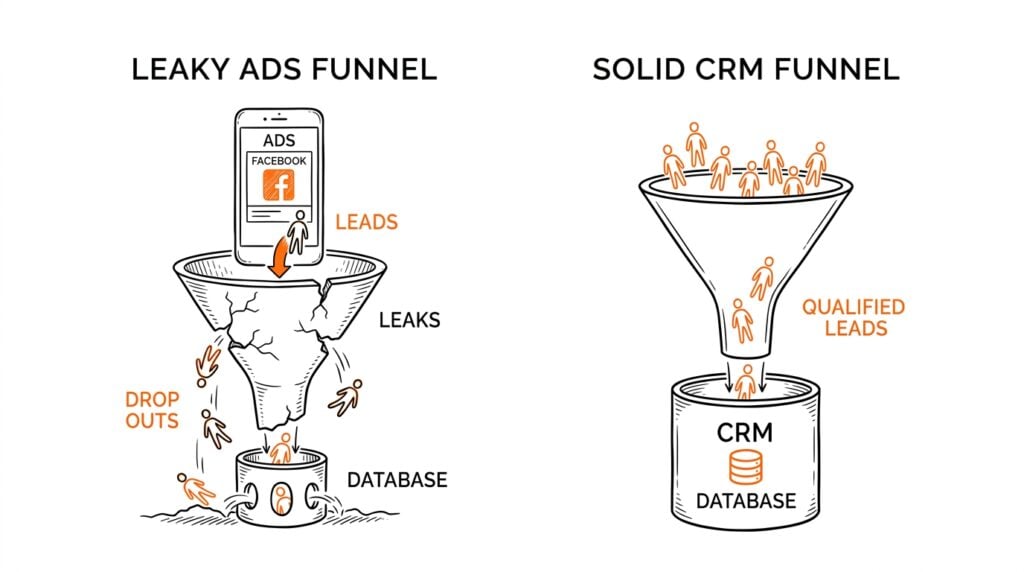
Choosing one channel solves half the problem. The other half is making sure that channel doesn’t leak.
Layer 1: CRM capture. Every person you talk to goes into your CRM the same day. No napkins. No mental notes. If it’s not in the system, it didn’t happen. And if your CRM is a mess, fix that before you fix anything else.
Layer 2: Automated nurture. You can’t manually follow up with 200 contacts every month. Build a drip sequence that runs without you. Day 1 text, day 3 email, day 7 value piece, day 14 check-in. This is where nurtureBEAST lives for agents who don’t want to build sequences from scratch.
Layer 3: Monthly content drip. A newsletter, market update, or SOI touchpoint that keeps you visible to contacts who aren’t ready to move yet. Eighty percent of your database isn’t buying this quarter. They need to remember your name when they are.
Without all three layers, even the right channel leaks leads out the bottom.
Week by Week: What 90 Days of One Channel Actually Looks Like
Set your expectations now so you don’t bail at week three.
Weeks 1-2: Volume and reps. Make 50 calls a day, post 5 Reels a week, knock 40 doors. Whatever your channel demands. You’ll be bad at it. Track your numbers but don’t judge them yet.
Weeks 3-6: Pattern recognition kicks in. You notice which scripts land, which post formats get saves, which neighborhoods answer the door. Tweak one variable at a time. Warm callbacks from early contacts start trickling in.
Weeks 7-9: Repeat conversations. People you contacted in week two remember your name. Your follow-up system pulls old contacts back into conversation. Pipeline starts to feel real.
Weeks 10-12: Closings from the channel. You’ve built enough pipeline depth that deals start falling. One or two closings fund another quarter of effort. Closings start landing. You stop wanting to pivot.
This timeline applies to almost any lead source. The specific numbers change. The arc doesn’t.
What to Do With Every Other Strategy (For Now)
Don’t trash them. Park them.
Keep a “Channel 2” list. Write down every strategy that caught your eye, the video that sold you on it, the reason it seemed promising. That list isn’t garbage. It’s your growth roadmap for month four.
The agent who masters cold calling can bolt on social media once the phone pipeline runs itself. Sequencing beats juggling, and one channel done right funds the next.
When are you ready to add a second channel?
Add a second channel when the math says yes, not when you’re bored.
1. Consistent conversation volume. Your first channel produces 10+ real conversations per week, not just dials or impressions, for at least three consecutive weeks.
2. Nurture runs without you. Your drip sequences, email campaigns, and SOI touchpoints fire automatically. You’re not spending two hours a day on manual follow-up.
3. Capacity exists. You have time, or you’ve hired help, to run Channel 2 without pulling hours from Channel 1. A second channel that cannibalizes your primary source defeats the purpose.
Hit all three? Pick the next item off your Channel 2 list and give it the same 90-day commitment.
Frequently asked questions
How long does shiny object syndrome usually last for new agents?
For most agents it shows up in months 3-12. The honeymoon of trying new tactics wears off only after enough abandoned campaigns add up to visible wasted spend and lost commission. A few self-aware agents catch it in month two. Most ride the carousel for a year or more before the math forces them to commit.
Is it ever okay to run two lead channels at the same time?
Yes – after you’ve earned the right. Once your first channel produces 10+ real conversations a week consistently and your nurture system is automated, capacity-permitting, you can layer a second one. The trap is running two from day one. Both stay shallow and neither compounds. Sequencing beats juggling every time.
What if my first chosen channel just isn’t working at day 90?
Before you pivot, audit three things: are you hitting your daily activity numbers (not just trying), is your nurture catching the leads you do generate, and is your script actually being tested or just executed badly. Most “this channel doesn’t work” calls are really “I’m doing it wrong” calls. If all three check out and the math still says no, pivot to your Channel 2 list – but commit to a full 90 days again, not another 14.
How is this different from “diversify your lead sources” advice?
Diversification is a goal, not a starting point. Successful multi-channel agents got there by mastering one channel first, then bolting on a second once the first ran on autopilot. Trying to “diversify” from day one is shiny object syndrome with better branding. Build before you diversify.
Related reading
- Stop Chasing Transactions: 5 Database Behaviors to Adopt – The mindset shift from deal-hunting to pipeline-building.
- Real Estate Drip Campaign: 3 Sequences Every Agent Needs – How to build the automated nurture layer that stops leads from dying.
- Real Estate Marketing Automation: 5 Steps in Order – The exact order to automate so your one channel doesn’t leak.
The Bottom Line
Shiny object syndrome is a systems problem. You keep restarting because nothing compounds, and nothing compounds because you keep restarting. Pick one lead source. Give it 90 days. Stack a CRM, an automated nurture sequence, and a monthly content drip behind it. That’s how busy agents stop staying broke.
Is Your Real Estate Business Leaking Revenue?
Most agents are losing deals they don’t even know they have. Find out exactly where your business is broken and get a custom plan to fix it.