⏱ 21 min read
Published March 30, 2026
Real Estate Lead Generation: 12 Sources Beyond Zillow
Last Updated: March 30, 2026
Zillow charges you $300–$1,000+ per month for leads that go to five agents simultaneously, often have wrong contact information, and convert at rates that would make any sane business owner walk away. Most agents know this and keep paying anyway – because they don’t have a clear alternative. Here are 12 alternatives.
Key Takeaways
- Portal leads (Zillow, Realtor.com) are expensive, shared, and low-quality – they should never be your primary lead source
- Your database and sphere of influence are the highest-ROI lead sources available to any agent, yet most agents systemically underwork them
- The 12 strategies below produce exclusive, owned leads – leads you don’t share with competitors and don’t stop getting when you stop paying
- Most agents try to run all 12 strategies at once, which means running none of them well – pick 3–4 and own them
- The one thing that separates agents who scale from those who hustle without growing is a consistent system for managing and nurturing every lead source
Table of Contents
- Why Portal Leads Are a Losing Game
- The 12 Lead Sources That Work
- Your Database Is Your Best Lead Source
- Sphere of Influence: Systematizing Word of Mouth
- Prospecting: Expired Listings and FSBOs
- Geographic Farming
- Referral Partner Networks
- Digital Presence That Generates Inbound
- The One System That Ties It All Together
- FAQ
Why Portal Leads Are a Losing Game
Zillow’s model is straightforward: they take your listings, build an audience of buyers around those listings, and then sell that audience back to you. You pay for leads that your own inventory helped generate. And you share those leads with every other agent who bought into the same zip code.
The math rarely works. Industry averages put portal lead conversion rates at 1–3%. If you’re paying $500/month and converting at 2%, you need to close one lead every 2–3 months just to break even – before accounting for your time, transaction costs, and the cost of following up with the 98% who don’t convert.
More damaging: portal leads make agents dependent on a paid spigot that can be turned off at any time. When Zillow changes its pricing (and it does, regularly), agents who built their entire business around portal leads have no fallback. The 12 strategies below are different: they build equity.
The average buyer contacts only 1–2 agents before choosing one (NAR Profile of Home Buyers and Sellers, 2023). That means being first and memorable matters far more than flooding every portal – which is exactly why owned lead sources consistently outperform paid ones over time.
The 12 Lead Sources That Work
1. Your existing database – Past clients, warm contacts, and leads who never converted. This is your highest-ROI lead source and the most underworked one in the industry.
2. Sphere of influence – Everyone who knows you personally: friends, family, neighbors, former colleagues, people you see regularly. Not a one-time email blast – a systematic, year-round contact plan.
3. Past clients – Distinct from your general database because past clients have already trusted you. They refer more, re-transact faster, and respond better than any cold lead source.
4. Expired listings – Sellers whose listings expired with another agent are actively motivated and currently without representation. This requires systematic prospecting, but the leads are exclusive.
5. FSBOs (For Sale By Owner) – Sellers who tried to avoid agents and often end up needing one. The objection is almost always about commission – your job is to demonstrate value before asking for it.
6. Geographic farming – Owning a specific neighborhood through consistent, long-term mail, digital presence, and community involvement. Slow to start, durable once established.
7. Open houses – Done strategically, open houses generate neighbors (future sellers), curious buyers, and agent introductions. Most agents treat open houses as a favor to the seller – the best ones treat them as lead generation events.
8. Referral partner networks – Mortgage lenders, financial advisors, CPAs, estate attorneys, and divorce attorneys all work with people going through major financial transitions that often involve real estate. One strong referral partnership can produce 10–20 deals per year.
9. Content and SEO – A real estate blog or YouTube channel that answers specific questions your ideal clients are searching for. Slow to build, but the leads are inbound, exclusive, and often highly motivated.
10. Social proof – Reviews on Google, Zillow, and Facebook that appear when a referred prospect looks you up. Not a direct lead source but a conversion multiplier for every other strategy.
11. Events – Client appreciation events, first-time buyer seminars, and neighborhood meetups. High cost per lead, but strong relationship quality and natural referral opportunities.
12. Community involvement – Sponsoring local sports teams, attending school board meetings, being visible in local Facebook groups. The slowest of all strategies, but it compounds over years into an inbound referral machine that you can’t buy.
Your Database Is Your Best Lead Source
Every name in your database is a lead that already knows you exist. That’s worth more than any cold portal lead you’ll ever buy – but only if you’re in contact with those people consistently.
The average real estate lead requires 8–12 follow-up attempts before converting. The average agent follows up 1–2 times and stops. Only 2% of sales happen at the first point of contact (Sales Insights Lab) – meaning 98% of your leads require ongoing follow-up to ever convert. That’s not just wasted leads – that’s wasted relationships. People who know you, like you, and trust you will hire you when the time comes. But only if you’re still in their awareness when the time comes.
How to reactivate a dead real estate database covers exactly how to restart contact with a database that’s gone cold. But the better play is never letting it go cold in the first place – which requires a system, not occasional effort. Pair this with an AI database reactivation system to turn your cold list into booked appointments.
Sphere of Influence: Systematizing Word of Mouth
Referrals are the most valuable leads in real estate. They close at higher rates, have lower friction, and produce more referrals in turn. But referrals don’t happen by accident – they happen to agents whose sphere of influence hears from them regularly and knows exactly who to refer.
Most agents rely on chance encounters and hope. Systematizing your SOI means every person in your sphere hears from you at least monthly – through a mix of email, text, direct mail, and personal calls. It means you have a plan for how often you reach out, what you say, and how you track it.
Sphere of influence marketing for real estate agents breaks down how to build a system around your SOI so that referrals become a predictable lead source rather than a pleasant surprise. The goal is to be the agent people think of first when someone they know needs help.
Prospecting: Expired Listings and FSBOs
Expired listings and FSBOs are among the highest-converting cold lead sources available because the motivation is already established. You’re not convincing someone to think about selling – they’re already there. Your job is to demonstrate why you’re the right agent.
For expired listings: call within 24 hours of expiration, lead with empathy (they’re frustrated), and have a concrete plan for why their home didn’t sell and what you’d do differently.
For FSBOs: don’t lead with the commission conversation. Lead with value – a free market analysis, offer to share your buyer list, show up at their open house and introduce yourself genuinely. The conversion happens over multiple contacts, not one call.
Both strategies require consistent daily or weekly prospecting activity. If you’re not doing it every week, you’re not really doing it.
Geographic Farming
Geographic farming means choosing a specific neighborhood – typically 200–500 homes – and becoming the known real estate presence in that area through consistent, multi-channel contact over 12–24 months.
The tools: postcards, door hangers, a neighborhood-specific website or landing page, a Facebook group for the community, and consistent social media content about homes sold and listed in that area. The goal is that when anyone in that neighborhood thinks “real estate,” your name comes up.
Farming takes 12–18 months before it produces consistent leads. Most agents quit at month 4. The ones who stay in for two years often own a neighborhood – meaning 20–40 listings per year from a single geographic area with no ongoing advertising cost.
Referral Partner Networks
A single strong referral relationship with a productive mortgage broker or financial advisor can outperform $1,000/month in Zillow leads. These partners see their clients making major financial decisions and can introduce you naturally at exactly the right moment. To put it in perspective: 87% of real estate sales come from referrals or repeat clients (NAR, 2023) – making referral networks one of the highest-ROI investments of your time.
Building referral partnerships requires reciprocity. It’s not enough to ask for referrals – you need to send them, refer their services to your clients, and stay in regular contact. The best referral partner relationships are mutual: they think of you because you think of them.
For a structured approach to building this kind of network, see how to get more referrals as a real estate agent.
Digital Presence That Generates Inbound
Content and SEO are the longest-term plays on this list, but they’re the only ones that generate inbound leads from people you’ve never met who are already looking for an agent. A well-optimized real estate blog with 20–30 articles targeting specific buyer and seller questions can generate 5–15 inbound leads per month without any ongoing ad spend.
The key is specificity. “Real estate tips” is not a content strategy. “How much do closing costs run for buyers in [your market]?” or “Best neighborhoods in [your city] for families under $500k” – those answer real questions people are searching for. Answer them better than anyone else, and the leads come to you.
Social proof – Google reviews, Zillow reviews, testimonials on your website – isn’t a lead source directly. But it’s a conversion tool for every other source. When a referred prospect looks you up, what they find determines whether they call you.
The One System That Ties It All Together
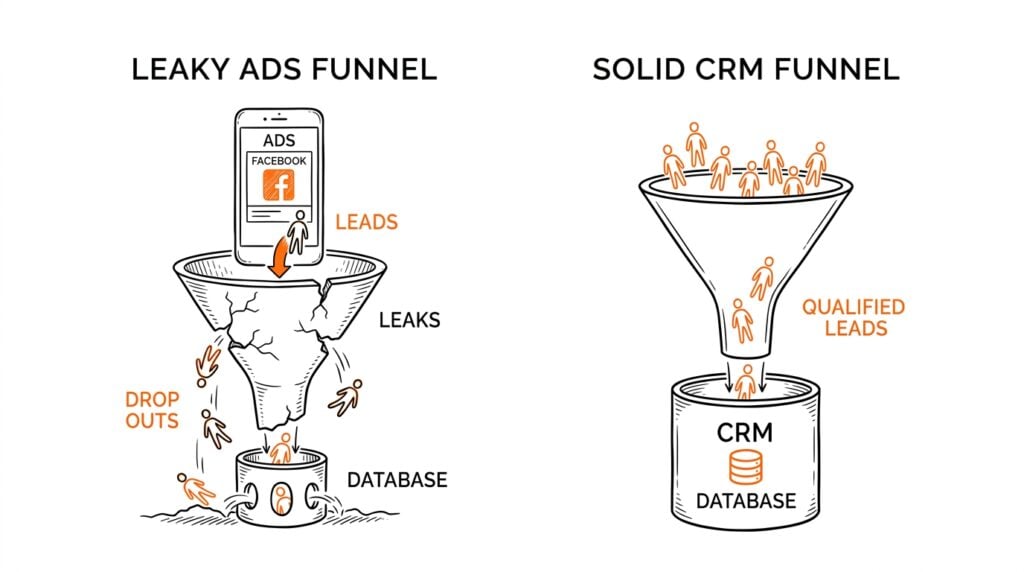
You can run all 12 of these strategies and still grow slowly if you don’t have a system for managing what comes in. Every lead from every source needs to be captured in one place, followed up with immediately, and nurtured over time until they’re ready to move.
That’s what a real estate follow-up system does. Without it, you’re generating leads with one hand and losing them with the other. Most agents can double their production without adding a single new lead source – just by following up consistently with the leads they already have.
Is Your Real Estate Business Leaking Revenue?
Most agents are losing deals they don’t even know they have. Find out exactly where your business is broken and get a custom plan to fix it.
FAQ
How many lead generation strategies should a real estate agent run at once?
Focus on 3–4 maximum. Most agents who try to run every strategy at once end up running none of them consistently. Pick your highest-priority sources based on your strengths and market, build systems around them, and add more only after those are running reliably.
How long does it take for a real estate lead generation strategy to produce results?
It depends on the strategy. Prospecting (expired listings, FSBOs) can produce results in days. Database and SOI work typically shows results in 30–90 days of consistent contact. Geographic farming takes 12–18 months. Content and SEO takes 6–18 months. Stack fast strategies with long-term ones for both immediate and compounding results.
Is door knocking still effective for real estate lead generation?
It depends on your market and personality. In tight-knit neighborhoods or during hot markets, door knocking can produce meaningful results. It requires thick skin and a clear value proposition. Most agents find prospecting by phone or building a farming campaign produces better ROI for the time invested.
What’s the best real estate lead source for new agents?
Your sphere of influence. New agents have exactly one advantage over experienced agents: personal relationships. Every person you know is a potential client or referral source. A systematic, consistent outreach plan to your SOI will outperform any paid lead source for an agent in their first two years.
How do I compete with agents buying Zillow leads in my market?
By being faster than them on response and more consistent on follow-up – and by not competing on the same leads at all. Build owned lead sources (database, SOI, farming, content) where you’re the only agent in the relationship. When you’re the only agent a prospect is talking to, conversion is dramatically higher than when you’re one of five.
The Bottom Line
The agents who build durable, scalable businesses don’t rely on Zillow. They own their lead sources – database, sphere, geographic farm, referral network – and they have a system to nurture those sources consistently over time. Twelve strategies exist. Pick your three and build the system to run them.
Get the system set up at nurturebeast.com.